7 Steps to Improve Your Credit Score to 700+
Ready to transform your financial future? This guide unveils seven actionable steps to significantly boost your credit score, aiming for that coveted 700+ mark. Discover proven strategies for a healthier credit profile and unlock better loan terms, lower interest rates, and greater financial freedom.
Step 1: Understand Your Current Credit Standing
Before embarking on any credit improvement journey, the foundational step is to gain a crystal-clear understanding of your current credit standing. This isn't just about knowing your score; it's about dissecting the components that make up that score and identifying your specific strengths and weaknesses. In 2025, the landscape of credit scoring remains largely consistent, with the FICO Score and VantageScore being the dominant models. Both systems evaluate five key factors, though their weighting and methodologies can differ slightly.
Why Knowing Your Score Matters
Your credit score is a three-digit number that lenders use to assess your creditworthiness. A higher score signals to lenders that you are a low-risk borrower, making it easier to qualify for loans, credit cards, mortgages, and even rental apartments. It also directly impacts the interest rates you'll be offered. For instance, a score in the 700+ range typically qualifies you for prime or super-prime interest rates, saving you thousands of dollars over the life of a loan. Conversely, a low score can lead to rejection or significantly higher costs.
Accessing Your Credit Reports
Your credit score is derived from the information contained in your credit reports. These reports are compiled by three major credit bureaus: Equifax, Experian, and TransUnion. You are entitled to a free copy of your credit report from each bureau annually. The official website for this is AnnualCreditReport.com. It's crucial to check all three reports, as they may contain different information or errors.
Key Information to Look For on Your Credit Reports:
- Personal Information: Ensure your name, address, Social Security number, and employment details are accurate.
- Account Status: Verify that all open and closed accounts are reported correctly, including balances, credit limits, and payment history.
- Inquiries: Note any recent credit inquiries. Too many hard inquiries in a short period can negatively impact your score.
- Public Records: Check for any bankruptcies, judgments, or liens.
Understanding Credit Scoring Models (FICO vs. VantageScore)
While the exact algorithms are proprietary, both FICO and VantageScore rely on similar categories of information. As of 2025, the general weighting is as follows:
| Factor | FICO Score (Approximate Weighting) | VantageScore (Approximate Weighting) |
|---|---|---|
| Payment History | 35% | 40% |
| Amounts Owed (Credit Utilization) | 30% | 23% |
| Length of Credit History | 15% | 21% |
| Credit Mix | 10% | 11% |
| New Credit | 10% | 15% |
Understanding these weights highlights where your efforts will yield the most significant results. For instance, payment history and credit utilization are the two most influential factors. By focusing on these, you can make substantial progress toward a 700+ credit score.
What Constitutes a "Good" Score in 2025?
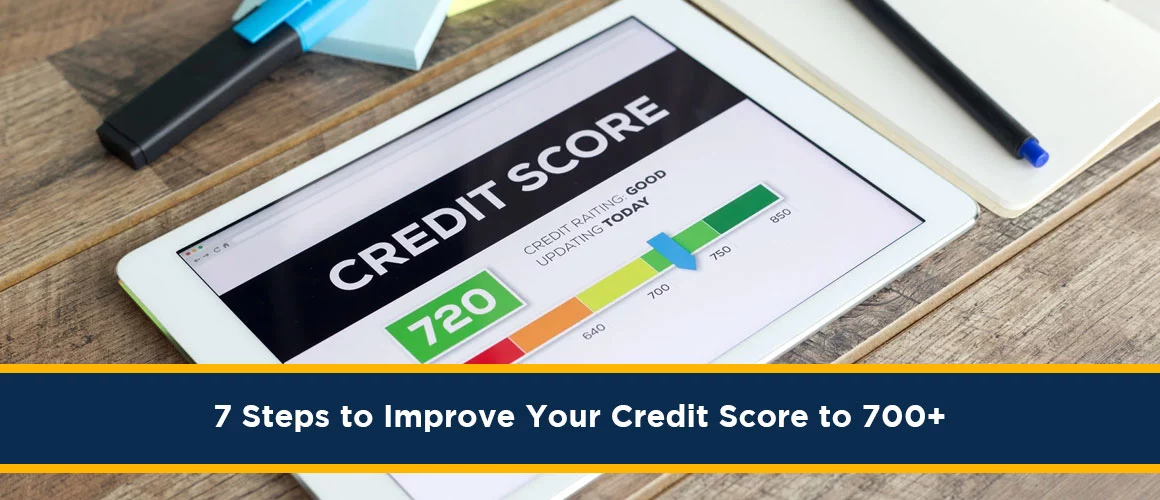
Credit score ranges are generally categorized as follows:
- Exceptional: 800-850
- Very Good: 740-799
- Good: 670-739
- Fair: 580-669
- Poor: 300-579
Aiming for 700+ places you firmly in the "Good" to "Very Good" categories, opening doors to more favorable financial opportunities. The goal of this guide is to help you ascend into the upper echelons of this range.
Step 2: Master Payment History: The Cornerstone of Credit
Payment history is, without question, the single most critical factor influencing your credit score. Lenders want to see that you can consistently meet your financial obligations. In 2025, this principle remains unchanged. A spotless payment record is the bedrock upon which a strong credit score is built.
The Impact of On-Time Payments
Every single payment you make on a credit account—whether it's a credit card, loan, or mortgage—is reported to the credit bureaus. Making these payments on or before the due date demonstrates reliability. Even a single late payment can have a devastating effect, potentially dropping your score by tens or even hundreds of points, depending on your existing score and how late the payment was.
Statistics for 2025: Studies consistently show that individuals with perfect payment histories have significantly higher average credit scores than those with even a few late payments. A payment that is 30 days late is bad; 60 days late is worse; and 90+ days late can be catastrophic for your credit score.
Strategies for Never Missing a Payment
Consistency is key. If you struggle with remembering due dates, implement systems to ensure you never miss one:
- Automatic Payments: Set up automatic payments for at least the minimum amount due on all your credit accounts. This is the most effective way to prevent late payments. Ensure you have sufficient funds in your account to cover these payments.
- Calendar Reminders: Use your smartphone's calendar or a physical planner to set reminders a few days before each payment is due.
- Budgeting Apps: Many budgeting and personal finance apps can track your bills and alert you to upcoming due dates.
- Consolidate Due Dates: If possible, try to align your credit card payment due dates to fall around the same time each month, simplifying your bill-paying process.
Dealing with Past Late Payments
If you have past late payments on your credit report, don't despair. While they will remain on your report for up to seven years, their impact diminishes over time. The best approach is to focus on building a new, positive payment history moving forward. For very recent late payments, you might consider contacting the creditor and politely requesting a goodwill adjustment, especially if you have a strong history with them. However, this is not guaranteed.
Understanding Derogatory Marks
Derogatory marks are negative items that significantly harm your credit score. These include:
- Late Payments (30, 60, 90+ days past due)
- Collections Accounts
- Charge-offs
- Bankruptcies
- Foreclosures
- Repossessions
The longer these marks stay on your report, the less impact they have. However, their presence will keep your score lower. The primary strategy to overcome these is to demonstrate consistent, positive behavior over an extended period.
The Role of Authorized Users
Becoming an authorized user on a credit card account with a long history of on-time payments and low utilization can sometimes help boost your score. The positive payment history of the primary cardholder may be reflected on your report. However, be cautious: if the primary cardholder misses payments or carries high balances, it can negatively impact your credit. Always discuss this arrangement with the primary cardholder and understand the risks.
Step 3: Optimize Credit Utilization: Less is More
Credit utilization ratio (CUR) is the second most significant factor in credit scoring. It measures the amount of credit you are currently using compared to your total available credit. Maintaining a low CUR is crucial for a healthy credit score.
What is Credit Utilization Ratio?
Your CUR is calculated by dividing the total balance on your revolving credit accounts (like credit cards) by the total credit limit across those accounts. For example, if you have a credit card with a $5,000 limit and a balance of $1,000, your utilization on that card is 20% ($1,000 / $5,000). The overall CUR is the sum of all your revolving balances divided by the sum of all your revolving credit limits.
Formula:
Credit Utilization Ratio = (Total Balances on Revolving Accounts / Total Credit Limits on Revolving Accounts) * 100
The Ideal Credit Utilization Ratio
For optimal scoring, experts recommend keeping your overall credit utilization below 30%. However, to reach a 700+ score, aiming even lower is beneficial. Many credit scoring models favor a CUR of 10% or less. This indicates to lenders that you are not overly reliant on credit and manage your finances responsibly.
2025 Data Insight: Consumers with a credit utilization ratio below 10% typically have credit scores that are significantly higher than those with utilization above 30%. This is a powerful lever for score improvement.
Strategies to Lower Your Credit Utilization
- Pay Down Balances: The most direct way to lower your CUR is to pay down the balances on your credit cards. Focus on cards with the highest utilization first.
- Increase Credit Limits: Contact your credit card issuers and request a credit limit increase. If approved, this will lower your utilization ratio, assuming your balances remain the same. Be aware that some issuers may perform a hard inquiry for this, which can temporarily ding your score.
- Spread Balances Across Cards: If you have multiple credit cards, try to distribute your spending so that no single card is maxed out or has a very high utilization.
- Make Multiple Payments Per Month: To keep your reported balance low, make payments throughout the month, not just before the due date. Credit card companies typically report your balance to the bureaus once a month, usually on your statement closing date. By paying down your balance before this date, you can ensure a lower utilization is reported.
What About Store Credit Cards?
Store credit cards often come with lower credit limits, making it easier to rack up high utilization quickly. If you have a store card with a high balance relative to its limit, prioritize paying it down or consider closing it if it's not providing significant value, provided it won't negatively impact your credit history length.
Secured Credit Cards for Building Credit
If you have limited credit or a low score, a secured credit card can be an excellent tool. You provide a cash deposit that becomes your credit limit. By using this card responsibly and making on-time payments, you can build a positive payment history and improve your credit utilization.
The Nuance of Credit Limit Increases
While requesting a credit limit increase can be beneficial, be strategic. If you have a history of overspending, a higher limit might tempt you to spend more, negating the benefit. Only pursue this if you are confident in your ability to manage your spending responsibly. A hard inquiry for a limit increase can slightly lower your score temporarily, so weigh this against the potential benefits.
Step 4: Address and Dispute Errors on Your Credit Reports
Credit reports are complex documents, and errors are surprisingly common. These inaccuracies can unfairly drag down your credit score. As part of your 700+ credit score strategy, diligently reviewing and disputing any errors is a critical step.
Common Types of Credit Report Errors
Errors can range from minor typos to significant misrepresentations. Common issues include:
- Incorrect Personal Information: Wrong addresses, incorrect employment history, or even your Social Security number being mixed up with someone else's.
- Accounts That Aren't Yours: identity theft can lead to fraudulent accounts appearing on your report.
- Incorrect Payment Status: A payment that was made on time being reported as late.
- Duplicate Accounts: The same debt listed multiple times.
- Incorrect Balances or Credit Limits: Reporting a higher balance or lower limit than what is accurate.
- Closed Accounts Still Reporting as Open: Or vice versa.
- Outdated Information: Negative information remaining on your report longer than legally allowed (generally 7 years, 10 for bankruptcies).
How to Dispute an Error
The Fair Credit Reporting Act (FCRA) gives you the right to dispute inaccurate information on your credit reports. Here's the process:
- Gather Evidence: Collect all relevant documentation that proves the information is incorrect. This could include payment confirmations, account statements, letters from creditors, or proof of identity.
- Contact the Credit Bureau: You can dispute errors online, by mail, or by phone with each credit bureau that shows the inaccuracy. Online is often the fastest method. Visit the respective websites for Equifax, Experian, and TransUnion to find their dispute sections.
- Write a Dispute Letter: If disputing by mail, send a clear, concise letter detailing the error and attaching copies of your evidence. Keep copies of everything you send. The bureaus have 30 days (or 45 days if you provide new information within 30 days of your initial dispute) to investigate your claim.
- Contact the Furnisher: You also have the right to dispute the information directly with the company that reported it (the "furnisher," e.g., your credit card company or lender). The credit bureau is required to forward your dispute to the furnisher.
What Happens After a Dispute?
The credit bureau will investigate your claim by contacting the furnisher of the information. The furnisher must then verify the accuracy of the disputed item. If they cannot verify it, or if it is found to be inaccurate, they must correct or remove it from your credit report. The credit bureau must then notify you of the outcome of the investigation and provide you with a corrected report if changes were made.
The Importance of Monitoring
Regularly checking your credit reports is not just about finding errors; it's about staying informed about your credit health. By reviewing your reports at least annually (and more often if you're actively working on improving your score), you can catch potential issues early.
When to Consider a Credit Repair Service
While you can dispute errors yourself, some individuals opt for credit repair services. These services can help identify errors and manage the dispute process. However, be wary of companies that promise guaranteed results or charge upfront fees. Reputable services will explain their process and fees clearly. Remember, no one can legally remove accurate negative information from your credit report.
Step 5: The Art of Credit Mix: Diversify Your Accounts Wisely
Your credit mix refers to the different types of credit accounts you have. Lenders view a diverse credit portfolio positively, as it suggests you can manage various forms of debt responsibly. This factor accounts for about 10% of your FICO score and 11% of your VantageScore.
Types of Credit
There are two primary categories of credit:
- Revolving Credit: This includes credit cards, lines of credit, and home equity lines of credit (HELOCs). You can borrow up to a certain limit, pay it back, and then borrow again.
- Installment Credit: This includes loans with fixed monthly payments and a set repayment period. Examples include mortgages, auto loans, student loans, and personal loans.
Why a Mix Matters
Having a history of successfully managing both revolving credit and installment loans demonstrates a broader range of financial responsibility. It shows lenders you can handle different repayment structures and credit limits.
Example: A person with only credit cards might be seen as less experienced in managing larger, longer-term debts compared to someone who also has a mortgage or auto loan.
Achieving a Healthy Credit Mix
For most individuals aiming for a 700+ score, a mix that includes both credit cards and at least one installment loan is ideal. You don't need a vast number of accounts; responsible management of a few diverse types is more important.
What is considered a "good" mix?
- Having multiple credit cards with good payment histories and low utilization.
- Having at least one installment loan (e.g., a car loan, student loan, or a personal loan) that is being paid down on time.
Conversely, having only one type of credit, or a high concentration of one type (e.g., many credit cards but no installment loans), can be less advantageous.
When to Consider Adding a New Account Type
If your credit profile consists solely of credit cards, you might consider taking out a small personal loan or an auto loan (if you need a vehicle) and managing it responsibly. However, this should be done cautiously. Opening new accounts to improve your credit mix can backfire if not managed properly. The impact of new credit (see Step 6) can temporarily lower your score.
Don't Open Accounts Solely for the Mix
The primary goal is to have a healthy mix, not to collect credit accounts. Opening accounts you don't need can lead to unnecessary fees and temptation to overspend. Focus on managing the credit you have effectively. If you naturally acquire different types of credit through your life circumstances (e.g., buying a car, taking out a mortgage), this will naturally contribute to your credit mix.
The Role of Credit History Length
While diversifying your credit mix is important, remember that the length of your credit history is also a significant factor. Opening too many new accounts simultaneously can dilute the average age of your accounts, negatively impacting your score. Therefore, it's often best to focus on payment history and utilization first, and then consider diversifying your credit mix strategically over time.
Step 6: Navigating New Credit: A Calculated Approach
The "New Credit" factor in your credit score relates to how often you apply for and open new credit accounts. While opening new credit can be necessary for building a healthy credit mix, doing it too frequently can hurt your score.
Understanding Hard vs. Soft Inquiries
When you apply for credit, lenders typically perform a "hard inquiry" on your credit report. Each hard inquiry can slightly lower your score by a few points. Multiple hard inquiries in a short period can signal to lenders that you are in financial distress or taking on too much debt too quickly.
Soft Inquiries: These occur when you check your own credit score, when a potential employer reviews your credit report (with your permission), or when a credit card company pre-approves you for a card. Soft inquiries do not affect your credit score.
The Impact of Too Many Inquiries
While a single hard inquiry has a minimal impact, several in a short timeframe can add up. Credit scoring models consider this. For example, FICO scores tend to be more sensitive to new credit inquiries than VantageScores.
2025 Credit Trends: The impact of inquiries is generally less significant than payment history or credit utilization, but it's still a factor, especially for those on the cusp of a score range. It's advisable to limit applications for new credit to one or two per year unless absolutely necessary.
Strategies for Opening New Credit Wisely
- Space Out Applications: If you need to apply for new credit, space out your applications over several months or even a year. This minimizes the impact of multiple hard inquiries.
- Rate Shopping for Specific Loans: For certain types of loans, like mortgages or auto loans, credit scoring models are designed to recognize rate shopping. Multiple inquiries for the same type of loan within a short period (typically 14-45 days, depending on the scoring model) are often treated as a single inquiry. This allows you to compare offers without unduly harming your score.
- Focus on Needs, Not Wants: Only apply for credit when you genuinely need it, whether it's for a major purchase or to build your credit mix strategically. Avoid applying for credit "just because" there's a promotional offer.
- Pre-qualification vs. Pre-approval: Understand the difference. Pre-qualification is usually a soft inquiry and gives you an estimate of your chances. Pre-approval often involves a hard inquiry and means the lender has tentatively decided to approve you based on your credit information.
The Role of "New Credit" in Credit History Length
Opening new accounts also affects the average age of your credit accounts. If you have a long history of responsible credit use, opening a new account can lower the average age, which can slightly decrease your score. This is why it's often recommended to focus on improving existing accounts before opening new ones, unless you have a very thin credit file.
Secured Credit Cards and Building Credit
For individuals with no credit or poor credit, a secured credit card is often the best way to establish or rebuild credit. By making a deposit, you secure the credit line. Responsible use of a secured card, including on-time payments and low utilization, will be reported to the credit bureaus and help you qualify for unsecured credit in the future. Once you've demonstrated responsible behavior, you can often graduate to an unsecured card, and your deposit will be returned.
Step 7: Patience and Persistence: The Long Game of Credit Building
Improving your credit score, especially reaching and maintaining a 700+ score, is not an overnight process. It requires consistent effort, discipline, and patience. This final step emphasizes the long-term nature of credit building and the importance of sustained good financial habits.
The Time Factor in Credit Scoring
Credit scoring models reward long-term positive behavior. The length of your credit history is a significant component. Older, well-managed accounts contribute more positively to your score than newer ones. Similarly, negative information, while impactful, loses its power over time.
2025 Credit Outlook: Building a strong credit score typically takes months, if not years, of consistent positive actions. Don't get discouraged by slow progress; every on-time payment and every percentage point reduction in utilization contributes to your overall score.
Maintaining Good Habits
Once you achieve your target score, the work isn't over. The key to maintaining a 700+ credit score is to continue practicing the habits that got you there:
- Consistent On-Time Payments: Never miss a payment.
- Low Credit Utilization: Keep your credit card balances low relative to your limits.
- Monitor Your Credit: Regularly check your credit reports and scores for accuracy and changes.
- Be Mindful of New Credit: Apply for new credit only when necessary and space out applications.
- Keep Old Accounts Open (If Managed Well): Even if you don't use them often, older accounts with good payment histories contribute positively to your credit history length and overall credit utilization.
The Power of Compound Interest (in Reverse)
Just as good credit saves you money on interest, poor credit costs you more. The longer you maintain a good score, the more money you save on loans, mortgages, insurance premiums, and even rental applications. This financial benefit compounds over time.
When to Re-evaluate Your Strategy
Life circumstances change. If you experience a significant financial event (e.g., job loss, medical emergency), your credit habits might need to adapt. If your score dips, revisit these seven steps to identify areas for improvement. Don't be afraid to seek advice from reputable financial counselors if you're facing significant challenges.
Conclusion: Your Path to a 700+ Credit Score
Reaching a credit score of 700 or higher is an achievable goal with a strategic and consistent approach. By understanding your current standing, prioritizing on-time payments, managing credit utilization effectively, correcting errors, diversifying your credit mix, approaching new credit cautiously, and exercising patience, you are well on your way. Each step you take builds a stronger financial foundation, opening doors to better opportunities and significant savings. Start today, stay committed, and watch your creditworthiness flourish.