How To Get A Debt Consolidation Loan In 5 Steps ?
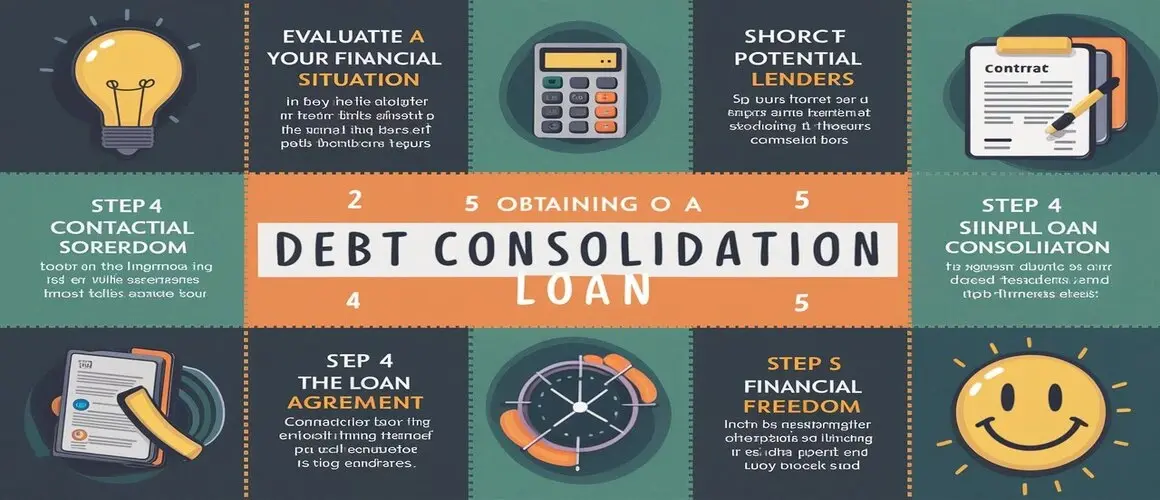
Navigating the complexities of debt can feel overwhelming, but a debt consolidation loan offers a clear path to financial relief. This guide breaks down precisely how to get a debt consolidation loan in 5 steps, empowering you to take control of your finances and streamline your payments efficiently.
Understanding Debt Consolidation
Debt consolidation is a financial strategy that involves combining multiple debts, such as credit card balances, personal loans, and medical bills, into a single, new loan. The primary goal is to simplify your repayment process, potentially lower your interest rate, and reduce your monthly payments. Instead of juggling numerous due dates and varying interest rates, you'll have one monthly payment to manage, often with a more manageable interest rate and a fixed repayment term.
In 2025, the landscape of consumer debt continues to be a significant concern for many households. According to recent analyses, the average American household carries over $60,000 in non-mortgage debt. This includes credit card debt, auto loans, and student loans. The burden of multiple payments can lead to financial stress, late fees, and a detrimental impact on credit scores. Debt consolidation aims to alleviate these pressures by offering a structured approach to debt repayment.
There are several common methods for debt consolidation:
- Debt Consolidation Loans: These are personal loans specifically designed to pay off existing debts. You receive a lump sum, which you then use to clear your other debts. You then repay the consolidation loan over time.
- Balance Transfer Credit Cards: These cards offer a promotional period with a 0% introductory APR on transferred balances. This allows you to pay down debt interest-free for a set time, but be mindful of balance transfer fees and the APR after the introductory period ends.
- Home Equity Loans or HELOCs: If you own a home, you might be able to tap into your home's equity to consolidate debt. These loans often have lower interest rates but put your home at risk if you can't make payments.
- Debt Management Plans (DMPs): Offered by non-profit credit counseling agencies, DMPs involve working with an agency that negotiates with your creditors to lower interest rates and monthly payments. You make one monthly payment to the agency, which then distributes it to your creditors.
This guide will focus on the process of obtaining a debt consolidation loan, a widely accessible and effective method for many individuals seeking to regain financial stability. By following a structured approach, you can navigate the application process with confidence and secure a loan that best suits your financial needs.
Step 1: Assess Your Financial Situation
Before you even begin searching for lenders, the most crucial first step is to thoroughly understand your current financial standing. This involves a deep dive into your income, expenses, and existing debts. Without this clarity, you risk applying for a loan that you can't afford or one that doesn't offer the best terms for your situation. Think of this as laying the groundwork for a successful financial recovery.
Calculate Your Total Debt
The first action item is to list every single debt you currently owe. This includes:
- Credit card balances (including the interest rate for each card)
- Personal loans (e.g., payday loans, installment loans)
- Medical bills
- Student loan balances
- Any other outstanding debts
For each debt, note the current balance, the interest rate (APR), and the minimum monthly payment. Summing these up will give you a clear picture of the total amount you need to consolidate. For example, if you have three credit cards with balances of $5,000, $3,000, and $2,000, and a personal loan of $4,000, your total debt to consolidate would be $14,000.
Analyze Your Monthly Income and Expenses
Next, you need to understand your cash flow. Create a detailed budget that outlines all your sources of income and all your monthly expenses.
Income: This includes your net pay (after taxes) from your job, any freelance income, rental income, or other regular financial inflows.
Expenses: Categorize your expenses. Common categories include:
- Housing (rent/mortgage, property taxes, insurance)
- Utilities (electricity, gas, water, internet, phone)
- Transportation (car payments, insurance, gas, public transport)
- Food (groceries, dining out)
- Debt payments (minimum payments on existing debts)
- Insurance (health, life, disability)
- Personal care and hygiene
- Entertainment and hobbies
- Savings and investments
- Childcare or education expenses
By tracking your expenses diligently for a month or two, you can identify areas where you might be overspending and where you could potentially cut back to free up more money for loan payments. The difference between your total monthly income and your total monthly expenses is your disposable income. This figure is crucial for determining how much you can realistically afford to pay towards a new consolidation loan each month.
Determine Your Debt-to-Income Ratio (DTI)
Your Debt-to-Income ratio is a key metric that lenders use to assess your ability to manage monthly payments. It's calculated by dividing your total monthly debt payments by your gross monthly income (income before taxes).
Formula: DTI = (Total Monthly Debt Payments / Gross Monthly Income) * 100
For example, if your gross monthly income is $5,000 and your total monthly debt payments (including rent/mortgage, car payments, student loans, and minimum credit card payments) are $1,500, your DTI is 30% ($1,500 / $5,000 * 100).
Lenders generally prefer a DTI of 43% or lower, but for debt consolidation loans, a lower DTI (ideally below 36%) can indicate a stronger financial position and increase your chances of approval with favorable terms. Understanding your DTI will help you gauge what loan amounts and monthly payments are realistic.
This initial assessment provides a solid foundation. Knowing your exact debt load, your spending habits, and your borrowing capacity is essential before you start comparing loan offers. It ensures you approach lenders with realistic expectations and a clear understanding of what you need.
Step 2: Check Your Creditworthiness
Your creditworthiness, primarily reflected in your credit score and credit report, is arguably the most significant factor determining your eligibility for a debt consolidation loan and the interest rate you'll be offered. Lenders use this information to gauge the risk associated with lending you money. A good credit score can unlock lower interest rates, saving you a substantial amount of money over the life of the loan.
Understand Your Credit Score
Your credit score is a three-digit number, typically ranging from 300 to 850, that summarizes your credit history. It's calculated based on several factors, including your payment history, amounts owed, length of credit history, credit mix, and new credit.
In 2025, credit scoring models continue to evolve, but the core principles remain the same. Generally, scores are categorized as follows:
- Excellent: 800-850
- Very Good: 740-799
- Good: 670-739
- Fair: 580-669
- Poor: 300-579
Higher scores indicate a lower risk to lenders, leading to better loan terms. For debt consolidation loans, particularly unsecured personal loans, lenders often look for scores in the "Good" to "Excellent" range to offer the most competitive rates.
Obtain and Review Your Credit Reports
Your credit score is derived from the information in your credit reports. You are entitled to a free credit report from each of the three major credit bureaus (Equifax, Experian, and TransUnion) once every 12 months through AnnualCreditReport.com. It's highly recommended to check these reports regularly, especially before applying for a loan.
When reviewing your credit reports, look for:
- Accuracy: Ensure all personal information (name, address, Social Security number) is correct.
- Account Information: Verify that all accounts listed are yours and that the balances and payment histories are accurate.
- Inaccuracies or Errors: Look for any accounts you don't recognize, late payments that were actually made on time, or incorrect balances. If you find errors, dispute them immediately with the credit bureau. Correcting errors can potentially improve your credit score.
- Public Records: Check for any outdated bankruptcies, liens, or judgments.
The presence of negative marks, such as late payments, defaults, collections, bankruptcies, or a high credit utilization ratio, can significantly lower your credit score and make it difficult to qualify for a consolidation loan or result in a very high interest rate. For instance, a consistent history of paying bills on time is the most influential factor in credit scoring.
Identify Areas for Improvement
If your credit score is lower than you'd like, take steps to improve it before applying for a loan. While it may take time, some actions can have a relatively quick impact:
- Pay Bills on Time: This is the most critical factor. Set up auto-pay or reminders to ensure you never miss a payment.
- Reduce Credit Utilization: Aim to keep your credit card balances below 30% of their credit limits. Paying down existing balances can significantly boost your score.
- Avoid Opening New Credit Accounts: Applying for multiple new credit accounts in a short period can lower your score due to hard inquiries.
- Address Delinquent Accounts: Work to resolve any overdue accounts or accounts in collections.
By understanding and improving your creditworthiness, you position yourself to secure the best possible terms for your debt consolidation loan. This proactive approach can save you thousands of dollars in interest over time.
Step 3: Research and Compare Loan Options
Once you have a clear understanding of your financial situation and your creditworthiness, it's time to explore the market for debt consolidation loans. This step involves identifying potential lenders, understanding the types of loans available, and meticulously comparing the terms and conditions to find the most suitable option.
Types of Debt Consolidation Loans
The most common type of debt consolidation loan is an unsecured personal loan. However, other options exist, each with its own pros and cons:
- Unsecured Personal Loans: These loans do not require collateral. Approval is based on your creditworthiness and income. They offer flexibility but often come with higher interest rates than secured loans.
- Secured Personal Loans: These loans are backed by collateral, such as a car or savings account. They may offer lower interest rates but put your collateral at risk if you default.
- Home Equity Loans (HEL) and Home Equity Lines of Credit (HELOC): If you own a home with sufficient equity, these can be viable options. They often have competitive interest rates but use your home as collateral.
For the purpose of this guide, we will primarily focus on unsecured personal loans, as they are the most accessible for many seeking debt consolidation without risking their assets.
Where to Find Debt Consolidation Loans
Several types of financial institutions offer debt consolidation loans:
- Banks: Traditional banks, both national and local, offer personal loans. They often have established reputations and may offer competitive rates for customers with excellent credit.
- Credit Unions: Member-owned cooperatives, credit unions often provide lower interest rates and more personalized service than banks. You typically need to become a member to apply.
- Online Lenders: A growing number of online lenders specialize in personal loans. They often have streamlined application processes, faster funding times, and may be more flexible with credit requirements. Examples include LendingClub, Prosper, and SoFi.
Key Factors to Compare
When comparing loan offers, focus on the following critical elements:
| Feature | Description | Importance |
|---|---|---|
| Interest Rate (APR) | Annual Percentage Rate, which includes the interest rate plus any fees. This is the true cost of borrowing. | Highest Priority. A lower APR means significant savings over time. |
| Loan Term | The length of time you have to repay the loan (e.g., 3, 5, or 7 years). | High Priority. Shorter terms mean higher monthly payments but less interest paid overall. Longer terms mean lower monthly payments but more interest paid overall. |
| Loan Amount | The maximum amount you can borrow. Ensure it covers all your debts. | High Priority. Must be sufficient to consolidate all desired debts. |
| Origination Fees | An upfront fee charged by some lenders for processing the loan. Often a percentage of the loan amount. | Medium Priority. Factor this into the total cost of the loan. |
| Prepayment Penalties | Fees charged if you pay off the loan early. | Medium Priority. Avoid if possible, especially if you plan to pay down debt aggressively. |
| Monthly Payment | The fixed amount you'll pay each month. Ensure it fits your budget. | Highest Priority. Must be affordable. |
| Lender Reputation and Customer Service | Reviews and ratings of the lender's reliability and support. | Medium Priority. Important for a smooth borrowing experience. |
Example Comparison:
Let's say you need to consolidate $20,000 in debt. You find two potential lenders:
- Lender A (Bank): 10% APR, 5-year term, 2% origination fee.
- Lender B (Online Lender): 12% APR, 5-year term, no origination fee.
For Lender A, the origination fee is $400 ($20,000 * 0.02). The total amount repaid over 5 years with a 10% APR would be approximately $25,300. Adding the fee, the total cost is around $25,700.
For Lender B, with a 12% APR, the total repaid over 5 years would be approximately $26,300.
In this scenario, Lender A, despite the origination fee, offers a lower overall cost due to the significantly lower APR. This highlights the importance of comparing the APR and all associated fees.
Tip: Many lenders offer pre-qualification tools that allow you to check your potential rates and terms without a hard credit inquiry, which won't affect your credit score. Use these tools extensively to compare offers from multiple lenders.
Step 4: Gather Necessary Documentation
Once you've identified a promising loan option and are ready to proceed, the next critical step is to gather all the required documentation. Lenders need to verify your identity, income, and financial stability to approve your loan application. Having these documents ready will streamline the process and prevent delays.
Identify Required Documents
While specific requirements can vary slightly between lenders, most will ask for a combination of the following:
- Proof of Identity: A government-issued photo ID is essential. This could be a driver's license, state ID card, or passport. Some lenders may also require a Social Security card or birth certificate.
- Proof of Address: Lenders need to confirm your current residence. Acceptable documents typically include utility bills (electricity, gas, water), bank statements, or a lease agreement, all showing your name and current address.
- Proof of Income: This is crucial for lenders to assess your ability to repay the loan. Common forms of income verification include:
- Pay Stubs: Recent pay stubs (usually from the last 30-60 days) that show your gross pay, deductions, and net pay.
- Tax Returns: W-2 forms or federal tax returns (Form 1040) for the past one to two years, especially if you are self-employed or have variable income.
- Bank Statements: Several months of bank statements can show consistent income deposits.
- Employment Verification Letter: Some lenders may request a letter from your employer confirming your position, salary, and length of employment.
- Information on Existing Debts: You'll need details about the debts you intend to consolidate. This typically includes:
- Creditor names
- Account numbers
- Current balances
- Interest rates (APRs)
- Minimum monthly payments
Having statements from your credit cards, loans, and other debts readily available will be very helpful.
- Bank Account Information: Lenders will need your bank account and routing numbers for disbursing the loan funds and setting up automatic payments.
Organize Your Documents
Before submitting anything, take the time to organize your documents. Create a dedicated folder, either physical or digital, for all the paperwork. Ensure that each document is legible and up-to-date. If you're scanning documents, save them in a common format like PDF and name them clearly (e.g., "JohnDoe_Paystub_Oct2024.pdf").
Pro Tip: If you have variable income (e.g., freelance, commission-based), gather more documentation than you think you'll need. This could include invoices, contracts, and a more extensive history of tax returns and bank statements. Lenders may be more stringent in verifying income that isn't from a traditional employer.
Being prepared with all necessary documentation demonstrates your seriousness and efficiency to the lender. It can significantly expedite the approval and funding process, allowing you to consolidate your debts sooner and begin your journey towards financial freedom.
Step 5: Apply and Manage Your Loan
You've assessed your finances, checked your credit, compared loan options, and gathered your documents. Now, it's time for the final stages: submitting your application and, upon approval, managing your new debt consolidation loan effectively.
Submitting Your Loan Application
Most lenders today offer online application portals, which are generally the most convenient and efficient method. The process typically involves:
- Completing the Application Form: You'll enter your personal information, employment details, income, and the amounts of the debts you wish to consolidate. Be accurate and honest; any discrepancies can lead to rejection or delays.
- Uploading Supporting Documents: You'll be prompted to upload the documents you gathered in Step 4. Ensure you upload clear, legible copies.
- Authorizing a Credit Check: The lender will perform a hard credit inquiry to verify the information in your application and assess your credit risk. This is why it's important to have done your credit check beforehand to know what to expect.
- Reviewing the Loan Offer: If approved, you'll receive a formal loan offer outlining the loan amount, interest rate (APR), loan term, monthly payment, and any fees. Read this document very carefully. Ensure it matches what you expected and what was discussed during pre-qualification.
- Accepting the Loan Terms: If you are satisfied with the offer, you will digitally sign the loan agreement.
Disbursement of Funds
Once you've accepted the loan, the lender will disburse the funds. There are two common methods:
- Direct Deposit to Your Bank Account: The loan amount is deposited directly into your bank account. You are then responsible for using these funds to pay off your existing debts. This gives you control but requires you to be diligent in making those payments promptly.
- Lender Pays Creditors Directly: Some lenders offer to pay off your existing debts on your behalf. They will send payments directly to your creditors. This is a convenient option that ensures your old debts are cleared, but it's essential to confirm with your lender that this service is available and how it works.
Regardless of the disbursement method, it's crucial to ensure all your old debts are paid off completely and that you receive confirmation of closure from each creditor. This prevents any lingering balances or late fees from affecting your credit.
Managing Your New Debt Consolidation Loan
Obtaining the loan is only half the battle. Effective management is key to realizing the full benefits of debt consolidation and avoiding future financial pitfalls.
- Make Payments on Time: This is paramount. Set up automatic payments from your bank account to ensure you never miss a due date. Late payments can incur fees and damage your credit score, negating the benefits of consolidation.
- Stick to Your Budget: The goal of consolidation is to improve your financial health. Continue to live within your means and avoid accumulating new debt. Use the freed-up cash flow from lower payments (if applicable) to build an emergency fund or make extra payments towards the consolidation loan.
- Monitor Your Credit: Keep an eye on your credit report and score to ensure the consolidation is having a positive impact. A consistent history of on-time payments on your new loan should help improve your credit over time.
- Avoid New Debt: A common pitfall is using the freed-up credit on old cards or taking out new loans. Resist this temptation. The consolidation loan is meant to be a tool for repayment, not a license to spend more.
- Consider Extra Payments: If your budget allows, making extra payments towards your consolidation loan can significantly reduce the total interest paid and shorten the loan term. Even small additional amounts can make a big difference over time.
By diligently managing your new loan and maintaining responsible financial habits, you can successfully navigate out of debt and build a more secure financial future.
Alternatives to Debt Consolidation Loans
While debt consolidation loans are a popular and effective strategy, they aren't the only solution for managing overwhelming debt. Depending on your specific circumstances, creditworthiness, and the type of debt you have, other alternatives might be more suitable or accessible. It's always wise to explore all options before committing to a particular path.
Debt Management Plans (DMPs)
As mentioned earlier, Debt Management Plans are offered by non-profit credit counseling agencies. In a DMP, you work with a certified credit counselor who negotiates with your creditors on your behalf. The agency typically secures lower interest rates and may waive late fees. You then make a single, consolidated monthly payment to the credit counseling agency, which distributes the funds to your creditors.
- Pros: Can significantly lower interest rates, simplifies payments, often accessible to those with fair or poor credit, provides guidance from counselors.
- Cons: May involve a monthly fee, often requires closing credit cards, can take several years to complete, may have a negative impact on credit score if not managed properly (though less so than default).
In 2025, with continued economic uncertainty, credit counseling agencies report a steady increase in individuals seeking DMPs as a way to manage rising costs and debt burdens.
Debt Snowball vs. Debt Avalanche Methods
These are do-it-yourself strategies for paying off multiple debts without taking out a new loan. They focus on how you allocate extra payments.
- Debt Snowball: You pay the minimum on all debts except the smallest one, on which you make the largest possible payment. Once the smallest debt is paid off, you roll that payment amount into the next smallest debt, creating a "snowball" effect. This method provides psychological wins.
- Debt Avalanche: You pay the minimum on all debts except the one with the highest interest rate, on which you make the largest possible payment. Once that debt is paid off, you move to the debt with the next highest interest rate. This method saves you the most money in interest over time.
Both methods require discipline and a commitment to paying more than the minimum on at least one debt. They are excellent for individuals who can manage their existing debts without needing a new loan and want to pay off their obligations efficiently.
Balance Transfer Credit Cards
If you have a good credit score, a balance transfer credit card can be an effective tool for consolidating credit card debt. These cards often offer a 0% introductory APR for a promotional period (e.g., 12-21 months). You transfer your high-interest credit card balances to the new card and can pay them down interest-free during this period.
- Pros: Can save significant money on interest if paid off within the introductory period, simplifies payments for credit card debt.
- Cons: Usually involves a balance transfer fee (typically 3-5% of the transferred amount), the APR jumps significantly after the introductory period, requires a good credit score to qualify for the best offers, doesn't address other types of debt.
For example, transferring a $5,000 balance with a 3% fee would cost $150 upfront. If you can pay off the $5,000 within 18 months at 0% APR, you've saved on interest, but the fee is a cost to consider.
Negotiating Directly with Creditors
In some cases, you can contact your creditors directly to negotiate more favorable terms. This might involve asking for a lower interest rate, a temporary reduction in payments, or a payment plan. This approach is more likely to be successful if you can demonstrate a genuine financial hardship and have a history of making payments.
- Pros: Can be done without impacting your credit score (if no new loan is involved), allows for tailored solutions, potentially free of charge.
- Cons: Requires good negotiation skills, success is not guaranteed, may only offer temporary relief, doesn't consolidate multiple debts into one payment.
Choosing the right debt management strategy depends on your unique financial situation, credit score, and the types of debt you carry. While debt consolidation loans offer a structured and often beneficial way to manage debt, exploring these alternatives ensures you make the most informed decision for your financial well-being.
Conclusion
Successfully navigating the path to financial recovery often hinges on making informed decisions about managing your debt. This comprehensive guide has outlined precisely how to get a debt consolidation loan in 5 steps, empowering you with the knowledge to take decisive action. From the crucial initial assessment of your financial landscape to the diligent management of your new loan, each step is designed to guide you towards a more stable and less stressful financial future.
Remember, the journey begins with understanding your total debt, meticulously tracking your income and expenses, and accurately calculating your debt-to-income ratio. This foundational knowledge is indispensable for setting realistic goals and identifying suitable loan options. Following this, a thorough evaluation of your creditworthiness is paramount, as your credit score directly influences the terms and interest rates you'll be offered. By proactively checking your credit reports and scores, you can identify areas for improvement and position yourself for the best possible outcome.
The research and comparison phase is where you actively seek out lenders, scrutinize loan terms, and prioritize factors like APR, loan term, and fees. Gathering all necessary documentation promptly and accurately ensures a smooth application process, while the final step of applying and diligently managing your loan solidifies your commitment to financial discipline. Making timely payments, sticking to your budget, and avoiding the temptation of new debt are the cornerstones of long-term success.
While debt consolidation loans offer a powerful solution, exploring alternatives like Debt Management Plans or DIY methods such as the debt snowball or avalanche can also be beneficial depending on your circumstances. Ultimately, the most effective strategy is the one that aligns with your financial capacity and long-term goals. By implementing the steps outlined here, you are well-equipped to take control of your debt, reduce financial stress, and pave the way for a brighter financial future.
