- Quick Answer
- Understanding debt consolidation loans
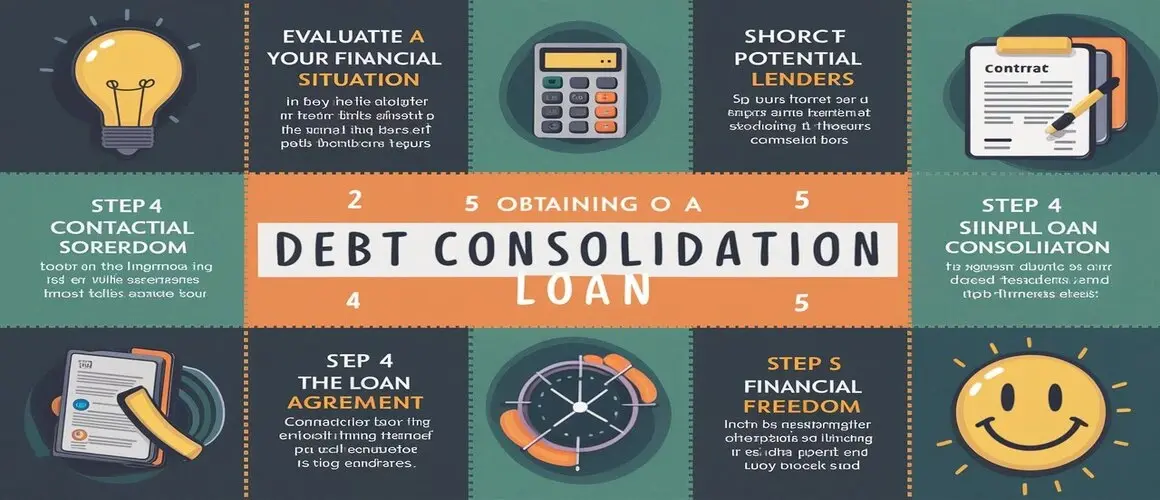
- The 5 Steps to Getting a Debt Consolidation Loan
- Practical Tips for Debt Consolidation Success
- Frequently Asked Questions
Quick Answer
Getting a debt consolidation loan involves assessing your debt, checking your credit, comparing lenders, applying, and managing your new loan. This process can simplify your payments into one manageable monthly installment, potentially with a lower interest rate. Need professional guidance? Call CreditRepairinMyArea at (888) 804-0104 for a free credit consultation.
Understanding Debt Consolidation Loans
Many Americans find themselves juggling multiple debts, from credit cards and personal loans to medical bills and payday loans. The sheer volume of different due dates, interest rates, and minimum payments can feel overwhelming, leading to missed payments and mounting stress. This is where a debt consolidation loan can offer a lifeline. Essentially, a debt consolidation loan is a type of personal loan that allows you to borrow a single lump sum to pay off multiple existing debts. The goal is to combine all your high-interest debts into one new loan, often with a lower overall interest rate and a single, predictable monthly payment. This can significantly simplify your financial life, making it easier to manage your budget and work towards becoming debt-free.
Consider Sarah, who had three credit cards with balances totaling $15,000, each with an APR ranging from 18% to 25%. She also had a small personal loan with a 12% interest rate. Her monthly payments were spread across different dates, and she often felt like she was just making the minimum payments without making significant progress. After exploring her options, she decided to apply for a debt consolidation loan. She secured a loan for $17,000 (covering her existing debts plus a small buffer for the loan fee) at an 8% APR, with a fixed monthly payment over five years. This change not only reduced her total interest paid over the life of the loan but also simplified her finances to one payment per month, giving her peace of mind and a clear path forward. Companies like CreditRepairinMyArea understand the complexities of managing debt and can help you explore options like these.
The 5 Steps to Getting a Debt Consolidation Loan
Embarking on the journey to debt consolidation requires a structured approach. By following these five key steps, you can navigate the process effectively and increase your chances of securing a loan that meets your financial needs. It's crucial to approach each step with diligence and a clear understanding of your financial situation.
Step 1: Assess Your Current Financial Situation and Debt
Before you even think about applying for a loan, you need a crystal-clear picture of your current financial landscape. This involves gathering all your outstanding debt statements. For each debt, note down the exact balance, the annual percentage rate (APR), the minimum monthly payment, and the due date. This detailed inventory will help you understand the total amount of debt you need to consolidate and identify which debts have the highest interest rates. You should also calculate your total monthly debt payments and your current debt-to-income ratio (DTI). Your DTI is calculated by dividing your total monthly debt payments by your gross monthly income. Lenders use this ratio to gauge your ability to repay a new loan. A lower DTI generally indicates a stronger ability to manage additional debt. Understanding these figures is paramount; it allows you to determine how much you need to borrow and what kind of loan terms you'll likely qualify for. For instance, if you have $20,000 in credit card debt with an average APR of 20%, and your DTI is already high, you'll need to be realistic about the loan amounts and interest rates you can expect.
Step 2: Check Your Credit Score and Report
Your credit score is a critical factor in determining whether you'll be approved for a debt consolidation loan and what interest rate you'll be offered. Lenders use your credit score to assess your creditworthiness – essentially, how likely you are to repay borrowed money. Generally, a higher credit score (typically 670 or above for good credit) will qualify you for better loan terms, including lower interest rates, which is the primary benefit of consolidation. Obtain copies of your credit reports from the three major credit bureaus: Equifax, Experian, and TransUnion. You can get these for free annually at AnnualCreditReport.com. Review them carefully for any errors or inaccuracies, such as accounts that don't belong to you, incorrect payment history, or outdated negative information. Disputing these errors can potentially improve your score before you apply for a loan. Even small errors can impact your score, so thoroughness here is vital. If your credit score is lower than you'd like, consider working with credit repair professionals to address any issues before applying.
Step 3: Research and Compare Lenders
Once you have a solid understanding of your finances and credit standing, it's time to shop around for lenders. Don't settle for the first offer you receive. Different lenders – including banks, credit unions, and online lenders – offer varying interest rates, loan terms, fees, and repayment options. Look for lenders that specialize in debt consolidation loans. When comparing offers, pay close attention to the APR, which includes the interest rate plus any fees associated with the loan, such as origination fees or late payment fees. A lower APR means you'll pay less interest over the life of the loan. Also, consider the loan term: a shorter term means higher monthly payments but less interest paid overall, while a longer term means lower monthly payments but more interest paid. Read customer reviews and check the lender's reputation. Some lenders may require a good-to-excellent credit score, while others might be more accommodating to those with fair credit, albeit at a higher interest rate. It's often beneficial to get pre-qualified with a few lenders to see what rates you might be offered without impacting your credit score significantly.
Step 4: Apply for the Loan
After selecting the lender that offers the best terms for your situation, you'll proceed with the formal application. This typically involves filling out an online application or completing paperwork in person or over the phone. You'll need to provide detailed personal information, including your Social Security number, employment history, income, and housing expenses. You'll also need to provide documentation to verify this information, such as pay stubs, bank statements, and tax returns. The lender will then perform a hard credit inquiry, which will have a small, temporary impact on your credit score. Be honest and accurate in your application; any discrepancies could lead to denial or issues down the line. Once your application is submitted, the lender will review your information and credit history to make a final decision. The approval process can take anywhere from a few hours to several business days, depending on the lender and the complexity of your application.
Step 5: Manage Your New Loan and Debt
Congratulations, you've been approved! The final, and perhaps most crucial, step is to manage your new debt consolidation loan responsibly. Once you receive the funds, you must use them immediately to pay off your existing debts as agreed. Failure to do so could result in the loan being rescinded or you being responsible for both the new loan and your old debts. Set up automatic payments for your new loan to ensure you never miss a due date. This not only helps you avoid late fees and potential damage to your credit score but also ensures you benefit from the lower interest rate. Continue to practice good financial habits, such as budgeting and avoiding taking on new debt, to ensure you stay on track toward becoming debt-free. Consistent, on-time payments on your consolidation loan will help rebuild your credit over time, opening up more financial opportunities in the future.
📞 Ready to take action on your credit? Don't navigate the credit repair process alone. Call CreditRepairinMyArea at (888) 804-0104 and speak with a credit expert who can help you today.
Actionable Strategies for Debt Consolidation Success
Achieving financial freedom through debt consolidation isn't just about getting the loan; it's about using it effectively and maintaining healthy financial habits afterward. Here are some proven strategies to maximize your debt consolidation efforts and set yourself up for long-term success.
Proven Approaches That Work
- Create a Detailed Budget: Before and after consolidating, a realistic budget is your roadmap. Track your income and expenses meticulously to identify areas where you can cut back. This freed-up money can be directed towards your consolidation loan, allowing you to pay it off faster or build an emergency fund.
- Prioritize Paying More Than the Minimum: While a consolidation loan often lowers your monthly payment, resist the temptation to simply pay the minimum. If your budget allows, paying extra each month will significantly reduce the total interest paid and shorten the loan term, saving you money and accelerating your debt-free journey.
- Build an Emergency Fund: Unexpected expenses can derail even the best debt consolidation plans. Aim to build a small emergency fund of $500 to $1,000 as quickly as possible. This buffer will prevent you from having to resort to high-interest credit cards or payday loans when an unexpected bill arises.
- Avoid New Debt: The most critical part of successful debt consolidation is not replacing old debt with new debt. Once your old debts are paid off, resist the urge to run up those credit card balances again. Focus on living within your means and making your consolidation loan payment your top financial priority.
Common mistakes to avoid include not fully understanding the terms of the consolidation loan, especially hidden fees or a higher interest rate than initially perceived. Another pitfall is failing to address the spending habits that led to the debt in the first place; without behavioral change, you'll likely end up in debt again. Always ensure you're comparing the total cost of the consolidation loan against the total cost of your individual debts to confirm it's a financially sound decision. Patience and discipline are key; debt consolidation is a tool, not a magic wand, and requires ongoing commitment to financial responsibility.
Frequently Asked Questions About Debt Consolidation Loans
Question 1: What are the typical fees associated with a debt consolidation loan?
Common fees include origination fees, which are a percentage of the loan amount charged upfront. Some lenders may also charge late payment fees if you miss a due date, and there might be prepayment penalties if you decide to pay off the loan early, though this is less common with personal loans. Always ask lenders to detail all potential fees before signing.
Question 2: How long does it typically take to get approved for a debt consolidation loan?
The approval timeline can vary. For online lenders, you might receive a pre-qualification decision within minutes and final approval and funding within 1-3 business days. Traditional banks or credit unions might take a bit longer, potentially up to a week, due to more extensive underwriting processes. Factors like your creditworthiness and the completeness of your application play a role.
Question 3: Should I hire a professional credit repair company or do this myself?
You can certainly do the legwork yourself by researching lenders and applying directly. However, a credit repair company can offer expert guidance, help you understand your credit reports, identify disputable items, and navigate the application process for loans or other credit products. They can be particularly helpful if your credit score is low, as they focus on improving your creditworthiness, which is essential for getting favorable loan terms.
Question 4: Can I consolidate all types of debt with a consolidation loan?
Generally, debt consolidation loans are best suited for unsecured debts like credit card balances, medical bills, and personal loans. Secured debts, such as mortgages or auto loans, typically cannot be included because they are already backed by collateral. Some lenders may allow you to include payday loans or certain other high-interest debts.
Question 5: What happens to my old credit accounts after I get a consolidation loan?
Once you use the consolidation loan to pay off your old debts, those accounts are closed. It's crucial not to reopen them or rack up new balances on them. Keeping old credit cards open (without using them) can sometimes benefit your credit utilization ratio, but the primary goal is to avoid adding new debt once you've consolidated.
Question 6: How does a debt consolidation loan affect my credit score?
Initially, applying for a loan and having a hard inquiry can slightly lower your score. However, if you manage the new loan responsibly by making on-time payments, it can improve your credit score over time. Paying off high-balance credit cards with a consolidation loan can also lower your credit utilization ratio, which positively impacts your score.
Get Professional Credit Repair Help
If you're struggling with credit issues and want professional assistance, CreditRepairinMyArea is here to help. Our experienced team understands the complexities of credit laws and can guide you through the dispute process, helping you address inaccurate negative items on your credit reports.
Don't let bad credit hold you back from getting approved for loans, mortgages, or credit cards. Take the first step toward better credit today by working with professionals who understand the system.
Call CreditRepairinMyArea now at (888) 804-0104 to speak with a credit repair specialist and start your journey to healthier credit.