How To Repair Your Credit Score Yourself?
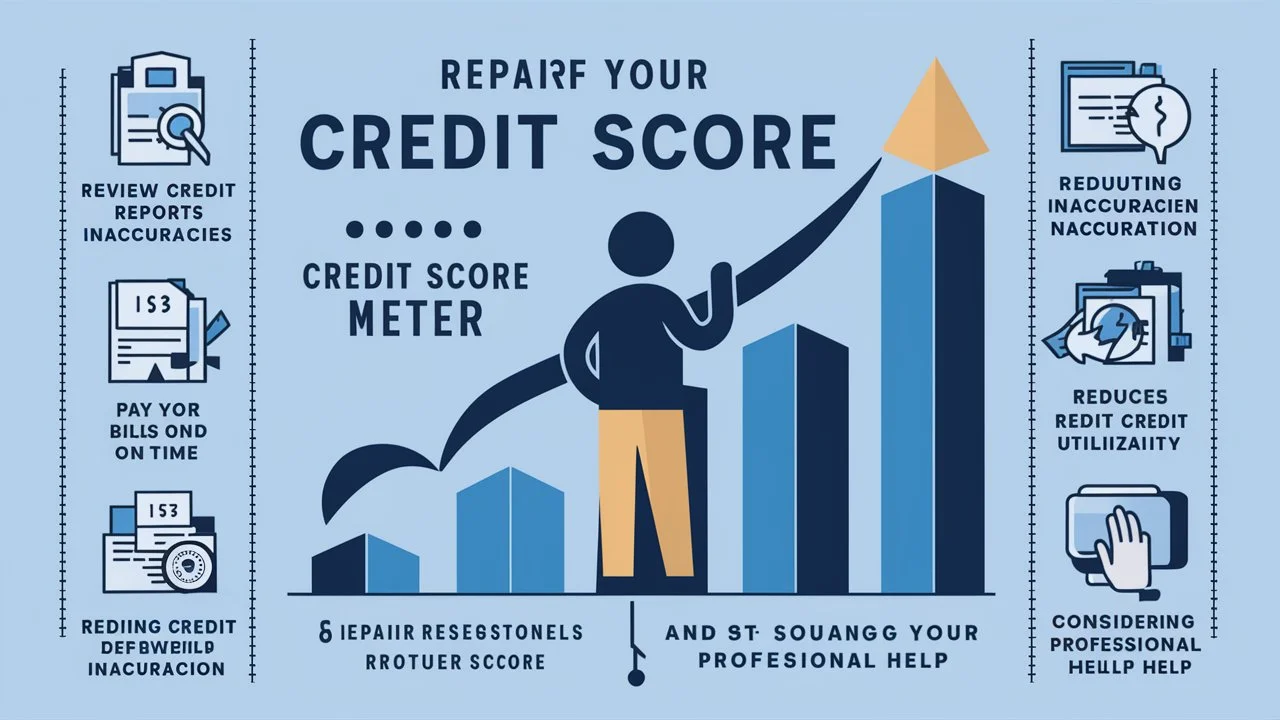
Repairing your credit score yourself is achievable with a strategic approach. This comprehensive guide empowers you with the knowledge and actionable steps needed to identify issues, dispute errors, and build a stronger financial future, all without needing to hire expensive services.
Understanding Your Credit Score: The Foundation of Repair
Before you can effectively repair your credit score, it's essential to understand what it represents and how it's calculated. Your credit score is a three-digit number, typically ranging from 300 to 850, that lenders use to assess your creditworthiness. It's a snapshot of your financial behavior, indicating how likely you are to repay borrowed money. In 2025, the average credit score in the United States hovers around 715, but this number can vary significantly based on demographics and financial habits. A higher score generally translates to better loan terms, lower interest rates, and easier approval for credit cards, mortgages, and even rental applications.
The most widely used credit scoring models are FICO and VantageScore. While their exact algorithms are proprietary, they both consider similar factors. Understanding these factors is crucial for targeted repair efforts. The key components influencing your credit score are:
- Payment History (35%): This is the most significant factor. It reflects whether you pay your bills on time. Late payments, missed payments, defaults, and bankruptcies can severely damage your score.
- credit utilization Ratio (30%): This measures the amount of credit you're using compared to your total available credit. Keeping this ratio low, ideally below 30%, is vital. For example, if you have a credit card with a $10,000 limit, using more than $3,000 can negatively impact your score.
- Length of Credit History (15%): The longer you've had credit accounts open and in good standing, the better. This shows lenders a track record of responsible credit management.
- Credit Mix (10%): Having a mix of different types of credit, such as credit cards, installment loans (like mortgages or auto loans), and personal loans, can be beneficial, as it demonstrates your ability to manage various credit products.
- New Credit (10%): Opening too many new credit accounts in a short period can signal risk to lenders and may lower your score. Each hard inquiry, which occurs when you apply for new credit, can slightly decrease your score.
In 2025, lenders are increasingly sophisticated in their analysis, but these core principles remain constant. Understanding these percentages provides a roadmap for prioritizing your repair efforts. For instance, focusing on paying down credit card balances will have a more immediate impact than trying to lengthen your credit history overnight.
Accessing Your Credit Reports: Your First Crucial Step
The bedrock of any credit repair journey is obtaining and thoroughly reviewing your credit reports. These reports are compiled by the three major credit bureaus: Equifax, Experian, and TransUnion. They contain detailed information about your credit history, including all your credit accounts, payment history, outstanding balances, and any public records like bankruptcies or liens.
The Fair Credit Reporting Act (FCRA) mandates that you are entitled to a free copy of your credit report from each of the three bureaus annually. The official website for this is AnnualCreditReport.com. It's crucial to use this site, as other "free credit report" websites may offer limited information or try to sell you unnecessary services.
Why is this step so important? Credit reports are not always perfect. Errors can occur due to data entry mistakes, identity theft, or reporting inaccuracies from creditors. These errors can unfairly lower your credit score, making it harder to achieve your financial goals. By reviewing your reports, you can identify these inaccuracies and take steps to correct them.
When you receive your reports, look for:
- Personal Information Accuracy: Verify your name, address, Social Security number, and date of birth. Any discrepancies could indicate identity theft.
- Account Information: Ensure all listed credit accounts belong to you and that the balances, credit limits, and payment statuses are accurate.
- Payment History: Check for any late payments or missed payments that you know you made on time.
- Public Records: Confirm that any bankruptcies, liens, or judgments listed are accurate and up-to-date.
- Inquiries: Review the list of inquiries. You should only see inquiries from yourself (when you checked your own score) and from lenders when you applied for credit.
In 2025, with the rise of digital data and complex financial systems, the potential for errors remains. It's recommended to pull your reports at different times of the year from each bureau. For example, you could pull Equifax in January, Experian in May, and TransUnion in September. This staggered approach allows you to monitor your credit more closely throughout the year and catch any emerging issues promptly.
Identifying Errors and Initiating Disputes: Taking Action
Once you have your credit reports in hand, the next critical phase is meticulous error identification. Even minor inaccuracies can shave points off your score. The goal is to find anything that doesn't accurately reflect your financial history. Common errors include:
- Incorrect personal information (e.g., wrong address, misspelled name).
- Accounts that do not belong to you (potential sign of identity theft).
- Incorrectly reported late payments or missed payments.
- Accounts listed as delinquent when they are current.
- Incorrect balances or credit limits.
- Duplicate accounts or listings.
- Outdated information that should have been removed.
If you find an error, you have the right to dispute it with the credit bureau that published the report and, often, with the creditor that provided the information. The FCRA requires credit bureaus to investigate disputes within a reasonable period, typically 30 days, and to remove or correct any inaccuracies.
How to Dispute an Error:
- Gather Documentation: Collect all evidence that supports your claim. This could include payment receipts, bank statements, letters from creditors, or any other relevant documents.
- Write a Dispute Letter: While you can initiate disputes online, a written letter is often more effective and provides a paper trail. Address your letter to the specific credit bureau where you found the error. Be clear, concise, and factual. State the error precisely, explain why it's incorrect, and attach copies of your supporting documentation. Do not send original documents.
- Send Certified Mail: Send your dispute letter via certified mail with a return receipt requested. This provides proof that the credit bureau received your letter and when.
- Dispute with the Creditor: In addition to disputing with the bureau, it's often beneficial to contact the creditor directly. They can investigate the error from their end and correct their records, which will then be reported to the bureaus.
Example Dispute Letter Snippet:
To Whom It May Concern at [Credit Bureau Name], I am writing to dispute an item on my credit report dated [Date of Report]. Specifically, account number [Account Number] listed under my name, [Your Name], Social Security Number [Your SSN], is inaccurately reported as [State the inaccuracy, e.g., 30 days late]. According to my records, I made the payment for this account on [Date you made payment], as evidenced by the attached copy of my [Payment Method, e.g., canceled check/bank statement]. Therefore, this account should be reported as current. Please investigate this matter and correct my credit report accordingly. I have enclosed copies of my supporting documentation for your review. I expect a response within 30 days as required by the Fair Credit Reporting Act.
In 2025, credit bureaus have streamlined online dispute portals, which can be faster. However, for complex issues or if you don't receive a satisfactory resolution online, a formal written dispute remains a powerful tool. Remember to keep copies of all correspondence.
The Investigation Process:
Once a dispute is filed, the credit bureau will contact the creditor or furnisher of the information to verify the accuracy of the disputed item. The furnisher has a legal obligation to respond and provide substantiation for the information. If they cannot verify the information, or if the investigation reveals an error, the bureau must correct or remove the inaccurate information from your report.
If the dispute is denied, you have the right to request that a statement of disagreement be added to your credit file, explaining why you believe the information is inaccurate. This statement will be included with your credit report whenever it's shared with potential lenders.
Strategies for Credit Improvement: Building a Better Score
Once you've addressed any errors on your credit reports, the focus shifts to actively improving your credit score. This involves implementing sound financial habits that positively influence the key scoring factors. Patience and consistency are paramount here, as credit repair is a marathon, not a sprint.
Payment History: The Unshakeable Pillar
As the most significant factor, ensuring on-time payments is non-negotiable.
- Pay Bills on Time, Every Time: Set up automatic payments or reminders for all your bills, including credit cards, loans, utilities, and rent (if reported). Even one late payment can have a substantial negative impact.
- Catch Up on Past Due Accounts: If you have any delinquent accounts, bring them current as quickly as possible. The longer an account remains past due, the more damage it inflicts.
- Negotiate with Creditors: If you're struggling to make payments, contact your creditors proactively. They may be willing to work out a payment plan, offer a temporary hardship arrangement, or even settle the debt for less than the full amount owed (though this can still negatively affect your score, it's often better than a default).
Credit Utilization Ratio: Lowering the Burden
This is another area where you can see relatively quick improvements.
- Pay Down Credit Card Balances: Aim to reduce your credit card balances significantly. The lower your utilization ratio, the better. Ideally, keep it below 30%, but below 10% is even better.
- Increase Your Credit Limits: Contact your credit card issuers and request a credit limit increase. If approved, this will lower your utilization ratio, assuming your spending remains the same. Be cautious not to increase spending just because your limit is higher.
- Avoid Maxing Out Cards: Never use your entire credit limit on any card. This is a major red flag for lenders.
Length of Credit History: Time is Your Ally
While you can't artificially shorten the time, you can avoid actions that shorten your history.
- Keep Old Accounts Open: Even if you don't use an old credit card much, keeping it open (especially if it has a zero balance and no annual fee) can help maintain your average age of accounts. Closing old accounts can reduce your average credit history length.
- Use Old Accounts Sparingly: Make a small purchase on an old card every few months and pay it off immediately to keep it active and avoid closure by the issuer due to inactivity.
Credit Mix: Demonstrating Versatility
This factor is less critical than payment history and utilization, but it still plays a role.
- Consider Different Credit Types: If you only have credit cards, you might consider a small, secured loan or a credit-builder loan from a credit union or community bank. This demonstrates your ability to manage different types of credit responsibly. However, only do this if you can manage the payments.
New Credit: A Cautious Approach
Opening new accounts can be beneficial, but it needs to be done strategically.
- Limit New Applications: Only apply for credit when you genuinely need it. Each application results in a hard inquiry, which can temporarily lower your score.
- Shop Around Strategically: If you're looking for a loan (e.g., auto or mortgage), do your research and apply for multiple loans within a short period (typically 14-45 days, depending on the scoring model). Most scoring models will treat these as a single inquiry to allow you to find the best rates.
Example Scenario for Credit Utilization:
Sarah has two credit cards. Card A has a $5,000 limit and a $4,000 balance (80% utilization). Card B has a $2,000 limit and a $1,500 balance (75% utilization). Her total available credit is $7,000, and her total debt is $5,500. Her overall utilization is approximately 78.5%.
If Sarah pays down Card A to $1,000 and Card B to $500, her total debt becomes $1,500. Her overall utilization drops to about 21.4%. This significant reduction in utilization would likely lead to a substantial increase in her credit score.
In 2025, many financial apps and services can help you track your credit utilization in real-time, making it easier to manage this crucial metric.
Managing Debt Effectively: The Cornerstone of Credit Health
Effective debt management is not just about paying bills; it's about a strategic approach to reducing and controlling your overall debt burden. High debt levels are a primary driver of poor credit scores.
Debt Reduction Strategies
There are two popular methods for tackling debt:
| Method | Description | Pros | Cons |
|---|---|---|---|
| Debt Snowball | Pay off debts from smallest balance to largest, regardless of interest rate. Make minimum payments on all debts except the smallest, on which you pay as much as possible. Once the smallest is paid off, roll that payment into the next smallest debt. | Psychological wins provide motivation. Simple to follow. | May cost more in interest over time if larger debts have higher rates. |
| Debt Avalanche | Pay off debts from highest interest rate to lowest, regardless of balance. Make minimum payments on all debts except the one with the highest APR, on which you pay as much as possible. Once paid off, apply that payment to the next highest APR debt. | Saves the most money on interest over time. Mathematically efficient. | May take longer to see initial wins, potentially leading to discouragement. |
Choose the method that best suits your personality and financial situation. The key is to be consistent and committed.
Debt Consolidation and Balance Transfers
These tools can help simplify your debt and potentially lower your interest rates.
- Debt Consolidation Loan: This involves taking out a new loan to pay off multiple existing debts. You'll then have a single monthly payment. This can be beneficial if the new loan has a lower interest rate than your existing debts.
- Balance Transfer Credit Cards: Many cards offer a 0% introductory Annual Percentage Rate (APR) for a limited period (e.g., 12-21 months). You can transfer balances from high-interest cards to this new card, saving money on interest. Be aware of balance transfer fees (typically 3-5% of the transferred amount) and ensure you can pay off the balance before the introductory period ends, or the regular APR will apply.
Important Considerations:
- Avoid New Debt: While working on debt reduction, resist the urge to take on new debt.
- Budgeting: Create and stick to a realistic budget. This helps you track your income and expenses, identify areas where you can cut back, and allocate more funds towards debt repayment.
- Negotiating Settlements: For very old or significantly delinquent debts, you might be able to negotiate a settlement with the creditor or a debt collection agency. This means paying a lump sum that is less than the full amount owed. While this can resolve the debt, it will likely be reported as "settled for less than full amount" or "paid in full for less than full amount," which can still negatively impact your score, though less severely than an unpaid charge-off.
In 2025, financial advisors often recommend a combination of aggressive debt repayment and careful budgeting as the most sustainable path to credit health.
Building Positive Credit History: Long-Term Success
Repairing credit isn't just about fixing past mistakes; it's about establishing a consistent pattern of responsible financial behavior for the future. This is where building positive credit history comes into play.
Secured Credit Cards
For individuals with no credit history or a severely damaged one, a secured credit card is an excellent starting point.
- How They Work: You provide a cash deposit to the card issuer, which typically becomes your credit limit. For example, a $300 deposit might get you a $300 credit limit.
- Benefits: These cards report your payment activity to the credit bureaus just like regular credit cards. By making on-time payments and keeping utilization low, you build a positive credit history. After a period of responsible use (usually 6-12 months), many issuers will refund your deposit and convert the card to an unsecured one.
Credit-Builder Loans
These are small loans designed specifically to help individuals build or rebuild credit.
- How They Work: You make payments on the loan over a set period. The loan amount is typically held in an account by the lender and released to you only after the loan is fully repaid. Your payment history is reported to the credit bureaus.
- Where to Find Them: Credit unions and some community banks often offer these loans.
Become an Authorized User
If you have a trusted friend or family member with excellent credit, you could ask them to add you as an authorized user on one of their credit cards.
- How It Works: You'll receive a card with your name on it, linked to the primary cardholder's account. The primary cardholder's payment history and credit utilization on that account can then appear on your credit report.
- Risks: Ensure the primary cardholder is responsible. If they miss payments or have high utilization on that card, it can negatively affect your credit as well. It's crucial to have open communication and trust.
Rent and Utility Reporting Services
Traditionally, rent and utility payments were not factored into credit scores. However, several services now report these payments to credit bureaus.
- How They Work: You sign up for a service (some are free, others charge a fee), and they verify your rent or utility payments and report them to one or more of the major credit bureaus.
- Benefits: This can be a valuable way to add positive payment history to your report, especially if you have limited other credit accounts. Examples include Experian Boost, RentReporters, and LevelCredit.
Responsible Use of Existing Credit
If you already have credit accounts, focus on using them wisely to build positive history.
- Small, Regular Purchases: Use your credit cards for small, everyday purchases that you can easily pay off in full each month. This demonstrates consistent, responsible usage.
- Avoid Closing Unused Accounts: As mentioned earlier, keeping older, unused accounts open can help your credit history length.
In 2025, the landscape of credit building is more diverse than ever, with innovative services emerging to help consumers establish and grow their credit profiles.
Monitoring Your Progress: Staying on Track
Credit repair is an ongoing process, and consistent monitoring is key to ensuring your efforts are paying off and to catch any new issues that may arise.
Regularly Check Your Credit Reports
Don't wait for your annual free reports. Utilize services that offer free credit score and report monitoring. Many credit card companies and financial institutions provide this as a perk to their customers.
- Frequency: Aim to check your credit score at least monthly. This allows you to see trends and understand the impact of your actions.
- Dispute New Errors Promptly: If you notice any new inaccuracies, dispute them immediately. The sooner you address an error, the less impact it will have.
Understand Your Credit Score Factors
Most credit monitoring services will break down your score by the factors that influence it (payment history, utilization, etc.).
- Identify Strengths and Weaknesses: Use this information to understand what's helping your score and what's holding it back. This helps you prioritize your efforts. For example, if your utilization is still high, focus on paying down balances. If your payment history is the main issue, ensure all future payments are on time.
Beware of Credit Repair Scams
Unfortunately, the credit repair industry attracts scammers who prey on individuals seeking help. Be wary of companies that:
- Guarantee to remove accurate negative information from your credit report.
- Charge upfront fees before performing any work.
- Ask you to pay for services that you can legally do yourself for free (like obtaining your own credit reports).
- Advise you to dispute all items on your report or to obtain a new Social Security number.
Legitimate credit counseling agencies, often non-profit, can offer guidance and help you develop a debt management plan, but they do not "guarantee" credit repair.
Set Realistic Goals and Celebrate Milestones
Credit repair takes time. Set achievable short-term and long-term goals. For example, a short-term goal might be to lower your credit utilization to below 50% within three months. A long-term goal could be to reach a credit score of 700 within two years.
Celebrate your progress along the way. Reaching a new credit score milestone, paying off a debt, or successfully disputing an error are all victories worth acknowledging. This positive reinforcement can help you stay motivated throughout the process.
In 2025, with the proliferation of personal finance apps and AI-driven financial tools, monitoring your credit has become more accessible and insightful than ever before. Leverage these resources to stay informed and in control of your financial journey.
Conclusion
Repairing your credit score yourself is a journey that demands diligence, patience, and a strategic understanding of credit scoring. By diligently accessing and scrutinizing your credit reports from Equifax, Experian, and TransUnion, you can identify and dispute inaccuracies that may be hindering your progress. Implementing robust strategies focused on timely payments, reducing credit utilization, and building a positive credit history are the cornerstones of this endeavor. Tools like secured credit cards and credit-builder loans can be invaluable for those starting from scratch or with damaged credit. Remember, consistent monitoring of your credit reports and scores is crucial to track your improvement and to quickly address any new issues. While the path to excellent credit may have its challenges, the financial freedom and opportunities that come with it are well worth the effort. Take control of your credit today, and build a more secure financial future for yourself.
