Is 585 a Good Credit Score? A Comprehensive Guide
Understanding Credit Scores
Your credit score is a three-digit number that lenders use to assess your creditworthiness. It's a critical component of your financial health, influencing your ability to secure loans, rent an apartment, and even get a job. Understanding how credit scores work is the first step toward managing your finances effectively. This guide will delve into what a 585 credit score signifies and how you can work towards improving it.
What is a 585 Credit Score?
A 585 credit score falls into a specific category within the broader credit scoring systems. To understand its implications, we first need to establish the context of credit scoring models. The most common models used in the United States are FICO and VantageScore. Both of these systems generate scores based on your credit history, with higher scores indicating lower risk to lenders.
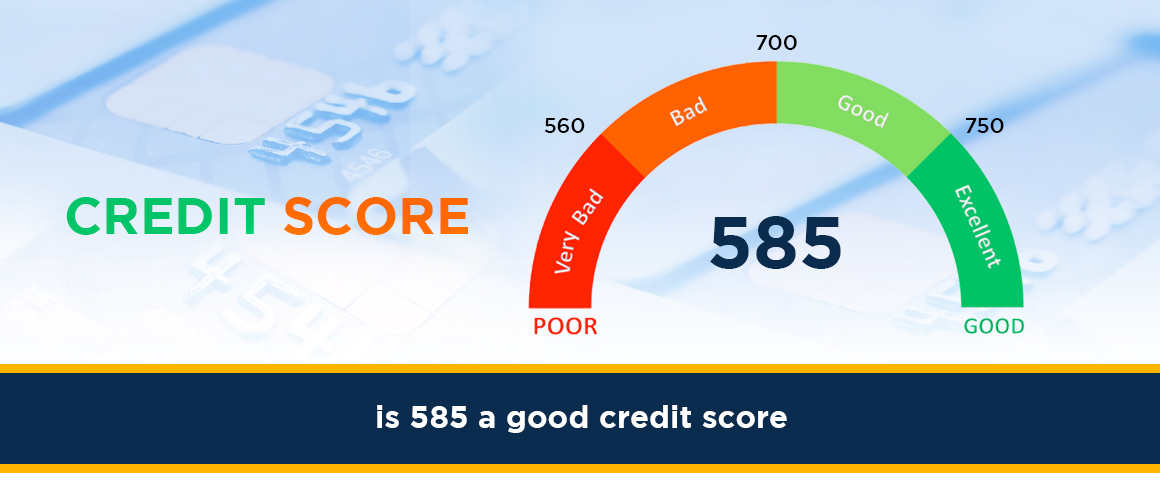
A 585 score is generally considered to be on the lower end of the spectrum. It suggests that you may have had some challenges in managing credit in the past, or that your credit history is relatively thin. Lenders interpret this score as an indication of a higher risk of default, meaning there's a greater chance you might not repay borrowed money as agreed.
It's important to note that credit scoring models are dynamic and can be updated. However, the fundamental principles of what constitutes a good or bad score remain consistent. A 585 score, regardless of the specific model, signals a need for attention and strategic improvement to unlock better financial opportunities.
Credit Score Ranges and What They Mean
Credit scores are typically presented on a scale, and different ranges are associated with varying levels of creditworthiness. While the exact ranges can differ slightly between FICO and VantageScore, and even between different versions of these models, there's a general consensus on what each tier represents. Understanding these ranges is crucial for interpreting your 585 score.
FICO Score Ranges (Commonly Used)
The FICO score is the most widely used credit scoring model. Its ranges generally look like this:
- Excellent: 800-850
- Very Good: 740-799
- Good: 670-739
- Fair: 580-669
- Poor: 300-579
VantageScore Ranges (An Alternative Model)
VantageScore, developed by the three major credit bureaus (Equifax, Experian, and TransUnion), offers a slightly different categorization:
- Excellent: 781-850
- Good: 661-780
- Fair: 601-660
- Poor: 500-600
- Very Poor: 300-499
As you can see, a 585 credit score typically falls into the "Fair" category for FICO scores and the "Poor" category for VantageScore. This placement is significant because it directly impacts how lenders perceive your credit risk. Scores in these lower tiers often mean higher interest rates, larger down payment requirements, or outright denial of credit applications.
It's essential to check which scoring model your lender uses, but regardless of the specific model, a score around 585 indicates that you are not considered a prime borrower. The good news is that this is a score that can be improved with diligent effort and a solid understanding of credit management principles.
Is 585 a Good Credit Score? The Verdict
The direct answer to "Is 585 a good credit score?" is a resounding no. While it's not the absolute lowest score possible (which typically starts around 300), a 585 credit score is generally considered poor to fair, depending on the scoring model used. This score range suggests a higher risk for lenders, making it challenging to obtain favorable terms on financial products.
Lenders use credit scores to predict the likelihood of a borrower repaying debt. A score of 585 signals that there have been issues in the past that raise concerns about your ability to manage credit responsibly. This could include late payments, high credit utilization, or significant negative marks on your credit report.
For context, consider the typical approval rates and interest rates associated with different credit score ranges. Borrowers with scores above 740 (considered "Very Good" to "Excellent") often qualify for the best interest rates on mortgages, auto loans, and credit cards. Those with scores in the 670-739 range ("Good") can still access decent rates, though perhaps not the absolute lowest. However, with a 585 score, you are likely to face:
- Higher interest rates, significantly increasing the cost of borrowing.
- Larger down payment requirements for loans like mortgages or auto financing.
- Difficulty getting approved for new credit cards, especially those with rewards or premium benefits.
- Potential denial of applications for rental properties or even certain job positions that require a credit check.
Therefore, while a 585 score isn't the end of the world, it's a clear indicator that you are not in a strong financial position regarding your credit. It's a score that requires focused attention and a strategic plan for improvement to access better financial opportunities and reduce the cost of credit.
Why a 585 Credit Score is Considered Poor
A 585 credit score is considered poor primarily because it indicates a higher risk of default to lenders. This perception is built upon the factors that typically contribute to a score in this range. Lenders rely on credit scores as a predictive tool, and a 585 score suggests that past financial behaviors have demonstrated a potential for unreliability in meeting debt obligations.
Several common reasons can lead to a credit score of 585:
- Late or Missed Payments: This is often the most significant factor. Consistently paying bills late, even by a few days, can severely damage your credit score. Multiple late payments, especially those that are 30, 60, or 90 days past due, will drag your score down considerably.
- High Credit Utilization Ratio: This refers to the amount of credit you are using compared to your total available credit. If you're maxing out your credit cards or using a large percentage of your available credit limit (generally above 30%), lenders see this as a sign of financial distress and a higher risk.
- Length of Credit History: A short credit history means lenders have less data to assess your long-term credit management habits. While not directly a "poor" behavior, a lack of established positive history can result in a lower score.
- Credit Mix: Having only one type of credit (e.g., only credit cards) might not be as beneficial as having a mix of credit, such as credit cards and installment loans (like a car loan or mortgage), managed responsibly.
- New Credit Applications: Opening too many new credit accounts in a short period can negatively impact your score. Each application typically results in a "hard inquiry," which can slightly lower your score.
- Collections and Charge-offs: Accounts that have been sent to collections or charged off by the original creditor are serious negative marks that significantly lower your credit score.
- Public Records: Bankruptcies, judgments, and liens are severe negative events that can drastically reduce your credit score, often for many years.
When your score hovers around 585, it's a signal that one or more of these issues are likely present on your credit report. Lenders interpret this score as a red flag, indicating that you might be more likely to struggle with making payments on new credit. This is why approval rates decrease and interest rates increase for individuals with scores in this range.
Impact of a 585 Credit Score on Loan Applications
Having a 585 credit score can significantly impact your ability to obtain loans and other forms of credit. Lenders use your credit score as a primary indicator of your creditworthiness, and a score in this range typically places you in a higher-risk category. This means you'll likely face more hurdles and less favorable terms compared to individuals with higher credit scores.
Mortgage Loans
Securing a mortgage with a 585 credit score is challenging. Most conventional mortgage lenders prefer scores of 620 or higher. While some government-backed loans, like FHA loans, may allow lower scores (sometimes as low as 500 with a larger down payment), approval is not guaranteed and will come with stricter conditions. You can expect:
- Higher Interest Rates: If approved, your interest rate will be substantially higher, leading to much larger monthly payments and significantly more interest paid over the life of the loan.
- Larger Down Payments: Lenders may require a larger down payment to mitigate their risk.
- Private Mortgage Insurance (PMI): For conventional loans, you'll likely need to pay for PMI, which protects the lender if you default. This adds to your monthly housing cost. FHA loans have their own form of mortgage insurance.
Auto Loans
Getting approved for an auto loan with a 585 credit score is possible, but often through subprime lenders who specialize in working with borrowers with lower credit scores. The consequences include:
- Elevated Interest Rates: Auto loan interest rates for subprime borrowers can be exceptionally high, sometimes double-digit percentages. This means the car will cost you considerably more over time.
- Shorter Loan Terms: Lenders might offer shorter repayment periods to reduce their exposure, resulting in higher monthly payments.
- Limited Vehicle Choices: You might be restricted to older, less desirable vehicles, or lenders may require a co-signer.
Personal Loans
Personal loans are often used for debt consolidation, unexpected expenses, or home improvements. With a 585 score:
- Limited Approval Chances: Many mainstream lenders will deny applications with scores below 600-620.
- High Interest Rates: If approved by a subprime lender, expect very high Annual Percentage Rates (APRs), making the loan expensive.
- Shorter Repayment Terms: Similar to auto loans, shorter terms can lead to higher monthly payments.
Credit Cards
Securing a traditional rewards credit card or one with a low introductory APR will be difficult. Your options are likely to be:
- Secured Credit Cards: These require a cash deposit that acts as your credit limit. They are designed to help build credit but offer no rewards and typically have annual fees.
- Store Credit Cards: Some retail stores offer credit cards with more lenient approval requirements, but these often come with very high interest rates and low credit limits.
- Subprime Credit Cards: These cards are specifically for individuals with poor credit and often come with substantial fees (annual fees, processing fees) and very high interest rates.
In summary, a 585 credit score significantly restricts your access to credit and makes borrowing much more expensive. It highlights the urgency of taking steps to improve your score to qualify for better financial products and save money in the long run. For more information on specific loan types, you can explore resources on understanding different loan products.
Strategies to Improve a 585 Credit Score
Improving a 585 credit score requires a focused and consistent effort. The good news is that credit scores are dynamic and can be raised by addressing the underlying issues that led to the lower score. Here are key strategies to implement:
1. Pay All Bills On Time, Every Time
Payment history is the most critical factor in your credit score. Even a single late payment can have a significant negative impact. To improve:
- Set Up Auto-Pay: For all your bills (credit cards, loans, utilities, rent), set up automatic payments from your bank account to ensure you never miss a due date.
- Set Reminders: If auto-pay isn't feasible, set calendar reminders a few days before each bill is due.
- Pay at Least the Minimum: If you're struggling financially, always pay at least the minimum amount due by the deadline. It's better to pay late than not at all, though it still incurs penalties and can affect your score.
2. Reduce Your Credit Utilization Ratio
Your credit utilization ratio (CUR) is the amount of credit you're using compared to your total available credit. A CUR below 30% is generally recommended, but lower is even better (under 10% is ideal). To lower your CUR:
- Pay Down Balances: Focus on paying down the balances on your credit cards. Prioritize cards with the highest interest rates or highest utilization.
- Increase Credit Limits: Contact your credit card issuers and request a credit limit increase. If approved, this will lower your CUR without you spending more, provided you don't increase your spending.
- Avoid Maxing Out Cards: Never carry balances close to your credit limit.
3. Avoid Opening Unnecessary New Credit Accounts
While responsible use of new credit can help over time, applying for too much credit at once can hurt your score. Each application typically results in a hard inquiry, which can temporarily lower your score. Focus on managing your existing credit well before opening new accounts.
4. Dispute Errors on Your Credit Report
Mistakes can happen on credit reports. Incorrect information, such as late payments that were actually on time, accounts that aren't yours, or incorrect balances, can negatively affect your score. You have the right to dispute these errors with the credit bureaus (Equifax, Experian, TransUnion).
- Obtain Your Credit Reports: Get free copies of your credit reports from AnnualCreditReport.com.
- Review Carefully: Examine each report for any inaccuracies.
- File Disputes: If you find errors, file a dispute with the relevant credit bureau online, by mail, or by phone.
5. Keep Old, Unused Accounts Open (If They Have No Fees)
The length of your credit history matters. Closing an old credit card account, especially if it's your oldest account, can shorten your average credit history length and potentially increase your credit utilization ratio if it had a credit line. If the account has no annual fee and you don't use it, keep it open and perhaps make a small purchase occasionally to keep it active.
6. Consider a Secured Credit Card or Credit-Builder Loan
If you have limited credit history or significant negative marks, these products can be invaluable:
- Secured Credit Card: Requires a cash deposit that serves as your credit limit. Use it for small, everyday purchases and pay the balance in full each month.
- Credit-Builder Loan: The loan amount is held in an account while you make payments. Once the loan is repaid, you receive the funds, and your on-time payments are reported to credit bureaus.
Implementing these strategies consistently will help you gradually improve your 585 credit score. It's a marathon, not a sprint, and patience is key. For more detailed advice on credit repair, you might find resources on credit repair strategies helpful.
Understanding the Factors That Influence Your Credit Score
To effectively improve your credit score, it's essential to understand the components that contribute to it. Credit scoring models, like FICO and VantageScore, analyze various aspects of your credit behavior. While the exact weighting can vary, the core factors remain consistent across most models. Knowing these factors empowers you to focus your efforts on the areas that will yield the most significant improvements.
1. Payment History (Approximately 35% of FICO Score)
This is the most crucial factor. It reflects whether you pay your bills on time. Late payments, missed payments, defaults, and bankruptcies have a severe negative impact. Conversely, a consistent history of on-time payments builds a strong foundation for a good score.
Impact: High. Even one 30-day late payment can drop your score significantly, and multiple delinquencies or severe issues like collections can have a devastating effect.
2. Amounts Owed / Credit Utilization (Approximately 30% of FICO Score)
This factor looks at how much debt you carry, particularly on revolving credit accounts like credit cards. The key metric here is your credit utilization ratio (CUR), which is the amount of credit you're using divided by your total available credit. A high CUR indicates you might be overextended and poses a higher risk.
Impact: High. Keeping your CUR below 30% is important, but ideally, you should aim for below 10%. Maxing out credit cards can severely damage your score.
3. Length of Credit History (Approximately 15% of FICO Score)
This factor considers how long your credit accounts have been open and the average age of all your accounts. A longer credit history generally indicates more experience managing credit, which is viewed favorably by lenders.
Impact: Moderate. Older accounts, especially those managed well, contribute positively. Closing older accounts can shorten your average credit history and potentially lower your score.
4. Credit Mix (Approximately 10% of FICO Score)
This factor assesses the variety of credit you have. Lenders like to see that you can manage different types of credit responsibly, such as revolving credit (credit cards) and installment loans (mortgages, auto loans, personal loans). However, this factor is less impactful than payment history or utilization.
Impact: Low to Moderate. Having a mix can be beneficial, but it's not worth opening new loans just to improve your credit mix if you don't need them.
5. New Credit (Approximately 10% of FICO Score)
This factor considers how many new credit accounts you've opened recently and the number of hard inquiries on your credit report. Opening multiple new accounts in a short period can signal higher risk, as can numerous hard inquiries.
Impact: Low. While it has a smaller impact, opening too much credit at once can temporarily lower your score.
Understanding Your 585 Score in Context
With a 585 credit score, it's highly probable that your payment history and/or amounts owed are the primary contributors to this score. For instance, a history of late payments will significantly penalize the payment history component, while carrying high balances on credit cards will negatively impact the credit utilization aspect. It's crucial to obtain your credit reports from Equifax, Experian, and TransUnion to identify the specific issues affecting your score.
By understanding these factors, you can prioritize your efforts. Focusing on consistent on-time payments and reducing credit card balances will likely yield the most significant improvements for a 585 score. For more in-depth information on how these factors are calculated, you can refer to resources on credit score calculation.
Step-by-Step Guide to Raising Your Credit Score from 585
Improving your credit score from 585 is an achievable goal with a systematic approach. This guide breaks down the process into actionable steps, focusing on the most impactful strategies.
Step 1: Obtain and Review Your Credit Reports
Action: Visit AnnualCreditReport.com to request your free credit reports from Equifax, Experian, and TransUnion. This is the official source mandated by federal law.
Why: You need to understand exactly what is on your credit report. A 585 score is a symptom; your credit report details the cause. Look for late payments, high balances, collections, errors, or other negative information.
Timeline: Immediately.
Step 2: Identify and Dispute Errors
Action: Carefully examine each report for any inaccuracies. This includes incorrect personal information, accounts you don't recognize, incorrect payment statuses (e.g., a payment marked late when it was on time), or incorrect balances.
Why: Errors can unfairly lower your score. Removing them can provide an immediate boost. The Fair Credit Reporting Act (FCRA) gives you the right to dispute inaccuracies.
How: File disputes directly with the credit bureaus online, by mail, or by phone. Provide any supporting documentation you have.
Timeline: Within the first week of obtaining reports.
Step 3: Prioritize On-Time Payments
Action: Make sure every single bill is paid on or before its due date. This applies to credit cards, loans, rent, utilities, and any other recurring payments that might be reported to credit bureaus.
Why: Payment history is the most significant factor influencing your credit score. Consistent on-time payments are crucial for rebuilding trust with lenders.
How: Set up automatic payments, use calendar reminders, or pay bills as soon as they arrive. Even paying the minimum on time is better than missing a payment.
Timeline: Ongoing, starting immediately.
Step 4: Reduce Credit Card Balances (Lower Your Credit Utilization Ratio)
Action: Focus on paying down the balances on your credit cards. Aim to get your credit utilization ratio (CUR) below 30% on each card and overall. Ideally, aim for below 10%.
Why: High credit utilization is a major red flag for lenders and a significant drag on your score. Lowering it demonstrates responsible credit management.
How:
- Prioritize paying down cards with the highest utilization first (the "snowball" or "avalanche" method).
- If possible, request credit limit increases on existing cards. This can lower your CUR without you spending more, provided you don't increase your spending.
- Avoid making large purchases on credit cards while you're trying to pay down balances.
Timeline: Ongoing, with aggressive efforts in the first 3-6 months.
Step 5: Consider a Secured Credit Card or Credit-Builder Loan
Action: If your credit history is thin or severely damaged, consider opening a secured credit card or a credit-builder loan.
Why: These tools are specifically designed to help individuals with low scores build positive credit history. Responsible use will be reported to the credit bureaus.
How:
- Secured Card: Requires a cash deposit that acts as your credit limit. Use it for small, everyday purchases and pay the balance in full each month.
- Credit-Builder Loan: You make payments on a loan that's held in an account. Once repaid, you receive the funds, and your payment history is reported.
Timeline: After addressing immediate errors and payment issues, if needed.
Step 6: Be Patient and Consistent
Action: Understand that credit score improvement takes time. There are no quick fixes.
Why: Credit scoring models reward consistent, responsible behavior over months and years. Rapid score increases are rare and often temporary.
How: Stick to your payment plan, continue to manage your credit utilization, and avoid making impulsive credit decisions. Monitor your credit score regularly to track progress.
Timeline: Long-term commitment (6 months to 2 years for significant improvement).
By following these steps diligently, you can systematically improve your credit score from 585 to a much more favorable range, opening doors to better financial products and opportunities. For more detailed advice, you can explore resources on credit building strategies.
What Loans Can I Get with a 585 Credit Score?
Securing financing with a 585 credit score can be challenging, as it falls into the subprime category for most lenders. However, it's not impossible. Your options will likely be more limited, and the terms will be less favorable than for those with higher scores. It's crucial to understand what types of loans you might be able to qualify for and what to expect.
1. Secured Loans
Secured loans require collateral, which reduces the lender's risk. This makes them more accessible to borrowers with lower credit scores.
- Secured Auto Loans: If you're looking to finance a car, a secured auto loan is a possibility. The car itself serves as collateral. Expect higher interest rates and potentially a larger down payment requirement.
- Secured Personal Loans: These loans are backed by assets like savings accounts, certificates of deposit (CDs), or other valuable property. The collateral reduces the lender's risk, making approval more likely.
2. FHA Loans (for Homebuyers)
The Federal Housing Administration (FHA) insures loans made by FHA-approved lenders. FHA loans are designed to help low-to-moderate-income borrowers and those with less-than-perfect credit achieve homeownership.
- Minimum Credit Score: While the FHA's minimum score is technically 500 with a 10% down payment, most lenders require a score of at least 580 for this option. Some lenders may have higher internal requirements.
- Down Payment: You can potentially get an FHA loan with a down payment as low as 3.5% if your score is 580 or higher.
- Mortgage Insurance Premiums (MIP): FHA loans require both an upfront and annual MIP, which adds to the cost of the loan.
3. Credit-Builder Loans
These are small loans specifically designed to help individuals build or rebuild their credit history. The loan amount is typically held in an account by the lender and released to you after you've made all the payments. Your on-time payments are reported to the credit bureaus.
- Purpose: Primarily for credit building, not for large purchases.
- Accessibility: Often available from credit unions and some online lenders, with less stringent credit score requirements.
4. Secured Credit Cards
While not a loan, a secured credit card functions similarly to a traditional credit card but requires a cash deposit that typically equals your credit limit. This deposit mitigates the lender's risk.
- Purpose: To establish or re-establish a positive payment history.
- Usage: Use it for small, everyday expenses and pay the balance in full each month to report positive activity to the credit bureaus.
5. Loans from Subprime Lenders
There are lenders who specialize in providing loans to individuals with poor credit. These are often referred to as subprime lenders.
- Higher Interest Rates: Be prepared for significantly higher interest rates (APRs) compared to prime borrowers. This can make the loan very expensive over time.
- Shorter Loan Terms: Subprime loans may have shorter repayment periods, leading to higher monthly payments.
- Fees: Watch out for origination fees, processing fees, and other charges that can increase the overall cost of the loan.
What to Expect and How to Prepare
When applying for loans with a 585 credit score:
- Higher Costs: Expect higher interest rates and potentially more fees, increasing the total cost of borrowing.
- Larger Down Payments: Lenders may require a larger down payment to reduce their risk.
- Co-signer: Consider applying with a co-signer who has a good credit score. This can significantly improve your chances of approval and may help you secure better terms.
- Thorough Comparison Shopping: Don't accept the first offer you receive. Compare rates and terms from multiple lenders, including credit unions, online lenders, and those specializing in subprime loans.
It's essential to remember that while these options exist, the ultimate goal should be to improve your credit score. This will unlock access to a wider range of financial products with much more favorable terms. For guidance on improving your credit, refer to our section on strategies to improve your credit score.
Alternatives to Traditional Loans for Those with a 585 Score
If traditional loans are out of reach or come with prohibitively high costs due to a 585 credit score, exploring alternative financing options can be a viable strategy. These alternatives often focus on community resources, specific needs, or leveraging existing assets.
1. Borrowing from Friends or Family
Description: This is often the most accessible and affordable option if you have supportive friends or family members who are willing and able to lend you money.
Pros:
- Potentially no interest or very low interest rates.
- Flexible repayment terms.
- Faster approval process.
Cons:
- Can strain personal relationships if not managed professionally.
- Lack of formal reporting to credit bureaus means it won't help build credit.
Recommendation: If you pursue this, treat it like a formal loan. Put the terms in writing, including the loan amount, interest rate (if any), repayment schedule, and consequences of default. This protects both parties.
2. Credit Unions
Description: Credit unions are member-owned financial cooperatives that often have more flexible lending criteria and lower fees than traditional banks, especially for members.
Pros:
- Often more willing to work with members with lower credit scores.
- Lower interest rates and fees compared to banks and online lenders.
- Focus on member well-being.
Cons:
- You typically need to become a member by meeting certain eligibility requirements (e.g., living in a specific area, working for a certain employer).
- Loan options might be more limited than large banks.
Recommendation: If you're not already a member of a credit union, investigate local options. They can be a great resource for personal loans, auto loans, and even credit-builder loans.
3. Payday Loans and Cash Advance Apps (Use with Extreme Caution)
Description: Payday loans offer short-term, high-cost loans typically due on your next payday. Cash advance apps allow you to borrow small amounts against your next paycheck, often with a fee or subscription.
Pros:
- Very fast access to cash.
- Minimal credit checks (or none).
Cons:
- Extremely High Costs: APRs can be astronomically high (often 300-400% or more).
- Debt Trap: Easy to get caught in a cycle of borrowing to repay previous loans.
- Predatory Practices: Many payday lenders engage in aggressive collection tactics.
Recommendation: These should be considered an absolute last resort, only for true emergencies, and only if you are 100% certain you can repay the full amount on the due date. Explore all other options first.
4. Pawn Shop Loans
Description: You can get a loan by leaving a valuable item (like jewelry, electronics, or tools) as collateral at a pawn shop. You receive a loan based on the item's value and have a set period to repay the loan plus interest to reclaim your item.
Pros:
- No credit check required.
- Quick access to cash.
Cons:
- High interest rates and fees.
- Risk of losing your valuable item if you cannot repay the loan.
- Loan amounts are typically much lower than the item's actual value.
Recommendation: Only use this if you are certain you can repay the loan and are willing to risk losing the collateral.
5. Employer-Based Loans or Advances
Description: Some employers offer payroll advances or small loans to employees. This is becoming more common with the rise of earned wage access (EWA) apps.
Pros:
- Often low or no interest/fees.
- Conveniently deducted from your paycheck.
Cons:
- Availability depends entirely on your employer's policies.
- May not be suitable for larger loan amounts.
Recommendation: Check with your HR department to see if this is an option.
6. Community Assistance Programs
Description: Local non-profit organizations, charities, and government programs sometimes offer emergency financial assistance for specific needs, such as rent, utilities, or medical bills.
Pros:
- Often grants (no repayment required) or very low-interest loans.
- Designed to help those in immediate need.
Cons:
- Eligibility requirements can be strict.
- Funds may be limited.
- Application processes can take time.
Recommendation: Research local community action agencies, social services departments, or faith-based organizations in your area.
While these alternatives can provide much-needed funds, they often come with their own set of risks or limitations. The most sustainable solution is to work on improving your credit score. For guidance on this, refer to our section on strategies to improve your credit score.
The Role of Credit Monitoring in Score Improvement
Credit monitoring is an essential tool for anyone looking to improve their credit score, especially when starting from a score like 585. It provides visibility into your credit health, allowing you to track progress, identify issues, and make informed decisions. Here's how credit monitoring plays a crucial role:
1. Tracking Progress
How it helps: When you're actively working to improve your credit score, it's vital to see the results of your efforts. Credit monitoring services allow you to track your score over time. Seeing your score increase, even by a few points, can be a powerful motivator and confirm that your strategies are working.
Example: After consistently paying bills on time and reducing credit card balances for a few months, you might see your score tick up from 585 to 605. This positive reinforcement encourages you to continue your good habits.
2. Identifying and Correcting Errors
How it helps: Credit monitoring services often provide access to your full credit reports from one or more of the major bureaus. This allows you to regularly review your credit history for inaccuracies, such as incorrect late payment markers, accounts you don't recognize, or inaccurate personal information.
Example: You notice a collection account on your report that you believe has already been paid or is incorrect. Credit monitoring helps you spot this, prompting you to investigate and dispute the error with the credit bureau, potentially leading to its removal and a score increase.
3. Understanding Score Factors
How it helps: Many credit monitoring services offer tools that break down your credit score, explaining which factors are impacting it the most (e.g., payment history, credit utilization, length of credit history). This insight is invaluable for prioritizing your efforts.
Example: Your credit monitoring report might show that your credit utilization is very high, negatively impacting your score by 50 points. This immediately tells you that paying down credit card balances should be your top priority.
4. Staying Alert to Fraud and Identity Theft
How it helps: A 585 score might make you a target for certain types of fraud. Credit monitoring services often include alerts for significant changes to your credit report, such as new accounts opened in your name, large credit inquiries, or changes in your address. This can help you detect and respond to identity theft quickly.
Example: You receive an alert that a new credit card account has been opened in your name. By acting immediately, you can contact the lender, freeze your credit, and prevent further fraudulent activity.
5. Budgeting for Credit Improvement
How it helps: Some credit monitoring services are free, while others offer premium features for a monthly fee. Understanding the cost versus the benefit can help you budget for credit improvement. Free services often provide basic score tracking and credit report access, which can be sufficient for many.
Example: You might start with a free service from your bank or a credit card issuer to monitor your score and then consider a paid service if you need more detailed analysis or protection.
Where to Find Credit Monitoring
- Free Options: Many credit card issuers (like Discover, Capital One) and banks offer free credit score monitoring and access to credit reports through their online portals or mobile apps. Credit Karma and Credit Sesame also offer free services.
- Paid Services: Companies like Experian, Equifax, and TransUnion offer more comprehensive paid monitoring services that often include credit score simulators, identity theft insurance, and real-time alerts.
In essence, credit monitoring acts as your financial dashboard. It provides the necessary data and insights to navigate the path from a 585 credit score to a stronger financial future. Regularly checking your credit information is a fundamental habit for maintaining good credit health.
Long-Term Credit Health and Maintaining a Good Score
Improving your credit score from 585 is a significant achievement, but the journey doesn't end there. Maintaining good credit health and preventing your score from dropping again requires ongoing discipline and smart financial habits. This section outlines strategies for long-term credit success.
1. Continue Paying All Bills On Time
Why it matters: Payment history remains the most critical factor in your credit score. Even a single missed payment can cause your score to drop significantly, undoing months or years of hard work. Consistency is key.
Action: Maintain automatic payments for all your bills. If you change banks or payment methods, ensure your auto-pay settings are updated immediately. Regularly review your bank statements to confirm payments have been processed correctly.
2. Keep Credit Utilization Low
Why it matters: While your score has improved, keeping your credit utilization ratio low (ideally below 10-15%) continues to signal financial stability and responsible credit management to lenders. High utilization can still negatively impact your score.
Action: Avoid carrying balances close to your credit limits. If you receive a credit limit increase, resist the urge to spend more; instead, let it further reduce your utilization ratio. If you anticipate a large purchase, consider if you can pay for it outright or if a planned, manageable payment strategy is best.
3. Avoid Opening Too Many New Accounts Quickly
Why it matters: While responsible use of new credit can be beneficial over the long term, opening multiple new accounts in a short period can lower your average age of accounts and result in multiple hard inquiries, both of which can temporarily decrease your score.
Action: Only apply for credit when you genuinely need it. Space out applications over time. Before applying, research which lenders are most likely to approve you based on your current credit profile to minimize unnecessary inquiries.
4. Review Your Credit Reports Annually
Why it matters: Errors can reappear, or new fraudulent activity might occur. Regular review helps you catch these issues early, preventing them from significantly impacting your score.
Action: Use AnnualCreditReport.com to get your free credit reports from each bureau at least once a year. Many credit monitoring services also provide ongoing access to your reports and scores.
5. Manage Your Credit Mix Wisely
Why it matters: A healthy credit mix (credit cards and installment loans) can positively influence your score. However, don't open new accounts solely to improve your mix if you don't need them.
Action: Continue to manage any existing credit cards and installment loans responsibly. If you need a new loan (e.g., for a car or home), consider how it fits into your overall credit profile, but prioritize necessity and affordability.
6. Understand the Impact of Closing Accounts
Why it matters: Closing old credit card accounts can shorten your average credit history length and increase your credit utilization ratio if that account had a credit line. Both can negatively affect your score.
Action: Unless an account has a high annual fee that outweighs its benefits, consider keeping older, unused credit cards open. Make a small purchase on them periodically and pay it off immediately to keep them active.
7. Educate Yourself Continuously
Why it matters: The financial landscape and credit scoring models evolve. Staying informed about best practices for credit management is crucial.
Action: Read reputable financial blogs, consult resources from consumer protection agencies, and stay aware of changes in lending practices. Understanding how different financial decisions impact your credit will help you make better choices.
Maintaining a good credit score is about building and sustaining a pattern of responsible financial behavior. By integrating these long-term strategies into your financial life, you can enjoy the benefits of a strong credit profile for years to come. For more on this, explore our guide on building lasting credit health.
Conclusion: Your Path to Better Credit
In conclusion, a 585 credit score is generally considered poor to fair, signaling a need for improvement to access favorable financial opportunities. It indicates that lenders perceive a higher risk due to factors like late payments, high credit utilization, or a thin credit file. While this score presents challenges for obtaining loans and credit cards with competitive terms, it is by no means a permanent situation.
The key to transforming a 585 score lies in understanding the components of your credit report and implementing targeted strategies. Prioritizing on-time payments, diligently reducing credit card balances to lower your utilization ratio, and disputing any errors on your reports are the most impactful steps. For those with limited credit history, secured credit cards or credit-builder loans can provide a solid foundation for positive credit building.
Remember that improving your credit score is a marathon, not a sprint. Consistency, patience, and a commitment to responsible financial habits are paramount. By actively monitoring your credit, making informed decisions, and staying disciplined, you can systematically raise your score, unlock better loan terms, and achieve greater financial freedom. Your path to better credit starts today with informed action.
