Is 596 a Good Credit Score? A Comprehensive Guide
Understanding Credit Scores
Navigating the world of credit can feel complex, but understanding your credit score is fundamental to your financial well-being. This guide aims to demystify what a 596 credit score means and provide actionable strategies to improve it.
What is a Credit Score?
A credit score is a three-digit number that lenders use to assess your creditworthiness – essentially, how likely you are to repay borrowed money. It's a snapshot of your financial behavior, compiled from information in your credit reports. While various scoring models exist, the most common are FICO and VantageScore, both of which use similar underlying data. These scores range typically from 300 to 850, with higher numbers indicating lower risk to lenders.
Think of your credit score as your financial report card. It influences your ability to get approved for loans, credit cards, mortgages, and even affects insurance premiums, rental applications, and employment opportunities. A good credit score opens doors to better interest rates and more favorable terms, saving you significant money over time. Conversely, a lower score can mean higher costs, limited options, and outright rejection from financial products.
The Purpose of Credit Scoring
Credit scoring systems were developed to provide lenders with a standardized, objective way to evaluate risk. Before credit scoring, lenders relied more heavily on subjective assessments and personal relationships, which could be inconsistent and prone to bias. Credit scoring models use statistical algorithms to analyze vast amounts of data from credit reports, predicting the probability that a borrower will default on their obligations.
The primary goal of a credit score is to predict future credit behavior. By examining past credit management, lenders can make more informed decisions about extending credit. This benefits both lenders by reducing losses from defaults and borrowers by allowing access to credit based on demonstrated responsibility.
Who Uses Credit Scores?
The reach of credit scores extends far beyond traditional lenders. While banks, credit unions, and credit card companies are primary users, many other entities rely on credit scores for risk assessment:
- Mortgage Lenders: Crucial for determining loan approval and interest rates for home purchases.
- Auto Lenders: Affects the interest rate and loan terms for car financing.
- Credit Card Issuers: Dictates which cards you qualify for and your credit limit.
- Landlords: Often check credit scores to assess a tenant's reliability in paying rent.
- Insurance Companies: In many states, credit-based insurance scores are used to set premiums for auto and homeowners insurance.
- Utility Companies: May require a security deposit for services like electricity, gas, or phone if your credit score is low.
- Employers: Some employers, particularly in roles involving financial responsibility or security clearances, may review credit reports (with your permission).
The widespread use of credit scores underscores their importance in personal finance. A strong score can translate into tangible savings and greater financial flexibility.
How Credit Scores Are Calculated
Understanding the factors that influence your credit score is the first step toward improving it. While the exact algorithms are proprietary, both FICO and VantageScore consider similar categories of information from your credit report. These are weighted differently, but generally, the following components are key:
| Factor | Description | Importance |
|---|---|---|
| Payment History | Whether you pay your bills on time. This includes late payments, missed payments, bankruptcies, and collections. | Highly Important (approx. 35% of FICO score) |
| Amounts Owed (credit utilization) | The amount of credit you are using compared to your total available credit. Keeping this low is crucial. | Important (approx. 30% of FICO score) |
| Length of Credit History | The age of your oldest account, the age of your newest account, and the average age of all your accounts. A longer history is generally better. | Moderately Important (approx. 15% of FICO score) |
| Credit Mix | Having a mix of different types of credit (e.g., credit cards, installment loans like mortgages or auto loans) can be beneficial. | Less Important (approx. 10% of FICO score) |
| New Credit | How often you open new accounts and the number of credit inquiries. Opening too many accounts in a short period can negatively impact your score. | Less Important (approx. 10% of FICO score) |
Payment History: The Cornerstone
This is the single most significant factor. Consistently paying your bills on time, every time, is paramount. Even a single 30-day late payment can lower your score, and multiple delinquencies or defaults can have a devastating impact. Lenders want to see a track record of responsible repayment.
Credit Utilization Ratio: Your Spending Impact
This refers to the amount of revolving credit you're using compared to your total available revolving credit. For example, if you have a credit card with a $1,000 limit and a $500 balance, your utilization ratio is 50%. Experts recommend keeping this ratio below 30%, and ideally below 10%, for the best results. High utilization suggests you might be overextended.
Length of Credit History: Time is a Factor
A longer credit history generally benefits your score. It provides lenders with more data points to assess your long-term financial behavior. This is why it's often advised not to close old, unused credit accounts, as they contribute to the average age of your accounts.
Credit Mix: Diversification Matters
Demonstrating you can manage different types of credit responsibly (e.g., credit cards, installment loans) can be a positive signal. However, this factor is less impactful than payment history or utilization. It's not advisable to open new accounts solely to improve your credit mix.
New Credit and Inquiries: Be Cautious
When you apply for new credit, lenders typically perform a "hard inquiry" on your credit report. Too many hard inquiries in a short period can suggest financial distress or increased risk, potentially lowering your score. While shopping for a mortgage or auto loan within a short timeframe (usually 14-45 days, depending on the scoring model) might be treated as a single inquiry for rate comparison purposes, opening multiple new credit cards quickly will likely have a negative impact.
Credit Score Ranges and What They Mean
Credit scores are grouped into categories that provide a general understanding of a consumer's credit risk. These ranges can vary slightly between FICO and VantageScore, but the general sentiment remains consistent. Understanding these tiers helps contextualize your 596 score.
| Score Range (FICO/VantageScore) | Category | Description |
|---|---|---|
| 800-850 | Exceptional / Excellent | Consumers with these scores are considered excellent risks. They typically qualify for the best interest rates and terms on loans and credit cards. |
| 740-799 | Very Good / Very Good | Strong credit history. Likely to qualify for most credit products with favorable terms. |
| 670-739 | Good / Good | Represents an average or slightly above-average borrower. Most lenders will approve credit, though rates may not be the absolute best. |
| 580-669 | Fair / Fair | Indicates some credit challenges. Approval for credit is possible but often comes with higher interest rates and stricter terms. Lenders may require a co-signer or larger down payment. |
| 300-579 | Poor / Poor | Significant credit problems. Difficulty obtaining credit. If approved, expect very high interest rates, significant fees, and strict terms. May require a security deposit for utilities or cell phone service. |
Understanding the "Fair" Category
Scores between 580 and 669 fall into the "Fair" category. This means you have a credit history that shows some signs of risk, but it's not necessarily dire. You might have had some late payments, higher credit utilization, or a shorter credit history. While you can still get approved for credit, the terms will likely be less favorable than for those with good or excellent scores.
The Threshold of Poor Credit
Scores below 580 are generally considered "Poor." This indicates substantial credit challenges. Lenders see borrowers in this range as high-risk, making it difficult to secure new credit. The impact of a score in this range is significant, affecting many aspects of financial life.
Is 596 a Good Credit Score?
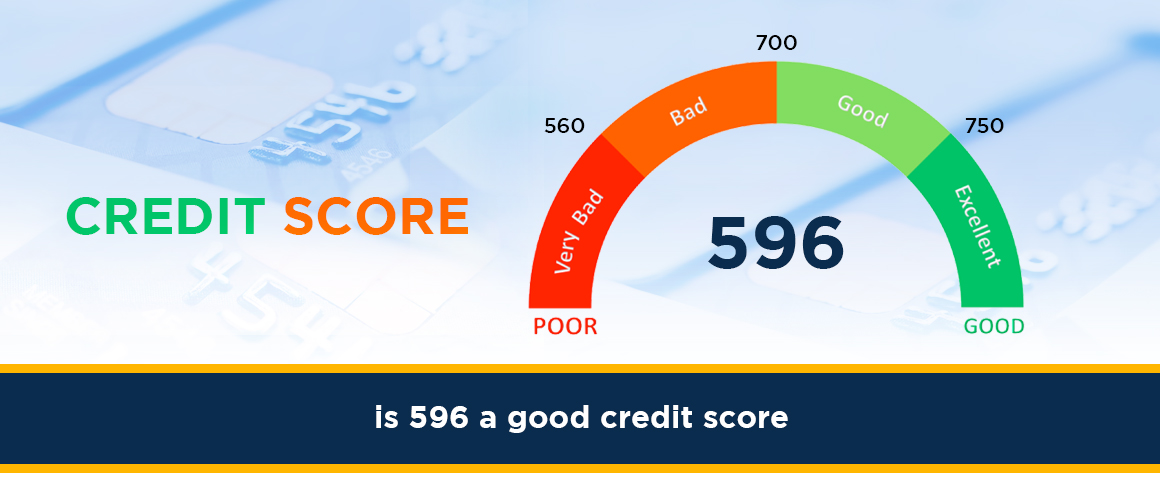
To directly answer your question: No, a credit score of 596 is generally not considered a good credit score. It falls within the "Fair" to "Poor" range, depending on the specific scoring model used and the lender's internal thresholds. For most lenders, a 596 score signals a higher level of risk.
While it's not in the absolute lowest tier (typically below 580), it's significantly below the average credit score in the United States, which hovers around 715-730 for FICO scores in 2025. A score of 596 indicates that you have likely encountered some credit challenges in the past, such as late payments, high credit card balances, or perhaps even collections or a past bankruptcy.
This score can make obtaining new credit difficult and will almost certainly result in higher interest rates and less favorable terms on any credit you are approved for. It's a score that requires attention and a strategic plan for improvement.
596 in Comparison to Averages
As mentioned, the average FICO score in the U.S. for 2025 is approximately 715-730. A 596 score is roughly 120-135 points below this average. This significant gap highlights how a 596 score is viewed by lenders as being in a riskier category. For context, the difference between a "Good" score (around 670) and an "Excellent" score (around 800) can mean a difference of several percentage points in an interest rate. The difference between "Fair/Poor" and "Good" is even more substantial.
Lender Perspectives on a 596 Score
Lenders use credit scores to predict the likelihood of default. A 596 score suggests a higher probability of default compared to scores in the "Good" or "Excellent" ranges. Consequently, lenders may:
- Deny your application outright.
- Approve your application but with a very high Annual Percentage Rate (APR).
- Require a larger down payment for loans (e.g., mortgages, auto loans).
- Demand a co-signer with a better credit history.
- Require a security deposit for services like utilities or cell phones.
- Offer lower credit limits on credit cards.
The perception of a 596 score is that while it might not be an absolute barrier to all credit, it represents a significant hurdle that will come with substantial financial costs.
Why 596 is Considered Poor
The designation of 596 as a poor or fair score stems directly from the factors that contribute to credit scoring. Scores in this range typically indicate one or more of the following issues:
History of Late or Missed Payments
This is the most common reason for a score in the 596 range. Even a few 30-day late payments, especially if they occurred recently, can significantly drag down a score. More severe delinquencies, such as 60-day or 90-day late payments, or even charge-offs (where the lender declares the debt uncollectible), will have a more profound negative impact. A score of 596 suggests that your payment history is not consistently on time.
High Credit Utilization Ratio
If you carry balances close to your credit limits on your credit cards, your credit utilization ratio will be high. For instance, if you have a $1,000 credit limit and a $900 balance, your utilization is 90%. This signals to lenders that you are heavily reliant on credit and may be struggling to manage your debt. Keeping utilization high for extended periods can significantly lower your score. A 596 score might be a result of consistently high balances on one or more credit cards.
Significant Negative Public Records
Public records like bankruptcies, foreclosures, liens, and judgments have a severe negative impact on credit scores. A score of 596 might indicate the presence of one or more of these, although a bankruptcy, for example, would typically push a score much lower unless it's several years in the past and other factors are improving. However, even less severe public records can contribute to a lower score.
Limited Credit History or Lack of Positive Activity
For some individuals, a 596 score might not be due to negative marks but rather a lack of positive ones. If you have a very short credit history or have only used credit sparingly without demonstrating consistent, responsible repayment over time, your score may not develop beyond the fair range. Lenders need to see a pattern of responsible credit management to assign a higher score.
Recent Credit Applications and Inquiries
While less impactful than payment history or utilization, a high number of recent hard inquiries can also contribute to a lower score. If you've applied for multiple credit products recently, this could have a minor negative effect, especially when combined with other issues.
Impact of a 596 Credit Score
A credit score of 596 can have a tangible and often frustrating impact on your financial life. It creates barriers to accessing affordable credit and can lead to higher costs for essential services.
Loan and Credit Card Approvals
Difficulty in Approval: Many mainstream lenders have minimum credit score requirements that are higher than 596. This means you may be denied applications for:
- Mortgages: While some FHA loans might be accessible with scores in the low 600s, a 596 score is likely too low for most conventional mortgages. If approved, expect significantly higher interest rates and private mortgage insurance (PMI) premiums.
- Auto Loans: Securing financing for a car will be challenging. If approved, the interest rates could be exceptionally high, making the total cost of the vehicle much greater.
- Personal Loans: Unsecured personal loans from traditional banks are often out of reach. You might have to look at lenders specializing in subprime borrowers, which come with higher rates.
- Credit Cards: Standard rewards credit cards or cards with attractive introductory offers will likely be denied. You'll probably only qualify for secured credit cards or cards designed for people with poor credit, often with high annual fees and low credit limits.
Interest Rates and Costs
This is where a 596 score hits your wallet the hardest. Even if you are approved for credit, the interest rates you'll be offered will be considerably higher than those offered to individuals with good credit.
Example: Consider a $20,000 auto loan over 60 months.
- Good Credit (7% APR): Monthly payment approx. $405. Total interest paid approx. $4,300.
- Fair/Poor Credit (15% APR): Monthly payment approx. $475. Total interest paid approx. $8,500.
In this example, a 596 score could cost you an additional $4,200 in interest over the life of the loan. This principle applies to mortgages, personal loans, and credit cards.
Other Financial Implications
Beyond loans and credit cards, a 596 score can affect other areas:
- Renting an Apartment: Landlords often check credit scores. A low score may lead to rejection or a requirement for a larger security deposit or a co-signer.
- Utility Services: Companies providing electricity, gas, water, or even cell phone service may require a security deposit if your credit score is low, as a safeguard against non-payment.
- Insurance Premiums: In many states, insurance companies use credit-based insurance scores to help determine premiums for auto and homeowners insurance. A lower score can lead to higher insurance costs.
- Employment: For certain positions, especially those involving financial responsibility or access to sensitive information, employers may review credit reports as part of the background check process. A low score could potentially impact hiring decisions.
The cumulative effect of these impacts means that a 596 credit score can create significant financial strain and limit opportunities.
How to Improve a 596 Credit Score
The good news is that a 596 credit score is not a permanent condition. With a focused and consistent effort, you can significantly improve your score over time. The key is to address the underlying issues that led to the score and to build a positive credit history. Here's a step-by-step guide:
Step 1: Understand Your Credit Report
Your credit score is a reflection of the information in your credit reports. Before you can improve your score, you need to know exactly what's on your reports.
- Obtain Your Credit Reports: You are entitled to a free copy of your credit report from each of the three major credit bureaus (Equifax, Experian, and TransUnion) once every 12 months through AnnualCreditReport.com. It's crucial to check all three, as they may contain slightly different information.
- Review for Errors: Carefully examine each report for any inaccuracies. This includes incorrect personal information, accounts you don't recognize, incorrect payment statuses (e.g., a paid account showing as delinquent), or outdated negative information that should have been removed.
- Identify Negative Marks: Note down all negative items, such as late payments, high balances, collections, judgments, liens, or bankruptcies. Understanding the specifics of these items is vital for creating an improvement plan.
Step 2: Address Negative Items
Once you've identified errors or negative items, take action.
- Dispute Errors: If you find any inaccuracies, dispute them with the credit bureau and the creditor that reported the information. Provide any supporting documentation you have. This process can take time, but correcting errors can lead to an immediate score increase.
- Handle Collections: If you have accounts in collections, it's generally best to address them. You can try to negotiate a "pay for delete" agreement, where the collection agency agrees to remove the item from your report in exchange for payment. However, not all agencies will agree to this. Even if they don't, paying off a collection account can sometimes help your score, especially if it's recent.
- Catch Up on Past Due Accounts: If you have accounts that are currently past due, bring them current as quickly as possible. The sooner you do this, the less impact it will have on your score going forward.
Step 3: Manage Credit Responsibly
This is the core of improving your credit score. It involves consistent, positive financial behavior.
- Pay All Bills On Time: This cannot be stressed enough. Set up automatic payments or reminders for all your bills – credit cards, loans, utilities, rent, etc. Payment history is the most significant factor in your credit score.
- Reduce Credit Utilization: Aim to keep your credit utilization ratio below 30%, and ideally below 10%.
- Pay down existing credit card balances.
- Consider requesting a credit limit increase on existing cards (if your spending habits are under control), which can lower your utilization ratio even if your balance stays the same.
- Avoid maxing out your credit cards.
- Avoid New Debt: Until your score improves, refrain from taking on new, unnecessary debt. Focus on managing what you have responsibly.
Step 4: Build Positive Credit History
If your credit history is thin or contains too many negative marks, you need to actively build positive activity.
- Secured Credit Cards: These require a cash deposit that usually becomes your credit limit. They function like regular credit cards and are reported to the credit bureaus. Use it for small, everyday purchases and pay the balance in full each month.
- Credit-Builder Loans: These are small loans offered by some credit unions and banks. The loan amount is held in a savings account and released to you after you've paid off the loan. Your payments are reported to the credit bureaus.
- Authorized User: If you have a trusted friend or family member with excellent credit, they could add you as an authorized user to one of their credit cards. Their positive payment history on that account can then reflect on your credit report. Ensure they manage the account responsibly, as their negative activity could also impact you.
- Rent and Utility Reporting Services: Services like Experian Boost, UltraFICO, or RentReporters allow you to have your on-time rent and utility payments factored into your credit score. Check if these services are compatible with your credit scoring model.
Step 5: Monitor Your Progress
Credit improvement is a marathon, not a sprint.
- Regularly Check Your Credit Reports: Continue to obtain your free reports annually and monitor them for changes.
- Track Your Credit Score: Many credit card companies and financial institutions offer free credit score monitoring services. Use these to see how your efforts are impacting your score over time.
- Be Patient: It takes time for positive actions to reflect on your credit report and for your score to increase. Don't get discouraged by slow progress. Consistency is key.
Alternative Options with a 596 Score
While your primary goal should be to improve your credit score, you may need access to credit or financial products in the interim. Fortunately, there are options available for individuals with scores in the 596 range, though they typically come with higher costs or specific requirements.
Secured Credit Cards
As mentioned earlier, secured credit cards are designed for individuals with poor or limited credit history.
- How they work: You provide a refundable cash deposit to the credit card issuer, which typically becomes your credit limit. For example, a $300 deposit might get you a card with a $300 credit limit.
- Benefits: They function like regular credit cards, allowing you to make purchases and build a positive payment history. Most issuers report your payment activity to the major credit bureaus, which is crucial for score improvement.
- Considerations: Look for cards with low annual fees and ensure the issuer reports to all three credit bureaus. Use the card responsibly by making small purchases and paying the balance in full each month.
Credit-Builder Loans
These are specifically designed to help individuals build or rebuild credit.
- How they work: You apply for a small loan, but the funds are held in a locked savings account by the lender. You make regular payments on the loan, and these payments are reported to the credit bureaus. Once the loan is fully repaid, you receive the funds from the savings account.
- Benefits: They provide a structured way to demonstrate consistent repayment behavior. They can also help you save money simultaneously.
- Considerations: Interest rates can vary, so compare options. Ensure the lender reports to all three credit bureaus.
Co-signer Options
If you need to apply for a loan (like an auto loan or personal loan) and your score is a barrier, a co-signer with good credit might help.
- How they work: A co-signer agrees to be legally responsible for the debt if you fail to make payments. Their good credit history can help you get approved and potentially secure a better interest rate.
- Benefits: Opens doors to loans you might otherwise be denied. Can lead to lower interest rates.
- Considerations: This is a significant commitment for the co-signer. If you miss payments, it will negatively impact both your credit and their credit. Choose someone you trust implicitly and who understands the risks involved.
Rent-Reporting Services
Many people pay rent on time every month, but this positive behavior often isn't reflected in their credit score.
- How they work: Services like Experian Boost, RentReporters, or LevelCredit partner with landlords or property management companies to report your on-time rent payments to credit bureaus. Some services also report utility and telecom payments.
- Benefits: Can add a positive data point to your credit report, potentially boosting your score, especially if your credit file is thin.
- Considerations: Not all credit scoring models incorporate these payments equally. Some services may have fees associated with them. Ensure the service reports to the bureaus that matter most to your lenders.
Conclusion: Improving Your Credit from 596
A credit score of 596 is a clear signal that your credit profile needs attention. It falls into the "Fair" to "Poor" category, indicating a higher risk to lenders and potentially leading to higher costs and limited access to credit. However, this score is not a dead end; it's a call to action. By understanding the factors that influence your score – particularly payment history and credit utilization – and by implementing a strategic plan, you can systematically improve your creditworthiness.
The journey begins with obtaining and meticulously reviewing your credit reports to identify any errors or negative marks. Addressing these inaccuracies and negative items is paramount. Subsequently, focusing on consistent, on-time payments for all your financial obligations and diligently working to reduce your credit utilization ratio are the cornerstones of building a positive credit history. For those needing immediate credit access, options like secured credit cards and credit-builder loans offer pathways to demonstrate responsible credit management. Remember, patience and persistence are your greatest allies. Consistent positive financial behavior over time will undoubtedly lead to a stronger credit score, unlocking better financial opportunities and saving you money in the long run.
