Is 607 a Good Credit Score? Everything You Need to Know
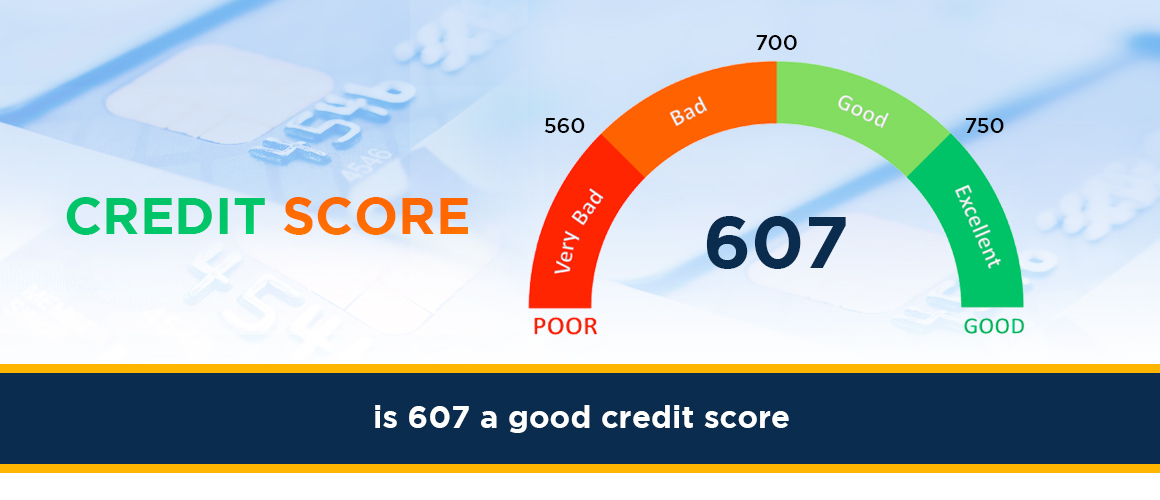
Is 607 a Good Credit Score? Everything You Need to Know
A credit score of 607 generally falls into the "fair" credit category. While not considered "good" or "excellent," it's not a score that automatically disqualifies you from all credit opportunities. Understanding what a 607 score signifies and how to improve it is crucial for achieving your financial goals.
Understanding a 607 Credit Score
Credit scores are numerical representations of your creditworthiness, essentially a snapshot of your financial behavior. Lenders use these scores to assess the risk involved in lending you money. The most widely used scoring models are FICO and VantageScore, and while they have slightly different methodologies, they generally categorize scores into similar ranges.
A score of 607 sits in a transitional zone. It indicates that you have had some credit activity, but there are likely areas where your credit management could be improved. It's a score that lenders will scrutinize carefully, and approval for loans or credit cards may come with higher interest rates or stricter terms compared to individuals with higher scores.
What is a Credit Score?
At its core, a credit score is a three-digit number calculated from your credit history. This history includes information from your credit reports, such as how you've managed credit accounts, your payment timeliness, the amount of debt you carry, and the length of your credit history. The goal of a credit score is to predict the likelihood that you will repay borrowed money.
The Role of Credit Bureaus
Three major credit bureaus in the United States collect and maintain credit information: Equifax, Experian, and TransUnion. These bureaus compile your credit history, and credit scoring companies (like FICO and VantageScore) use this data to generate your credit score. It's important to note that you can have slightly different scores from each bureau, and even between FICO and VantageScore, due to variations in the data they access and their scoring algorithms.
Why is Credit Score Important?
Your credit score is a powerful financial tool that impacts many aspects of your life. Beyond just loan approvals, it can influence:
- Loan Approvals: Whether you get approved for a mortgage, auto loan, personal loan, or credit card.
- Interest Rates: Higher scores typically qualify you for lower interest rates, saving you significant money over the life of a loan.
- Rental Applications: Landlords often check credit scores to assess a tenant's reliability in paying rent.
- Insurance Premiums: In many states, insurance companies use credit-based insurance scores to determine premiums for auto and homeowners insurance.
- Employment: Some employers, particularly in financial or security-sensitive roles, may review credit reports as part of the hiring process.
Credit Score Ranges: Where Does 607 Fit?
Understanding how a 607 score compares to the broader spectrum of credit scores is essential. While specific ranges can vary slightly between FICO and VantageScore, and even between different versions of their models, a general consensus exists for 2025.
FICO Score Ranges (General for 2025)
The FICO scoring model is the most widely used. Its ranges are typically categorized as follows:
- Exceptional: 800-850
- Very Good: 740-799
- Good: 670-739
- Fair: 580-669
- Poor: 300-579
Based on these general FICO ranges, a score of 607 falls squarely within the "Fair" category.
VantageScore Ranges (General for 2025)
VantageScore, a competitor to FICO, also uses a 300-850 scale and categorizes scores similarly:
- Excellent: 781-850
- Good: 661-780
- Fair: 601-660
- Poor: 500-600
According to VantageScore's typical ranges, a 607 score would be considered on the higher end of the "Fair" category, bordering on "Good." This highlights that even within different models, 607 is not in the top tiers.
What "Fair" Credit Means
Having a credit score in the "Fair" range (like 607) signifies that while you have a credit history, there are likely negative marks or insufficient positive activity that are preventing your score from reaching higher levels. This could include late payments, high credit utilization, a short credit history, or a limited credit mix.
For lenders, a "Fair" score indicates a moderate level of risk. You are more likely to be approved for credit than someone with a "Poor" score, but you will likely face less favorable terms. This means higher interest rates on loans and credit cards, potentially requiring larger down payments, or being offered lower credit limits.
Comparing 607 to Other Scores
To put 607 into perspective:
- Below 607: Scores in the "Poor" range (e.g., 550) signal a high risk to lenders. Approval for traditional credit products is difficult, and if granted, will come with very high interest rates and strict terms.
- Around 607: A 607 score is in the middle-to-lower end of the "Fair" spectrum. It's a score that requires careful consideration by lenders.
- Above 607 (e.g., 650-700): These scores move into the lower end of the "Good" category. You'll start to see more loan approvals and potentially slightly better interest rates than with a 607 score.
- Above 740: Scores in the "Very Good" to "Exceptional" ranges (e.g., 750+) indicate excellent creditworthiness. These individuals typically receive the best interest rates and the most favorable loan terms.
The difference between a "Fair" score and a "Good" score can translate into thousands of dollars saved on a mortgage or auto loan due to lower interest rates. Therefore, improving from a 607 score is a worthwhile endeavor.
Factors Influencing a 607 Credit Score
Several key factors contribute to your credit score. Understanding these components is the first step toward identifying why your score is 607 and how you can improve it. The most impactful factors, according to FICO's model, are:
1. Payment History (Most Important)
This is the single most critical factor, accounting for about 35% of your FICO score. It reflects whether you pay your bills on time. A 607 score often indicates a history of late payments, missed payments, or even defaults on past credit obligations.
- Late Payments: Even a single 30-day late payment can significantly lower your score. The longer the delay (60, 90 days or more), the more severe the impact.
- Collections: Accounts sent to collections due to non-payment are highly damaging.
- Bankruptcies and Foreclosures: These are severe negative marks that can remain on your report for seven to ten years.
2. Amounts Owed (Credit Utilization) (Second Most Important)
This factor, making up about 30% of your score, looks at how much credit you are using compared to your total available credit. This is known as your credit utilization ratio (CUR).
- High Credit Utilization: If your 607 score is due to high utilization, it means you're using a large percentage of your available credit limits. For example, if you have a credit card with a $1,000 limit and a balance of $800, your utilization is 80%. Experts recommend keeping your utilization below 30%, and ideally below 10%, across all your cards and on individual cards.
- High Balances: Carrying large balances on credit cards, even if paid on time, can signal to lenders that you might be overextended.
3. Length of Credit History (Third Most Important)
This accounts for about 15% of your score. It measures the age of your oldest account, the age of your newest account, and the average age of all your accounts. A longer credit history generally leads to a higher score, as it provides more data for lenders to assess your long-term financial behavior.
- Short Credit History: If you're new to credit or haven't used credit for long, your score might be lower simply because there isn't enough history to evaluate.
- Closing Old Accounts: While sometimes necessary, closing older, well-managed accounts can reduce the average age of your credit history.
4. Credit Mix (Fourth Most Important)
This factor, around 10% of your score, considers the different types of credit you manage. Having a mix of credit, such as revolving credit (credit cards) and installment loans (mortgages, auto loans, student loans), can be beneficial. However, this is less impactful than payment history or utilization.
- Limited Credit Mix: Primarily having only one type of credit (e.g., just credit cards) might slightly lower your score if other factors are neutral.
- Too Many Different Types: Conversely, opening too many different types of credit accounts in a short period can also be detrimental.
5. New Credit (Fifth Most Important)
This accounts for about 10% of your score and relates to how often you apply for and open new credit accounts. Applying for multiple credit accounts in a short timeframe can lead to multiple "hard inquiries" on your credit report, which can temporarily lower your score.
- Frequent Applications: Opening several new credit cards or loans within a few months can signal increased risk.
- New Accounts: Having many recently opened accounts can also lower the average age of your credit history.
Common Reasons for a 607 Score
Given these factors, a 607 score commonly arises from a combination of:
- One or more late payments in the past 1-2 years.
- Credit utilization consistently above 30%.
- A relatively short credit history (less than 5 years of active credit).
- Having accounts in collections, even if they are older.
- A recent spree of credit applications.
Identifying which of these factors are most prominent in your credit report is the crucial first step to developing an effective improvement plan. You can obtain a free copy of your credit report from each of the three major bureaus annually at AnnualCreditReport.com.
The Real-World Impact of a 607 Credit Score
A credit score of 607, while not dire, does present tangible challenges in the financial world. Lenders view this score as indicating a moderate risk, which translates into specific consequences for individuals seeking credit or financial services.
Mortgage and Home Buying
Securing a mortgage with a 607 credit score can be difficult. Most conventional mortgage lenders prefer scores of 620 or higher. While some FHA (Federal Housing Administration) loans might be accessible with scores in the low 600s, the terms will likely be less favorable.
- Higher Interest Rates: Even if approved, you'll likely face significantly higher interest rates compared to borrowers with good credit. Over the 30-year term of a mortgage, this can amount to tens of thousands of dollars in extra interest paid.
- Larger Down Payments: Lenders may require a larger down payment to mitigate their risk.
- Stricter Underwriting: Expect more scrutiny of your income, employment history, and overall financial stability.
- Limited Lender Options: You may be restricted to lenders who specialize in subprime or "fair" credit mortgages, which often come with higher fees and less flexibility.
For example, a borrower with a 740 credit score might qualify for a 6.5% interest rate on a $300,000 mortgage, while a borrower with a 607 score might be offered 8.5%. This difference translates to monthly payments that are hundreds of dollars higher and tens of thousands of dollars more in interest paid over 30 years.
Auto Loans
Getting approved for an auto loan with a 607 score is more feasible than a mortgage, but the cost will be higher.
- Higher APRs: Interest rates on auto loans for borrowers with fair credit can be substantially higher than for those with good credit. This increases the overall cost of the vehicle.
- Shorter Loan Terms: Lenders might offer shorter loan terms, which results in higher monthly payments, even if the interest rate is slightly lower.
- Limited Vehicle Choices: You might be limited to older or less desirable vehicles, as lenders may be hesitant to finance newer, more expensive models.
- Down Payment Requirements: A down payment may be required, especially for newer or more expensive vehicles.
Credit Cards
Securing traditional, high-reward credit cards will be challenging with a 607 score. However, there are options:
- Secured Credit Cards: These cards require a cash deposit that typically equals your credit limit. They are designed for individuals with poor or fair credit and are an excellent tool for rebuilding credit.
- Store Credit Cards: Retail store credit cards are often easier to obtain but typically come with very high interest rates and low credit limits.
- Subprime Credit Cards: Some issuers offer cards specifically for those with fair credit. These may have annual fees, high APRs, and lower credit limits.
The primary benefit of these cards is the opportunity to demonstrate responsible credit usage, which can help improve your score over time. Always aim to pay balances in full to avoid accumulating high-interest debt.
Personal Loans
Personal loans are often used for debt consolidation, unexpected expenses, or major purchases. With a 607 score:
- Limited Approval Odds: Approval for personal loans from traditional banks will be difficult.
- Higher Interest Rates: If approved by online lenders or credit unions that cater to fair credit, expect interest rates to be significantly higher than prime borrowers.
- Shorter Repayment Terms: Loan terms might be shorter, leading to higher monthly payments.
Renting an Apartment
Many landlords use credit scores to screen potential tenants. A 607 score might be borderline for some rental properties.
- Rejection: Some landlords have strict minimum score requirements (e.g., 650 or 700) and may reject your application outright.
- Co-signer Requirement: You may be asked to have a co-signer with a stronger credit history to guarantee the rent payments.
- Larger Security Deposit: Landlords might require a larger security deposit to offset their perceived risk.
Insurance Premiums
In many states, insurance companies use credit-based insurance scores to set premiums for auto and homeowners insurance. A lower credit score like 607 can lead to higher insurance costs.
- Higher Premiums: You might pay more for insurance than someone with a higher credit score, even with a clean driving or claims record.
- Limited Insurer Choice: Some insurers may be less willing to offer policies to individuals with lower credit-based insurance scores.
The impact of a 607 credit score is clear: it makes accessing credit and financial services more expensive and challenging. The key takeaway is that this score is not a permanent barrier, but it necessitates a strategic approach to improvement.
Strategies to Improve a 607 Credit Score
Improving a 607 credit score requires consistent effort and a focus on the key factors that influence creditworthiness. The good news is that by implementing the right strategies, you can see positive changes over time. Here’s a comprehensive plan:
1. Pay All Bills On Time, Every Time
As payment history is the most significant factor, making on-time payments is paramount. This applies to credit cards, loans, utility bills, and any other recurring payments that might be reported to credit bureaus.
- Set Up Automatic Payments: Automate payments for at least the minimum amount due to avoid late fees and negative marks.
- Use Payment Reminders: Utilize calendar alerts or budgeting apps to remind you of upcoming due dates.
- Catch Up on Past Due Accounts: If you have any past-due accounts, prioritize bringing them current immediately.
2. Reduce Your Credit Utilization Ratio (CUR)
Lowering the amount of credit you're using relative to your limits is crucial. Aim to keep your CUR below 30%, and ideally below 10%.
- Pay Down Balances: Focus on paying down balances on your credit cards, especially those with high utilization. Prioritize cards with the highest interest rates or highest utilization first.
- Request Credit Limit Increases: If you have a good payment history with a particular card issuer, you might be able to request a credit limit increase. This can lower your CUR without you spending more, provided you don't increase your spending.
- Avoid Maxing Out Cards: Never max out your credit cards. Even if you pay them off each month, high utilization can be reported to the bureaus before your statement closing date.
3. Address Negative Marks on Your Credit Report
Identify and address any errors or negative items on your credit report.
- Review Your Credit Reports: Obtain free copies of your credit reports from Equifax, Experian, and TransUnion at AnnualCreditReport.com.
- Dispute Errors: If you find any inaccuracies (e.g., accounts that aren't yours, incorrect late payment dates), dispute them with the credit bureau.
- Negotiate with Creditors: For older, delinquent accounts, you might be able to negotiate a settlement with the creditor or collection agency. A "pay for delete" agreement, where the creditor agrees to remove the negative mark in exchange for payment, can be beneficial, though not always guaranteed.
4. Build a Longer Credit History
While you can't speed up time, you can take steps to ensure your existing credit history ages positively.
- Keep Old Accounts Open: If you have older credit accounts in good standing, try to keep them open, even if you use them infrequently. This contributes to a longer average account age.
- Use Credit Responsibly: For newer accounts, focus on consistent, on-time payments and low utilization to build a positive history.
5. Diversify Your Credit Mix (Cautiously)
If your credit report shows only one type of credit (e.g., only credit cards), consider opening a different type of credit, such as a small installment loan, once you've stabilized your finances. However, do this cautiously and only if it makes sense for your financial needs, as applying for new credit can temporarily lower your score.
6. Consider a Secured Credit Card
If you're struggling to get approved for traditional credit, a secured credit card is an excellent tool.
- How it Works: You provide a cash deposit (e.g., $200-$500), which becomes your credit limit.
- Benefits: Responsible use (on-time payments, low utilization) is reported to credit bureaus, helping to build or rebuild your credit score.
- Transition: After 6-12 months of responsible use, many issuers will review your account and may refund your deposit, potentially converting the card to an unsecured one.
For example, after consistently using a secured card with a $300 limit and keeping the balance below $30, and making all payments on time for a year, your credit score can see significant improvement.
7. Become an Authorized User (Use with Caution)
If you have a trusted friend or family member with excellent credit, they could add you as an authorized user on one of their credit cards. Their positive payment history and low utilization on that account could then appear on your credit report, potentially boosting your score. However, if they miss payments or have high utilization, it could negatively impact your score.
8. Avoid Opening Too Many New Accounts Quickly
While new credit can help diversify your mix, opening multiple accounts in a short period can lead to several hard inquiries and lower your average account age, both of which can hurt your score. Space out any new credit applications.
9. Monitor Your Progress
Regularly check your credit reports and scores to track your progress. Many credit card issuers and financial institutions offer free credit score monitoring services.
Improving a 607 credit score is a marathon, not a sprint. It requires discipline and patience. By focusing on these actionable steps, you can systematically raise your score and unlock better financial opportunities.
Alternatives When a 607 Score is a Hurdle
If your 607 credit score is preventing you from accessing the loans or credit you need, don't despair. Several alternatives can help you meet your financial needs while you work on improving your creditworthiness.
1. Secured Loans
Unlike unsecured loans (like most personal loans and credit cards), secured loans require collateral. This reduces the lender's risk, making them more accessible to individuals with fair credit.
- Secured Personal Loans: You can use assets like a savings account, CD, or even a vehicle as collateral. The loan amount is typically a percentage of the collateral's value.
- Home Equity Loans/Lines of Credit (HELOCs): If you own a home with equity, you can borrow against it. However, be aware that your home is at risk if you default.
- Auto Title Loans: While technically an option, these are extremely high-interest loans and should be considered a last resort due to their predatory nature and high risk of repossession.
2. Credit Unions
Credit unions are member-owned financial cooperatives. They often have more flexible lending criteria than traditional banks and may be more willing to work with members who have fair credit.
- Personalized Service: Credit unions often take a more holistic view of a member's financial situation rather than relying solely on a credit score.
- Share-Secured Loans: Similar to secured credit cards, you can borrow against the money you have deposited in your savings account at the credit union.
- Credit Builder Loans: Some credit unions offer specific loans designed to help members build or rebuild credit. The loan amount is deposited into a savings account, and you make payments on it. Once the loan is repaid, you receive the funds.
3. Co-signer or Guarantor
If you have a friend or family member with excellent credit who is willing to co-sign for a loan, this can significantly increase your chances of approval and may even secure you a lower interest rate.
- Responsibility: The co-signer is legally obligated to repay the loan if you fail to do so. This is a significant responsibility and can strain relationships if not managed carefully.
- Impact on Co-signer's Credit: Missed payments on the loan will negatively affect both your credit score and your co-signer's.
4. Peer-to-Peer (P2P) Lending Platforms
Platforms like LendingClub and Prosper connect borrowers directly with individual investors. While they still assess creditworthiness, some platforms may offer options for borrowers with fair credit.
- Varying Criteria: Approval criteria can vary significantly between platforms.
- Potentially Higher Rates: Interest rates may still be higher than for borrowers with excellent credit.
5. Borrowing from Friends or Family
This can be a viable option for smaller amounts, but it's crucial to treat it formally.
- Formal Agreement: Draft a clear, written agreement outlining the loan amount, repayment schedule, interest (if any), and consequences of default.
- Maintain Trust: Stick to the agreed-upon terms to preserve the relationship.
6. Negotiate Terms with Existing Creditors
If you need to make a large purchase or consolidate debt, explore options with your current credit card companies or lenders. Sometimes, they may offer hardship programs or balance transfer options that could be more accessible than applying for new credit.
7. Rent-to-Own Programs
For larger purchases like furniture or appliances, rent-to-own can be an alternative to financing. However, these programs typically come with significantly higher overall costs than traditional financing or purchasing outright.
8. Build Emergency Savings
For unexpected expenses, having an emergency fund is the best defense. While it doesn't provide immediate cash for a large purchase, it prevents you from needing to take out high-interest loans when emergencies arise. Aim to save 3-6 months of living expenses.
When exploring these alternatives, always read the fine print carefully, understand all fees and interest rates, and assess the risk involved. The goal is to meet your immediate needs while continuing to work on improving your credit score so you can access more favorable traditional credit options in the future.
Building Long-Term Credit Health
Improving your credit score from 607 to a more favorable range is an ongoing process that extends beyond immediate fixes. Building long-term credit health ensures financial stability and opens doors to better opportunities throughout your life. It's about establishing and maintaining responsible financial habits.
1. Consistent On-Time Payments
This cannot be stressed enough. The foundation of good credit is a consistent record of paying all your obligations on time. Make this a non-negotiable habit. Even a single late payment can undo months or years of positive progress.
2. Maintain Low Credit Utilization
Aim to keep your credit utilization ratio consistently low, ideally below 10%. This demonstrates that you are not over-reliant on credit and can manage your finances responsibly. Regularly review your credit card balances and pay them down proactively.
3. Monitor Your Credit Reports Regularly
Make it a habit to check your credit reports at least annually from each of the three major bureaus. This allows you to:
- Catch fraudulent activity early.
- Identify and dispute any errors promptly.
- Track your progress as you implement credit-improvement strategies.
- Stay informed about the overall health of your credit profile.
4. Build a Diverse Credit Mix (Strategically)
As your credit history grows and your score improves, consider strategically adding different types of credit if it aligns with your financial goals. This could include a mix of revolving credit (credit cards) and installment loans (mortgage, auto loan, personal loan). However, avoid opening new accounts solely for the sake of credit mix if you don't need them, as this can lead to unnecessary debt and hard inquiries.
5. Keep Old, Positive Accounts Open
The length of your credit history is a significant factor. Older accounts, especially those with a positive payment history, contribute positively to your credit score by increasing the average age of your accounts. Unless there's a compelling reason (like a high annual fee you can't justify), consider keeping these accounts open and perhaps using them for small, recurring purchases that you pay off immediately.
6. Avoid Unnecessary Credit Applications
Each time you apply for new credit, a hard inquiry is typically placed on your credit report, which can temporarily lower your score. Only apply for credit when you genuinely need it and are likely to be approved. Avoid applying for multiple credit cards or loans in a short period.
7. Educate Yourself Continuously
The financial landscape is always evolving. Stay informed about credit scoring models, lending practices, and personal finance strategies. Resources like reputable financial blogs, government consumer protection websites, and non-profit credit counseling agencies can be invaluable.
8. Set Financial Goals
Having clear financial goals, such as buying a home, purchasing a new car, or saving for retirement, provides motivation to maintain good credit. Understanding how your credit score impacts your ability to achieve these goals can be a powerful driver for consistent good financial behavior.
9. Build an Emergency Fund
A robust emergency fund is crucial for long-term financial health. It prevents you from relying on high-interest credit cards or loans when unexpected expenses arise, such as medical bills, job loss, or car repairs. This stability reduces financial stress and protects your credit score from damage caused by financial emergencies.
10. Consider Professional Guidance
If you're struggling to manage your debt or improve your credit score, consider consulting with a non-profit credit counseling agency. These organizations can offer personalized advice, help you create a budget, and potentially set up a debt management plan. Be wary of for-profit credit repair companies that make unrealistic promises.
Building and maintaining strong credit health is a continuous journey. By adopting responsible financial habits and staying informed, you can ensure your credit score remains a valuable asset that supports your financial aspirations rather than hindering them.
In conclusion, a credit score of 607 is considered "fair." While it signifies that you have had credit activity, it also indicates areas for improvement. This score can lead to higher interest rates, stricter loan terms, and potential challenges in obtaining credit, renting, or even securing insurance. However, by diligently focusing on consistent on-time payments, reducing credit utilization, and monitoring your credit reports, you can significantly improve your score. Exploring alternatives like secured loans or credit unions can provide necessary financial tools while you rebuild. Ultimately, long-term credit health is achieved through sustained responsible financial behavior, making your credit score a powerful ally in achieving your financial goals.
