Is 619 a Good Credit Score? Understanding Its Impact on Your Financial Health
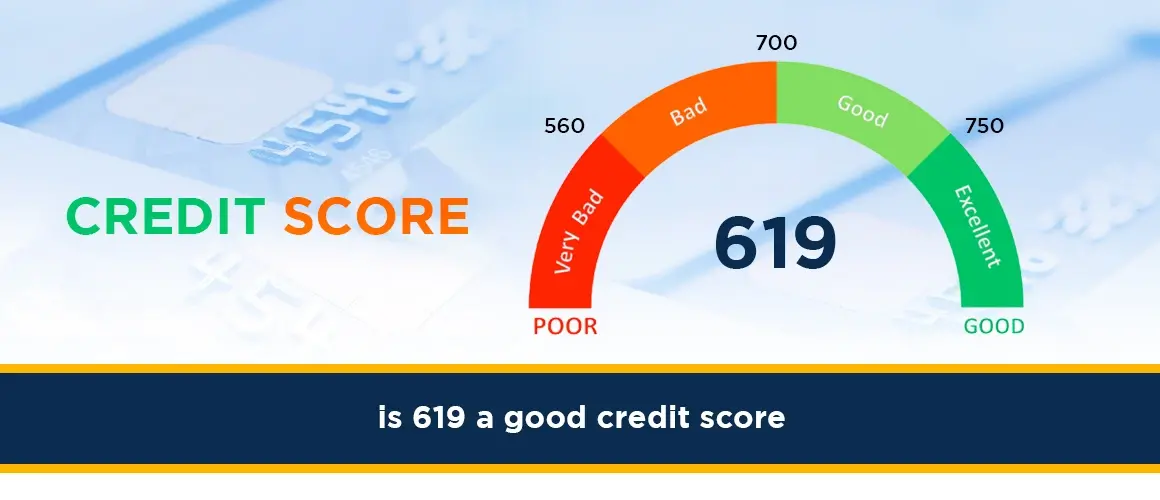
A credit score of 619 sits in the "fair" category, presenting both opportunities and challenges. While not ideal, it's a score that can be improved with strategic financial management, potentially unlocking better loan terms and financial products. This guide will delve into what a 619 credit score means for your financial health in 2025.
What is a 619 Credit Score? Understanding the Tiers
Understanding your credit score is fundamental to navigating the financial landscape. Credit scores are numerical representations of your creditworthiness, calculated by credit bureaus based on your credit history. These scores are crucial for lenders to assess the risk associated with lending you money. While there are various scoring models, the most widely used are FICO and VantageScore. Both models categorize scores into ranges, with 619 typically falling into the "fair" or "average" bracket. This means that while you're not in the "poor" category, you're also not yet in the "good" or "excellent" tiers that offer the most advantageous financial terms. A 619 score indicates that you have some positive credit history, but also some negative marks or a limited credit history that prevents you from being considered a low-risk borrower. It's a score that signals to lenders that there's a moderate risk involved in extending credit, and they may compensate for this by charging higher interest rates or imposing stricter terms.
Is 619 a Good Credit Score in 2025? The Nuances
In 2025, a credit score of 619 is generally considered to be in the "fair" credit range. This is a critical distinction. It's not "bad," which typically starts below 580, but it's also not "good," which usually begins around 670. The term "good" is subjective and depends heavily on the context. For some lenders and for certain financial products, a 619 might be just enough to get approved, albeit with less favorable terms. For others, particularly those seeking prime interest rates on mortgages or auto loans, a 619 score will likely result in denial or significantly higher costs. The financial industry uses these scores to segment borrowers into risk categories. A 619 score places you in a middle ground, where lenders see potential but also a history that warrants caution. This means that while you might be able to access some credit, the cost of that credit will likely be higher than for someone with a score in the 700s or above. It's a score that signals room for improvement and a need to actively manage your credit habits to unlock better financial opportunities.
The Real-World Impact of a 619 Credit Score
A credit score of 619 can have a tangible impact on your daily financial life and your ability to achieve significant financial goals. It's not just an abstract number; it influences the terms you'll receive on loans, the interest rates you pay, and even your ability to secure housing or essential services. Understanding these impacts is the first step toward improving your financial standing.
Loan Approvals and Interest Rates
One of the most significant impacts of a 619 credit score is on loan approvals and, crucially, the interest rates you'll be offered. For major loans like mortgages or auto loans, a 619 score often falls below the threshold for prime borrowers. This means you might face higher interest rates, which can significantly increase the total cost of your loan over its lifetime. For instance, a mortgage with a 619 score could carry an interest rate that is 1-2 percentage points higher than for someone with a score of 740 or above. Over 30 years, this difference can amount to tens of thousands of dollars in extra interest payments. In some cases, lenders might outright deny your application, or they may require a larger down payment or a co-signer to mitigate their risk. The same applies to personal loans; while approval might be possible, the interest rates will likely be substantial, making borrowing less attractive and more expensive. The Federal Reserve's interest rate policies in 2025 also play a role; when overall rates are high, borrowers with fair credit scores feel the pinch even more acutely.
Example Auto Loan Scenario
Consider two individuals seeking to finance a $25,000 car loan for 60 months.
- Borrower A (Credit Score: 740+): Might qualify for an interest rate of 5.5%. Monthly payment: approximately $483. Total interest paid: $3,000.
- Borrower B (Credit Score: 619): Might qualify for an interest rate of 9.5%. Monthly payment: approximately $527. Total interest paid: $6,620.
Credit Card Options
When it comes to credit cards, a 619 score generally limits your options to cards designed for individuals with fair credit. You're unlikely to qualify for premium rewards cards or those with the lowest introductory APRs. Instead, you'll likely be offered cards with:
- Higher Annual Percentage Rates (APRs): Expect APRs to be significantly higher than those offered to individuals with good or excellent credit, often in the mid-to-high 20s or even 30s.
- Lower Credit Limits: Lenders are more conservative with borrowers in this range, so initial credit limits may be modest, perhaps a few hundred to a couple of thousand dollars.
- Potential Annual Fees: Some cards for fair credit may charge an annual fee, adding to the cost of using the card.
- Fewer Rewards and Benefits: These cards typically do not offer lucrative rewards programs, travel perks, or extensive purchase protections.
Renting an Apartment
Landlords and property managers often review credit reports as part of the tenant screening process. A credit score of 619 might be considered borderline by some landlords. While many will approve tenants with scores in this range, you might encounter:
- Stricter Screening: Some landlords may have a minimum credit score requirement that a 619 falls just short of.
- Higher Security Deposits: If approved, you might be asked to pay a larger security deposit than tenants with higher credit scores.
- Requirement for a Co-signer: You may be asked to find a co-signer with a stronger credit history to guarantee the rent payments.
- Denial: In competitive rental markets or with landlords who have very strict criteria, a 619 score could lead to a rental application denial.
Insurance Premiums
In many U.S. states, insurance companies use credit-based insurance scores to help determine premiums for auto and homeowners insurance. Studies have shown a correlation between credit history and the likelihood of filing insurance claims. A score of 619, being in the fair range, can lead to higher insurance premiums compared to someone with excellent credit. Insurers may view individuals with lower credit scores as being at a higher risk of filing claims. While the exact impact varies by state and insurer, it's a factor that can add to your monthly expenses. Shopping around for insurance quotes from different providers is essential, as some insurers may weigh credit scores more heavily than others. Some states, like California, Maryland, and Hawaii, have restrictions or prohibitions on using credit scores for insurance pricing, so your location matters significantly.
Utility Deposits
When setting up new utility services (electricity, gas, water, internet, or even a mobile phone plan), companies often check your credit history. A score of 619 might mean you're required to pay a security deposit to establish service. This deposit is essentially a safeguard for the utility company against non-payment. While the deposit amount is usually much smaller than a rental security deposit, it's still an upfront cost. For individuals with excellent credit, these deposits are often waived. The exact amount of the deposit can vary but typically ranges from $50 to a few hundred dollars. Having a higher credit score can save you this initial expense and simplify the process of getting essential services connected.
Factors That Influence a 619 Credit Score
A credit score of 619 is the result of how you've managed credit in the past. Several key factors contribute to its calculation. Understanding these components is crucial for identifying areas where you can make improvements.
Payment History
This is the single most important factor influencing your credit score, typically accounting for about 35% of the FICO score. Late payments, missed payments, defaults, bankruptcies, and collections all negatively impact your payment history. Even a single 30-day late payment can lower your score. For a 619 score, it's highly probable that there are some instances of late payments or other negative marks in your credit history. Consistent, on-time payments are the bedrock of a good credit score. Conversely, any blemishes here can significantly drag down your score, as seen with a 619.
Credit Utilization Ratio
This factor, making up about 30% of your FICO score, measures how much of your available credit you're using. It's calculated by dividing the total balance on your credit cards by your total credit card limits. For example, if you have two credit cards with a total limit of $5,000 and a total balance of $2,500, your credit utilization ratio is 50%. Lenders prefer to see this ratio below 30%, and ideally below 10%. A 619 score often indicates that credit utilization might be high. Carrying balances close to your credit limits signals to lenders that you may be financially strained and at a higher risk of default. Reducing this ratio is one of the most effective ways to boost your score.
Length of Credit History
This component, worth about 15% of your FICO score, considers how long your credit accounts have been open and the average age of your accounts. A longer credit history generally benefits your score, as it provides lenders with more data to assess your borrowing behavior over time. If your credit history is relatively short, or if you've recently closed older accounts, this can contribute to a lower score. A 619 score might reflect a shorter credit history or a history that includes the closure of older, established accounts, thus reducing the average age of your credit lines.
Credit Mix
The variety of credit accounts you manage, such as credit cards, installment loans (like mortgages or auto loans), and personal loans, accounts for about 10% of your FICO score. Lenders like to see that you can responsibly manage different types of credit. However, this factor is less critical than payment history or credit utilization. A 619 score isn't necessarily caused by a poor credit mix, but rather by more significant factors. If you only have one type of credit, diversifying over time can help, but it's not a primary focus for immediate score improvement.
New Credit
The remaining 10% of your FICO score is influenced by how often you apply for and open new credit accounts. Each time you apply for credit, a hard inquiry is placed on your credit report, which can slightly lower your score. Opening multiple new accounts in a short period can signal to lenders that you might be in financial distress or taking on too much debt. If your 619 score is a result of recent credit applications, it's advisable to slow down and focus on managing your existing accounts responsibly. Conversely, a complete lack of recent credit activity might also not be ideal, so a balanced approach is best.
Strategies to Improve a 619 Credit Score
Improving a 619 credit score is an achievable goal. It requires a focused approach to credit management and a commitment to building positive financial habits. By addressing the factors that influence your score, you can gradually move into higher credit score tiers and unlock better financial opportunities.
Prioritize On-Time Payments
This is the most critical step. Make sure every single bill – credit cards, loans, rent, utilities – is paid on time, every time. Set up automatic payments or calendar reminders to avoid missing due dates. Even a single late payment can significantly damage your score, so consistency is key. For a 619 score, rectifying any past late payments and establishing a perfect payment record going forward is paramount. This directly addresses the most influential factor in credit scoring.
Reduce Credit Utilization
Aim to keep your credit utilization ratio below 30%, and ideally below 10%. If you have balances on your credit cards, focus on paying them down aggressively. Prioritize paying off cards with the highest interest rates first (the "avalanche method") or those with the smallest balances for quick wins (the "snowball method"). Even paying down balances without closing the cards can significantly improve your score. If you have multiple cards, try to keep the balance on each below 30% of its limit. For example, if a card has a $1,000 limit, aim to keep the balance below $300.
Example Utilization Reduction
Suppose you have a credit card with a $2,000 balance and a $3,000 limit (67% utilization). By paying down the balance to $900, your utilization drops to 30%, which can lead to a noticeable score increase. If you can get it down to $300 (10% utilization), the impact will be even greater.
Dispute Errors on Your Credit Report
Mistakes happen. Obtain copies of your credit reports from all three major bureaus (Equifax, Experian, and TransUnion) at AnnualCreditReport.com. Review them carefully for any inaccuracies, such as accounts that aren't yours, incorrect late payment markers, or incorrect balances. If you find errors, dispute them with the credit bureau and the creditor. Removing negative, inaccurate information can provide a significant boost to your score. This process can take time, but it's a crucial step in ensuring your score accurately reflects your creditworthiness.
Avoid Opening Too Many New Accounts
While building credit is important, opening too many new accounts in a short period can hurt your score. Each application can result in a hard inquiry, and a sudden influx of new accounts can signal increased risk to lenders. Focus on managing your existing accounts responsibly before applying for new credit. If you need to open a new account to improve your credit mix or utilization, do so strategically and space out applications.
Consider a Secured Credit Card
A secured credit card is an excellent tool for individuals with fair or poor credit. You provide a refundable cash deposit, which then becomes your credit limit. For example, a $300 deposit typically results in a $300 credit limit. Use this card for small, everyday purchases and pay the balance in full and on time each month. Responsible use of a secured credit card is reported to the credit bureaus, helping to build a positive payment history and improve your credit utilization. After a period of responsible use, you may be able to graduate to an unsecured card and get your deposit back.
Explore Credit-Builder Loans
Credit-builder loans are small loans designed specifically to help people establish or improve their credit history. You make regular payments on the loan, but the loan amount is typically held in an account by the lender and released to you only after the loan is fully repaid. The lender reports your on-time payments to the credit bureaus, which helps build a positive credit history. These are often offered by credit unions and some community banks. They are a low-risk way to demonstrate responsible borrowing behavior.
Seek Professional Help if Needed
If you're struggling to manage your debt or improve your credit score on your own, consider seeking help from a reputable non-profit credit counseling agency. These agencies can provide personalized advice, help you create a budget, and potentially negotiate with creditors on your behalf. Be wary of for-profit credit repair companies that make unrealistic promises or charge hefty upfront fees. Always research any agency thoroughly before engaging their services.
What is Considered a "Good" Credit Score?
In the realm of credit scoring, "good" is a relative term, but generally, a credit score of 670 or higher is considered "good" by most lenders. This score range typically indicates a borrower with a reasonably solid credit history who is likely to repay debts. With a good credit score, you can expect to qualify for a wider range of financial products, including loans and credit cards, with more favorable interest rates and terms. For example, mortgage lenders often consider scores of 670-739 as "good," while scores of 740 and above are typically categorized as "very good" or "excellent," unlocking the absolute best rates and terms available. A score of 619, while not poor, is below this threshold, meaning you're missing out on the best financial opportunities. The goal for anyone with a 619 score should be to work towards reaching at least the 670 mark, and ideally, the 700s for optimal financial benefits.
Credit Score Ranges in 2025: A Detailed Look
Credit scoring models, like FICO and VantageScore, categorize scores into distinct ranges to help lenders quickly assess risk. While specific thresholds can vary slightly between models and over time, the general ranges for 2025 are as follows:
| Credit Score Range (FICO & VantageScore) | Category | Implications |
|---|---|---|
| 800-850 | Exceptional | Best interest rates, highest credit limits, easiest approvals. |
| 740-799 | Very Good | Excellent loan terms, competitive credit card offers. |
| 670-739 | Good | Access to most credit products with decent terms, but not the absolute best. |
| 580-669 | Fair | Limited credit options, higher interest rates, potential for deposits/fees. A 619 falls here. |
| 300-579 | Poor | Very difficult to get credit, high risk, significant fees and deposits, often requires co-signers. |
As you can see, a 619 credit score places you squarely in the "Fair" category. This means you're likely to face challenges securing the most favorable loan terms, credit card offers, and even rental agreements. Lenders view this range as carrying a moderate to high risk of default. The good news is that this category is also where significant improvement is possible with focused effort. Moving from "Fair" to "Good" (670+) can unlock substantial financial benefits. For instance, the difference in mortgage interest rates between a 619 score and a 670 score can save a borrower thousands of dollars annually. The key is understanding where you stand and implementing strategies to climb the credit ladder.
Conclusion: Your Path to a Better Credit Score
A credit score of 619 in 2025 signifies a "fair" credit standing. While it's not ideal, it is a score that offers a clear path to improvement. This score indicates that you have a credit history, but it's likely marked by some late payments, high credit utilization, or other factors that lenders perceive as moderate risk. The impact of a 619 score is significant, potentially leading to higher interest rates on loans, limited credit card options, challenges in renting an apartment, and increased insurance premiums. However, by understanding the factors that influence your score—payment history, credit utilization, credit history length, credit mix, and new credit—you can strategically work towards building a stronger financial future. Prioritizing on-time payments, reducing credit card balances to below 30% utilization, disputing errors on your credit report, and considering tools like secured credit cards or credit-builder loans are actionable steps that can lead to substantial score increases. Aiming to reach the "good" credit score range (670+) should be your primary objective, as this opens doors to more favorable financial products and lower borrowing costs. Your financial health is within your control; with discipline and a strategic approach, a 619 credit score can be a stepping stone to greater financial freedom and opportunity.
