Is 628 a Good Credit Score? Understanding and Improving Your Creditworthiness
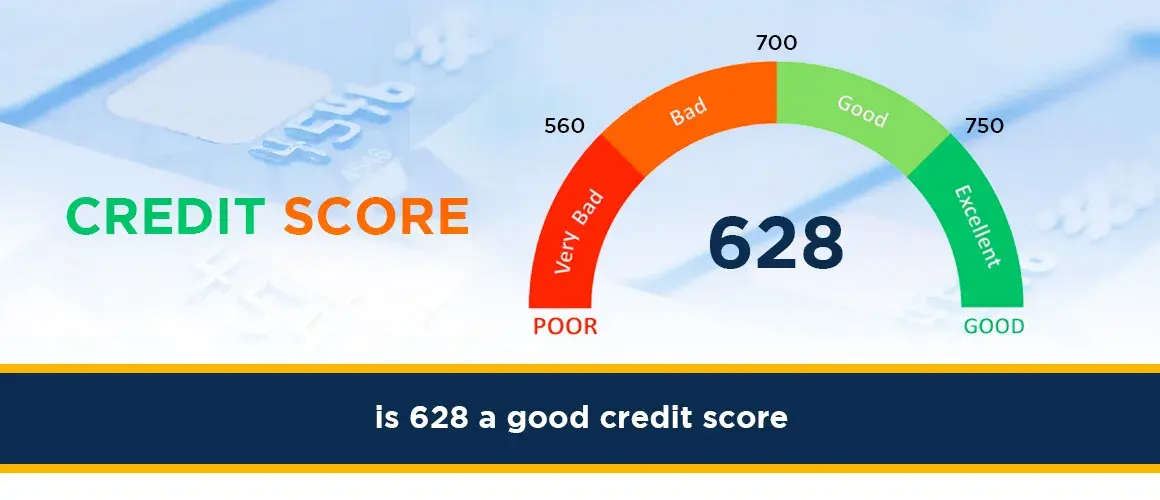
A credit score of 628 falls into the "fair" category, meaning it's neither excellent nor poor. Understanding what this score signifies and how to improve it is crucial for unlocking better financial opportunities, from lower interest rates on loans to easier rental approvals.
What is a 628 Credit Score?
A credit score is a three-digit number that lenders use to assess your creditworthiness, essentially predicting how likely you are to repay borrowed money. A score of 628, according to most major credit scoring models like FICO and VantageScore, typically lands in the "fair" or "average" range. This means that while you're not considered a high-risk borrower, you're also not seen as a prime candidate for the most favorable loan terms. Lenders might be willing to offer you credit, but often at higher interest rates than someone with an excellent credit score. For context, a score of 628 suggests there are areas in your credit history that could be improved to unlock better financial products and potentially save you significant money over time.
Understanding Credit Score Ranges
Credit scores are not monolithic; they exist on a spectrum, and understanding where 628 fits requires looking at the broader ranges. While specific ranges can vary slightly between different scoring models and lenders, a general consensus exists for the FICO Score, the most widely used model.
FICO Score Ranges (as of 2025)
The FICO scoring model generally categorizes scores as follows:
- Exceptional: 800-850
- Very Good: 740-799
- Good: 670-739
- Fair: 580-669
- Poor: 300-579
Based on these common FICO ranges, a score of 628 would technically fall into the "Fair" category. However, it's very close to the "Good" range (670-739). This proximity is important because it indicates that with some focused effort, you could potentially move into the "Good" category relatively quickly. The difference between "Fair" and "Good" can be substantial when it comes to loan approvals and interest rates. For instance, a lender might approve a loan for someone with a 628 score but at an interest rate that is 1-3% higher than for someone with a score of 670 or above. Over the life of a mortgage or a car loan, this difference can amount to thousands of dollars.
VantageScore Ranges (as of 2025)
VantageScore, another popular credit scoring model, has slightly different but broadly similar ranges:
- Excellent: 781-850
- Good: 661-780
- Fair: 601-660
- Poor: 500-600
Under the VantageScore model, a 628 score would be considered "Fair." Again, it sits comfortably within this range, not at the extreme low end. It's also quite close to the "Good" category (661-780), suggesting a similar opportunity for improvement as with the FICO model. The key takeaway from both models is that 628 is a score that signals room for improvement, but it's not a score that typically disqualifies you from all credit opportunities.
Why the Difference Matters
The distinction between "Fair" and "Good" is more than just a label. It's a financial threshold. When you're in the "Fair" range, lenders perceive a moderate level of risk. This perception translates into:
- Higher Interest Rates: You'll likely pay more for loans (mortgages, auto loans, personal loans) and credit cards.
- Lower Credit Limits: Credit card issuers might offer lower spending limits.
- Higher Down Payments: For major purchases like a car or home, you might be required to make a larger down payment.
- More Difficulty Getting Approved: Some lenders may outright deny applications from individuals with scores in the "Fair" range.
Moving from a 628 score to a score in the "Good" range (e.g., 670 or higher on FICO) can significantly reduce the cost of borrowing. For example, a 1% difference in interest rate on a $300,000 mortgage could save you over $60,000 in interest payments over 30 years. Therefore, understanding the nuances of your 628 score and actively working to improve it is a financially sound strategy.
Factors That Influence Your Credit Score
Your credit score is a dynamic number, influenced by a variety of factors reported by your creditors to the major credit bureaus (Equifax, Experian, and TransUnion). Understanding these factors is the first step toward strategically improving your 628 score. The most impactful elements, weighted by their typical influence on FICO scores, are:
1. Payment History (Approximately 35% of your score)
This is the single most important factor. It reflects whether you pay your bills on time.
- On-time payments: Consistently paying your credit card bills, loan installments, and other debts by the due date is crucial.
- Late payments: Even a single 30-day late payment can significantly drop your score. Longer delinquencies (60, 90 days or more) have an even more severe impact.
- Collections and charge-offs: Accounts sent to collections or written off by the lender are very damaging.
- Public records: Bankruptcies, liens, and judgments are the most detrimental items and can drastically lower your score for many years.
For a 628 score, it's highly probable that late payments or accounts in collections are the primary culprits dragging the score down.
2. Amounts Owed / credit utilization Ratio (Approximately 30% of your score)
This factor looks at how much debt you carry relative to your available credit. It's often expressed as the credit utilization ratio (CUR), calculated by dividing the total balance on your revolving credit accounts (like credit cards) by your total credit limit.
- High utilization: Using a large percentage of your available credit (e.g., balances close to your credit limits) signals higher risk. Experts generally recommend keeping your CUR below 30%, and ideally below 10%, for optimal scores.
- Low utilization: Keeping balances low demonstrates responsible credit management.
- Total debt: While CUR is more impactful for revolving credit, the total amount of debt across all your accounts also plays a role.
A 628 score might be affected by high balances on one or more credit cards, pushing the overall utilization ratio up.
3. Length of Credit History (Approximately 15% of your score)
This refers to the age of your oldest credit account, the age of your newest credit account, and the average age of all your accounts.
- Longer history: A longer credit history generally benefits your score, as it provides more data for lenders to assess your behavior over time.
- Newer accounts: While opening new accounts can sometimes temporarily lower your score due to a hard inquiry and a decrease in the average age of your accounts, it's a necessary part of building credit.
For a 628 score, this factor might be neutral or slightly negative if the credit history is relatively short or if there have been many recent account openings.
4. Credit Mix (Approximately 10% of your score)
This factor considers the different types of credit you have managed responsibly. This includes revolving credit (credit cards) and installment loans (mortgages, auto loans, student loans).
- Diverse mix: Having a mix of credit types can be beneficial, showing you can handle different kinds of debt.
- Lack of mix: Primarily having only one type of credit might not significantly hurt your score, but it doesn't help it either.
This is often a less significant factor for improving a score from 628, unless you have no installment loans and only credit cards, or vice versa.
5. New Credit (Approximately 10% of your score)
This factor looks at how many new credit accounts you've opened recently and how many hard inquiries are on your credit report.
- Multiple inquiries: Applying for several credit accounts in a short period can signal financial distress and lower your score.
- New accounts: Opening many new accounts quickly can also negatively impact your score.
- Re-establishing credit: For those with lower scores, opening a new, responsible account can be a positive step.
If a 628 score is the result of recent credit seeking, this factor might be contributing to the score.
By understanding these components, you can identify which areas are likely holding your 628 score back and focus your improvement efforts effectively.
How to Improve a 628 Credit Score
Improving a 628 credit score requires a strategic and consistent approach, focusing on the factors that have the most significant impact. The good news is that this score is within striking distance of the "Good" range, meaning positive changes can yield noticeable results relatively quickly.
Step-by-Step Guide to Boosting Your Score
1. Obtain and Review Your Credit Reports
Before you can fix issues, you need to know what they are. You are entitled to a free copy of your credit report from each of the three major credit bureaus (Equifax, Experian, and TransUnion) once every 12 months at AnnualCreditReport.com.
- Check for errors: Look for any inaccuracies, such as accounts that aren't yours, incorrect payment statuses, or incorrect personal information.
- Identify negative items: Note any late payments, collections, charge-offs, or high credit utilization.
Disputing errors can sometimes lead to a quick score increase if the information is removed.
2. Address Payment History Issues
Since payment history is the most critical factor, tackling any delinquencies is paramount.
- Pay all bills on time, every time: Set up automatic payments or calendar reminders for all your bills. Even if you can only pay the minimum, ensure it's done by the due date.
- Catch up on past-due accounts: If you have any accounts that are currently past due, bring them current as soon as possible. The longer an account is delinquent, the more it hurts your score.
- Negotiate with creditors: If you have accounts in collections, try to negotiate a settlement. While a settled collection may still appear on your report, it's often better than an unpaid one. Some agreements might allow for a "pay for delete," where the collection agency removes the item from your report in exchange for payment, though this is not always possible.
3. Lower Your Credit Utilization Ratio (CUR)
This is often the quickest way to see a score improvement if your CUR is high.
- Pay down credit card balances: Focus on paying down the balances on your credit cards, especially those closest to their limits. Aim to get your CUR below 30%, and ideally below 10%.
- Request a credit limit increase: If you have a good payment history with a particular card issuer, you might be able to request a credit limit increase. This will lower your CUR without you having to pay down debt, provided you don't increase your spending.
- Avoid maxing out cards: Even if you pay off balances monthly, carrying high balances throughout the billing cycle can negatively impact your CUR calculation, as this is often what's reported to the bureaus.
Example: If you have a credit card with a $5,000 limit and a $4,000 balance, your CUR is 80%. If you pay it down to $1,500, your CUR drops to 30%, which is a significant improvement.
4. Become an Authorized User (Use with Caution)
If you have a trusted friend or family member with excellent credit, they might be willing to add you as an authorized user on one of their credit cards. This can potentially boost your score by adding the positive history of that account to your credit report.
- Benefits: It can increase your average credit age and lower your overall credit utilization.
- Risks: If the primary cardholder misses payments or carries high balances, it will hurt your score. Ensure the primary user is responsible.
5. Consider a Secured Credit Card or Credit-Builder Loan
These products are designed for individuals with limited or damaged credit history.
- Secured Credit Card: You provide a cash deposit (e.g., $200-$500) that typically becomes your credit limit. Use it for small, everyday purchases and pay it off in full each month.
- Credit-Builder Loan: You make payments on a loan that is held in a savings account. Once the loan is fully repaid, you receive the funds. This demonstrates consistent installment payment behavior.
These tools help build a positive payment history and can gradually improve your score over 6-12 months of responsible use.
6. Manage New Credit Applications
Avoid applying for multiple credit accounts in a short period. Each application typically results in a hard inquiry, which can slightly lower your score. Space out applications if you need to apply for new credit.
7. Be Patient and Consistent
Credit building is a marathon, not a sprint. While some actions can yield quick results (like lowering CUR), others take time to show their full effect. Consistently practicing good credit habits is key to long-term score improvement.
By diligently following these steps, you can systematically address the factors affecting your 628 score and work towards achieving a higher, more favorable credit rating.
The Impact of a 628 Credit Score on Financial Products
A credit score of 628 places you in a position where accessing certain financial products is possible, but often with less favorable terms than those with higher scores. Lenders view this score as indicating a moderate risk, meaning they are willing to lend to you but will charge more to compensate for that perceived risk.
Mortgages
Securing a mortgage with a 628 credit score is challenging but not impossible, especially with government-backed loan programs.
- FHA Loans: The Federal Housing Administration (FHA) insures loans for borrowers with lower credit scores. Typically, FHA loans require a minimum score of 580 for a 3.5% down payment. A 628 score would likely qualify, but you might still face higher mortgage insurance premiums (MIP) compared to borrowers with better scores.
- Conventional Loans: For conventional mortgages, lenders generally prefer scores of 620 or higher. While 628 meets this minimum, you will likely face significantly higher interest rates. For example, a rate that is 1-2% higher on a $300,000 loan can add tens of thousands of dollars in interest over 30 years. You might also be required to make a larger down payment.
- Jumbo Loans: These loans are for amounts exceeding conforming loan limits and typically require excellent credit, often 700+. A 628 score would likely not qualify.
Recommendation: If purchasing a home is a priority, focus on improving your score to at least 670 to access better rates and terms on conventional loans. Consider an FHA loan as a stepping stone if immediate purchase is necessary.
Auto Loans
Getting approved for an auto loan with a 628 score is generally feasible, but expect higher interest rates.
- Subprime Auto Loans: Many lenders specialize in subprime auto loans for borrowers with scores in the "fair" to "poor" range. However, these loans come with very high Annual Percentage Rates (APRs), often in the double digits (15-25% or even higher).
- Impact of High APR: A high APR on an auto loan means you'll pay substantially more in interest over the life of the loan, making the vehicle much more expensive. For a $25,000 loan over 5 years, a 10% APR versus a 20% APR can mean a difference of over $7,000 in total payments.
Recommendation: Try to save for a larger down payment to reduce the loan amount. Simultaneously, work on improving your score to qualify for better rates from mainstream lenders.
Credit Cards
With a 628 score, you can still qualify for credit cards, but they will likely be:
- Secured Credit Cards: As mentioned, these require a cash deposit.
- Unsecured Cards for Fair Credit: Some issuers offer unsecured cards specifically for individuals with "fair" credit. These often come with:
- Higher APRs (often 20-30% or more)
- Lower credit limits (e.g., $300-$1,000)
- Annual fees
- Fewer rewards or benefits
These cards can be useful tools for rebuilding credit if used responsibly, but they are not ideal for carrying balances due to the high interest rates.
Recommendation: Use these cards for small, planned purchases and pay them off in full each month to build positive payment history and improve your credit utilization.
Personal Loans
Obtaining a personal loan with a 628 score is possible, but rates will be higher.
- Lender Availability: Many online lenders and credit unions offer personal loans to borrowers with fair credit.
- Interest Rates: Expect APRs to be significantly higher than those offered to borrowers with good or excellent credit. This means the cost of borrowing will be higher.
- Loan Amounts: The amount you can borrow might also be limited.
Recommendation: Only consider personal loans for essential needs and ensure you can comfortably afford the monthly payments, including the higher interest. Prioritize improving your score to access cheaper loan options.
Renting an Apartment
Landlords often check credit scores to assess a tenant's reliability in paying rent. A 628 score might be borderline for some landlords.
- Landlord Policies: Some landlords have strict minimum score requirements (e.g., 700+), while others may accept scores in the mid-600s.
- Increased Scrutiny: A score of 628 might lead to closer examination of your rental history, employment verification, and income.
- Requirement for Co-signer or Larger Deposit: If your score is considered too low, you might be asked to provide a co-signer with a better credit score or pay a larger security deposit.
Recommendation: Be prepared to explain any negative marks on your report if asked. Having a stable income and a good rental history can help offset a borderline credit score.
Insurance Premiums
In many states, insurance companies use credit-based insurance scores to help determine premiums for auto and homeowners insurance. A lower score like 628 can lead to higher insurance costs.
- Impact: Insurers correlate credit behavior with the likelihood of filing claims. A lower score might indicate a higher risk, resulting in higher premiums.
Recommendation: Improving your credit score can lead to savings on insurance premiums over time.
In summary, a 628 credit score is a "fair" score that allows access to credit but often at a premium. The primary impact is higher interest rates across most financial products, increasing the overall cost of borrowing. The most effective strategy is to actively work on improving your score to unlock more favorable terms and save money in the long run.
Common Misconceptions About 628 Credit Scores
The world of credit scores can be confusing, and several myths persist about what a score like 628 means and how it functions. Dispelling these misconceptions is key to developing an effective strategy for improvement.
Misconception 1: A 628 Score Means I Can Never Get Approved for Credit.
Reality: This is false. A 628 score falls into the "fair" category, which means you are still a viable candidate for many types of credit, including credit cards for fair credit, secured credit cards, and potentially some auto loans and mortgages (especially FHA loans). While approval isn't guaranteed and terms may not be ideal, it's far from a complete denial. The key is understanding which lenders cater to this credit tier.
Misconception 2: My Score is Too Low to Improve Significantly.
Reality: A score of 628 is very close to the "good" range (often starting around 670). This means that focused efforts on improving key factors like credit utilization and payment history can lead to noticeable score increases relatively quickly, often within a few months. It's not a score that requires years of rebuilding from scratch; it requires consistent, positive financial habits.
Misconception 3: Closing Old, Unused Credit Cards Will Improve My Score.
Reality: This is often the opposite of what's true. Closing an old credit card can negatively impact your score in two ways:
- Decreases Average Age of Accounts: A longer credit history is beneficial. Closing an old account shortens this average.
- Increases Credit Utilization Ratio: If you carry balances on other cards, closing an account reduces your total available credit, thus increasing your utilization ratio, which is a major score factor.
Unless an old card has a high annual fee that you can no longer justify, it's often better to keep it open and use it sparingly for small purchases that you pay off immediately.
Misconception 4: Checking My Own Credit Score Will Lower It.
Reality: There are two types of credit inquiries: hard and soft.
- Hard Inquiries: Occur when you apply for new credit (loan, credit card). These can slightly lower your score.
- Soft Inquiries: Occur when you check your own credit report, when lenders pre-approve you for offers, or when employers perform background checks. Soft inquiries do not affect your credit score.
Checking your score regularly through credit monitoring services or directly from the bureaus is a soft inquiry and is encouraged for understanding your financial health.
Misconception 5: Paying Off Collections Immediately Is Always the Best Strategy.
Reality: While paying off debts is generally good, the timing and method matter. A collection account, especially an older one, might have less impact over time. If a collection is nearing the end of its reporting period (typically 7 years), paying it off might "reset" the clock in some ways or not provide a significant score boost. Furthermore, some collection agencies may agree to "pay for delete" where they remove the item from your report in exchange for payment. This is the ideal scenario but not always achievable. It's wise to understand the age of the collection and negotiate terms before paying.
Misconception 6: All Credit Scores Are the Same.
Reality: As discussed earlier, there are different scoring models (FICO, VantageScore) and different versions of these models. Lenders may use different models and score ranges. Additionally, your credit report from Equifax, Experian, and TransUnion might have slight variations. A score of 628 on one report or model might be viewed slightly differently by different lenders.
Misconception 7: My Credit Score is Fixed and Cannot Change.
Reality: Credit scores are dynamic and change based on your credit activity. By consistently practicing good financial habits—paying bills on time, keeping credit utilization low, and managing new credit responsibly—you can actively improve your score over time. A 628 score is a snapshot in time, not a permanent label.
Understanding these common misconceptions helps clarify the reality of managing a 628 credit score. It's a score that requires attention and strategic action, but significant improvement is attainable.
Long-Term Credit Building Strategies
While immediate actions can help boost a 628 credit score, sustainable, long-term strategies are essential for building and maintaining excellent creditworthiness. These habits ensure that your score not only improves but also remains robust, opening doors to the best financial opportunities throughout your life.
1. Maintain a Consistent Payment History
This cannot be stressed enough. The bedrock of good credit is paying every bill on time, every single month.
- Automate Payments: Set up automatic payments for at least the minimum amount due on all your credit accounts. This prevents accidental late payments.
- Budget for Bills: Ensure your budget accounts for all debt obligations. If you struggle to make minimum payments, revisit your budget and look for areas to cut expenses or increase income.
- Pay More Than the Minimum: While paying the minimum keeps you current, paying more than the minimum not only reduces your debt faster but also helps lower your credit utilization ratio, a dual benefit for your score.
2. Keep Credit Utilization Low
Aim to keep your credit utilization ratio (CUR) below 30% on all cards and overall. Ideally, keeping it below 10% is even better for maximizing your score.
- Strategic Spending: Use credit cards for purchases you can afford to pay off immediately. Avoid carrying balances from month to month.
- Spread Balances: If you have multiple credit cards, try to keep balances relatively low across all of them rather than maxing out one card while others are empty.
- Monitor Regularly: Keep an eye on your credit card balances and your overall credit utilization.
3. Build a Long Credit History
The longer you have been managing credit responsibly, the more positive data lenders have about your financial behavior.
- Keep Old Accounts Open: As mentioned, unless there's a compelling reason (like a high annual fee), keep older credit accounts open, even if you use them infrequently.
- Use Old Accounts Periodically: To prevent issuers from closing inactive accounts, make a small purchase on them every few months and pay it off immediately.
4. Diversify Your Credit Mix (Responsibly)
Having a mix of credit types (revolving credit like credit cards and installment loans like mortgages or auto loans) can be beneficial. However, do not open new accounts solely to diversify your credit mix if you don't need them, as this can lead to unnecessary inquiries and debt.
- Demonstrate Management: Successfully managing different types of credit shows lenders you can handle various financial obligations.
- Focus on Needs: If you need a car, getting an auto loan and paying it off responsibly can positively contribute to your credit mix.
5. Limit New Credit Applications
While building credit sometimes involves opening new accounts, doing so excessively can harm your score.
- Apply Strategically: Only apply for credit when you genuinely need it.
- Space Out Applications: If you are applying for multiple credit products, space them out over time to minimize the impact of hard inquiries.
6. Monitor Your Credit Regularly
Make it a habit to check your credit reports and scores periodically.
- Identify Issues Early: Regular monitoring helps you spot errors, potential fraud, or negative trends before they significantly impact your score.
- Track Progress: See how your efforts are paying off and adjust your strategy as needed. Many credit card companies and financial institutions offer free credit score monitoring services.
7. Educate Yourself Continuously
The landscape of credit and finance is always evolving. Stay informed about best practices, new regulations, and how different financial decisions can affect your creditworthiness. Resources like the Consumer Financial Protection Bureau (CFPB) and reputable financial education websites can be invaluable.
8. Avoid Predatory Lending Practices
Be wary of payday loans, high-interest title loans, and other forms of predatory credit that can trap you in a cycle of debt and severely damage your credit. These are almost never a sustainable solution and will likely lead to a score of 628 or lower.
By integrating these long-term strategies into your financial life, you can build a strong credit foundation. This not only helps you move beyond a 628 score but also positions you for financial success, enabling you to achieve major goals like homeownership, securing favorable loan terms, and enjoying greater financial freedom.
Conclusion:
A credit score of 628 is a "fair" score, indicating that you have some established credit history but also areas needing improvement. While it's not a poor score, it does mean you're likely paying more for loans and may face challenges securing the best financial products. The good news is that this score is within reach of the "good" category, and consistent, strategic efforts can lead to significant positive changes. By focusing on paying all bills on time, drastically reducing your credit utilization ratio, and monitoring your credit reports for errors, you can systematically boost your score. Long-term strategies like maintaining a healthy credit mix and limiting new credit applications will solidify your creditworthiness. Ultimately, understanding your credit score is the first step toward unlocking better financial opportunities and achieving your financial goals.
