Is 645 a Good Credit Score? Understanding Its Impact on Your Financial Life
What is a Credit Score and Why Does It Matter?
Your credit score is a three-digit number that acts as a snapshot of your creditworthiness, a crucial indicator for lenders and other financial institutions. It's a vital component of your financial health, influencing your ability to access loans, secure housing, and even obtain certain jobs. Understanding its significance is the first step toward managing your finances effectively.
Understanding Credit Score Ranges
Credit scores are not a single, universal measure but rather fall into various ranges, each signifying a different level of risk to lenders. These ranges can vary slightly depending on the scoring model used (like FICO or VantageScore), but generally, they provide a clear picture of your financial behavior. Knowing where you stand within these ranges is essential for understanding what opportunities are available to you.
FICO Score Ranges (as of 2025)
The FICO score is one of the most widely used credit scoring models. For 2025, the general FICO score ranges are as follows:
- Exceptional: 800-850
- Very Good: 740-799
- Good: 670-739
- Fair: 580-669
- Poor: 300-579
VantageScore Ranges (as of 2025)
VantageScore is another popular credit scoring model, often used by many lenders. Its ranges for 2025 are typically:
- Excellent: 781-850
- Good: 661-780
- Fair: 601-660
- Poor: 500-600
- Very Poor: 300-499
It's important to note that while these are general ranges, specific lenders might have their own internal thresholds for approving applications.
Is 645 a Good Credit Score? The Nuances of a 645 Score
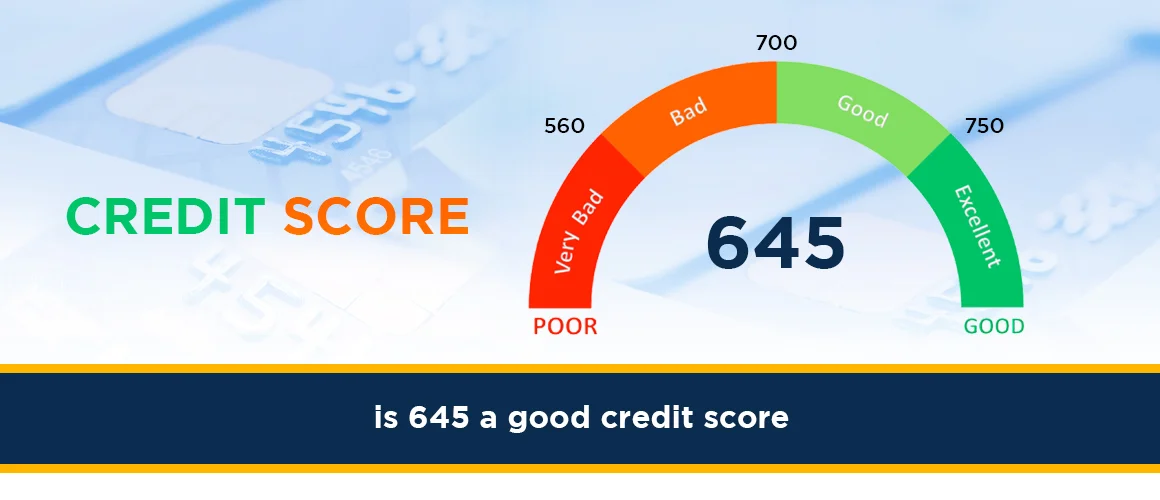
So, the pivotal question: is 645 a good credit score? The answer is nuanced. Based on the common FICO score ranges, a 645 falls squarely into the "Fair" category. This means it's not considered "poor," but it's also not yet in the "good" or "very good" territory. For VantageScore, a 645 would typically be considered "Fair" as well.
A "Fair" credit score indicates that while you have a credit history, there might be some blemishes or patterns of behavior that present a moderate level of risk to lenders. This could include late payments, a high credit utilization ratio, or a relatively short credit history. It's a score that can often lead to approvals for credit, but usually with less favorable terms than someone with a higher score.
It's crucial to understand that "good" is subjective and depends heavily on the context. For some basic financial products, a 645 might be sufficient. However, for more significant financial endeavors like purchasing a home or securing a low-interest car loan, it might present challenges. The goal for most individuals is to move their score into the "Good" or "Very Good" range to unlock better financial opportunities.
What Lenders See with a 645 Score
When a lender reviews an application with a 645 credit score, they see a borrower who is not a complete risk but is not an ideal candidate either. They will likely look more closely at other aspects of your application, such as your income, employment history, and debt-to-income ratio. The score suggests that while you've managed credit, there's room for improvement in your financial habits.
This score often means that you might be approved for credit cards or loans, but the interest rates offered will likely be higher than those for individuals with scores in the 700s. This is because lenders charge higher interest rates to compensate for the increased risk of default associated with lower credit scores. The difference in interest can add up significantly over the life of a loan.
The "Average" Credit Score Landscape in 2025
To put a 645 into perspective, let's consider the average credit score. In 2025, the average FICO score in the United States hovers around the mid-700s. This means a 645 is noticeably below the national average. While averages can be skewed by various factors, it highlights that a 645 score is not as common among the most credit-savvy population.
However, it's important not to get discouraged. Millions of Americans have credit scores in the "Fair" range, and many successfully improve them over time. The key is to understand the factors that influence your score and to implement strategies for positive change.
The Impact of a 645 Credit Score on Your Financial Life
A 645 credit score can have a tangible impact on various aspects of your financial life. It's not just about getting approved for a loan; it affects the cost of borrowing, the availability of certain services, and even your peace of mind. Understanding these impacts is crucial for making informed financial decisions and for motivating yourself to improve your score.
Approval Odds and Interest Rates
The most immediate impact of a 645 credit score is on your ability to get approved for credit and the terms you'll receive. While not a "deal-breaker" for all financial products, it often means:
- Higher Interest Rates: This is perhaps the most significant consequence. Loans and credit cards will come with higher Annual Percentage Rates (APRs), meaning you'll pay more in interest over time. For example, a mortgage or auto loan could cost thousands more over its lifespan compared to someone with a "Good" or "Excellent" score.
- Lower Credit Limits: Credit card issuers may offer lower credit limits to individuals with fair credit, reflecting a more cautious approach to extending credit.
- Limited Options: You might find that certain premium credit cards or specialized loans are out of reach.
- Higher Fees: Some lenders might impose additional fees, such as origination fees on loans, which can increase the overall cost of borrowing.
Securing Housing
Your credit score is a critical factor for landlords when you're looking to rent an apartment or house. A 645 score might lead to:
- Difficulty Finding a Rental: Many landlords perform credit checks, and a "Fair" score could result in your application being rejected, especially in competitive rental markets. They view a lower score as an indicator of potential payment issues.
- Requirement for a Co-signer: You might be asked to have a co-signer with a better credit history to guarantee the rent payments.
- Higher Security Deposits: Landlords may require a larger security deposit to mitigate their risk.
Employment Opportunities
In certain industries, particularly those involving financial responsibility or access to sensitive information, employers may conduct credit checks as part of the hiring process. A 645 score could potentially:
- Lead to Rejection: Some employers might view a fair credit score as a sign of irresponsibility, which could impact their decision to hire you, especially for positions like financial managers, loan officers, or roles requiring handling company funds.
- Limit Career Advancement: Certain promotions or job transfers might be contingent on a satisfactory credit history.
Utility Services
Utility companies (electricity, gas, water, internet, and mobile phone providers) often check credit scores. With a 645 score, you might encounter:
- Deposit Requirements: You may be required to pay a security deposit to establish service, which you typically get back after a period of consistent, on-time payments.
- Limited Plan Options: Some providers might restrict you to specific service plans or require pre-payment.
Loans and Credit Cards: Approval Odds and Interest Rates
When it comes to obtaining new lines of credit, a 645 score places you in a challenging but not impossible position. Understanding the typical outcomes for loans and credit cards is key.
Credit Cards
Securing a new credit card with a 645 score is often achievable, but the options will likely be limited to cards designed for individuals with fair credit.
- Secured Credit Cards: These are the most common and accessible option. Secured cards require a cash deposit that typically equals your credit limit. This deposit serves as collateral, reducing the lender's risk and making approval much easier. After a period of responsible use, many secured cards can be upgraded to unsecured cards.
- Unsecured Cards for Fair Credit: Some issuers offer unsecured credit cards specifically for those with fair credit. These cards often come with higher APRs, annual fees, and lower credit limits. Examples might include cards from issuers known for working with a broader range of credit profiles.
- Approval Odds: Your chances of approval for a standard unsecured credit card are moderate. If approved, expect the terms to be less favorable than those offered to individuals with good credit.
Example: A person with a 645 score applying for a new rewards credit card might be denied or offered a card with a 25% APR and no introductory bonus, whereas someone with a 750 score might receive the same card with a 18% APR and a $200 sign-up bonus.
Personal Loans
Obtaining a personal loan with a 645 credit score is possible, but interest rates will be higher.
- Lender Types: Traditional banks might be more hesitant to approve personal loans for scores in the fair range. Online lenders and credit unions often have more flexible criteria and are more likely to approve applications with a 645 score.
- Interest Rates: Expect APRs to be significantly higher than those offered to borrowers with good credit. This can make the overall cost of the loan substantial.
- Loan Amounts: The amount you can borrow might also be limited.
Example: A $10,000 personal loan over 5 years at 15% APR (typical for fair credit) would cost approximately $4,100 in interest. The same loan at 8% APR (typical for good credit) would cost about $2,200 in interest – a difference of nearly $1,900.
Debt Consolidation Loans
If you're looking to consolidate high-interest debt, a personal loan with a 645 score might help, but the savings could be diminished by a high APR on the new loan. It's crucial to compare the new loan's APR with the average APR of your current debts to ensure you're actually saving money.
Mortgages and Auto Loans: Navigating the Approval Process
Major purchases like homes and cars typically require significant financing, and credit scores play an even more critical role here. A 645 score can present substantial hurdles.
Mortgages
Securing a mortgage with a 645 credit score is challenging but not entirely impossible, especially with certain loan programs.
- FHA Loans: The Federal Housing Administration (FHA) insures loans for borrowers with lower credit scores. FHA loans typically allow credit scores as low as 580 with a 3.5% down payment, and sometimes even lower with a larger down payment. A 645 score would generally be considered acceptable for an FHA loan.
- Conventional Loans: For conventional mortgages (those not backed by government agencies), lenders typically prefer scores of 620 or higher, but a 645 might still result in higher interest rates and stricter underwriting. Many lenders consider 670+ to be "good" for conventional loans.
- Interest Rates: Even if approved, the interest rate on a mortgage with a 645 score will be considerably higher than for borrowers with good credit. This can add tens of thousands of dollars to the total cost of a home over 30 years.
- Down Payment: You might be required to make a larger down payment to offset the lender's risk.
Example: On a $300,000 mortgage, a 1% difference in interest rate (e.g., 7% vs. 6%) can mean paying an extra $60,000 to $70,000 in interest over 30 years. A 645 score could easily lead to a rate that is 1-2% higher than for someone with a 740 score.
Auto Loans
Getting approved for an auto loan with a 645 credit score is generally more feasible than a mortgage, but the cost will be higher.
- Approval Odds: Most auto lenders have programs for borrowers with fair credit. You are likely to be approved for a loan, but the terms will reflect your credit risk.
- Interest Rates: Expect significantly higher interest rates compared to borrowers with good or excellent credit. This means your monthly car payments will be higher, and you'll pay more interest over the life of the loan.
- Loan Terms: Lenders might offer shorter loan terms or require a down payment, especially for newer or more expensive vehicles.
Example: A $25,000 auto loan over 5 years with a 12% APR (typical for fair credit) would result in monthly payments of about $575 and total interest paid of around $9,500. The same loan at 6% APR (typical for good credit) would have monthly payments of about $483 and total interest of about $4,000 – a difference of over $5,500.
Rentals and Utilities: Beyond Just Borrowing Money
The impact of your credit score extends beyond traditional lending institutions. Landlords and utility providers also rely on credit checks to assess risk.
Rental Applications
As mentioned earlier, a 645 credit score can make finding a rental more challenging. Landlords use credit reports to gauge your reliability as a tenant. A score in the "Fair" range might signal to them that you have had past issues with making payments on time, which is a primary concern for any property owner.
- Screening Process: Most landlords use credit screening services. A score below 650 is often flagged as a potential risk.
- Competition: In high-demand rental markets, landlords can afford to be more selective, often favoring applicants with scores in the "Good" to "Excellent" range.
- Alternatives: If you face rejections, consider looking for smaller landlords who might be more flexible, offering to pay several months' rent in advance, or finding a co-signer with a stronger credit profile.
Utility Services (Electricity, Gas, Water, Internet, Mobile Phones)
Utility companies often require a credit check to determine if a security deposit is needed.
- Security Deposits: With a 645 credit score, you are likely to be asked to pay a security deposit when setting up new utility services. The amount can vary depending on the provider and the type of service. This deposit is typically refundable after a certain period of on-time payments.
- Prepaid Services: Some providers might offer prepaid plans as an alternative to a deposit, where you pay for services in advance.
- No Service Impact: While a deposit might be required, a fair credit score generally won't prevent you from receiving essential services like electricity or water. The impact is primarily financial upfront.
Insurance Premiums: The Hidden Financial Link
It might surprise you, but your credit score can also influence the cost of your insurance premiums, including auto and homeowners insurance. This practice is known as using a credit-based insurance score.
In most states (excluding a few like California, Hawaii, Massachusetts, and Michigan), insurance companies use a modified version of your credit history to predict the likelihood of you filing an insurance claim. The logic is that individuals with lower credit scores tend to file more claims.
- Auto Insurance: A 645 credit score could lead to higher auto insurance premiums. Insurers may see this score as an indicator of higher risk, translating into more expensive coverage.
- Homeowners Insurance: Similarly, homeowners insurance premiums can also be affected. If you're seeking a new policy or renewing an existing one, a fair credit score might result in higher costs.
Example: Two individuals with identical driving records and homes might pay different insurance rates. The one with a credit score of 750 could pay significantly less for auto or homeowners insurance than the one with a 645 score, potentially saving hundreds of dollars annually.
This is a crucial point: improving your credit score can lead to direct savings on insurance, in addition to better loan terms.
Strategies to Improve a 645 Credit Score
The good news is that a 645 credit score is not a permanent financial sentence. With consistent effort and smart financial habits, you can significantly improve your score. The key is to understand the factors that influence your credit and to address any negative elements while reinforcing positive ones.
Understanding Your Credit Report
Before you can improve your score, you need to know what's contributing to it. Your credit report is a detailed history of your borrowing and repayment activities. It's provided by the three major credit bureaus: Equifax, Experian, and TransUnion.
- Obtain Your Reports: You are entitled to a free copy of your credit report from each bureau annually at AnnualCreditReport.com. Reviewing these reports is the first critical step.
- Check for Errors: Look for any inaccuracies, such as accounts that don't belong to you, incorrect payment statuses, or outdated information. Dispute any errors immediately with the credit bureau and the creditor.
- Identify Negative Information: Note any late payments, collections, bankruptcies, or high credit utilization ratios. Understanding the source of your score's limitations is vital for targeted improvement.
Payment History is King
Payment history is the single most important factor influencing your credit score, typically accounting for about 35% of your FICO score.
- Pay Bills On Time: This is non-negotiable. Make sure all your credit accounts (credit cards, loans, mortgages) are paid by their due dates. Even one late payment can significantly drop your score.
- Set Up Autopay: To avoid missing payments, set up automatic payments from your bank account for at least the minimum amount due. Ensure you have sufficient funds in your account to cover these payments.
- Catch Up on Delinquencies: If you have past-due accounts, bring them current as soon as possible. The longer an account remains delinquent, the more damage it does to your score.
Credit Utilization Matters
Credit utilization ratio (CUR) is the amount of credit you're using compared to your total available credit. This factor accounts for about 30% of your FICO score. High utilization is a major red flag for lenders.
- Keep Balances Low: Aim to keep your credit utilization ratio below 30% on each credit card and across all your cards combined. Ideally, keeping it below 10% is even better.
- Pay Down Balances: If your utilization is high, focus on paying down your credit card balances. Making more than the minimum payment can significantly reduce your utilization.
- Request Credit Limit Increases: Strategically requesting a credit limit increase on existing cards can lower your utilization ratio, provided you don't increase your spending. Do this only if the issuer doesn't perform a "hard pull" on your credit for the request.
Example: If you have a credit card with a $1,000 limit and a $500 balance, your utilization is 50%. If you pay it down to $200, your utilization drops to 20%, which is much better for your score.
Length of Credit History
The longer you've had credit accounts open and in good standing, the better it is for your score. This factor accounts for about 15% of your FICO score.
- Keep Old Accounts Open: Avoid closing older credit accounts, even if you don't use them often, as long as they don't have annual fees. Closing an account reduces your average age of credit and can increase your overall credit utilization.
- Use Them Periodically: To keep old accounts active, make a small purchase on them every few months and pay it off immediately.
Credit Mix and New Credit
These two factors each account for about 10% of your FICO score.
- Credit Mix: Having a mix of different types of credit (e.g., credit cards, installment loans like auto loans or mortgages) can be beneficial, showing you can manage various credit products responsibly. However, don't open new accounts just for the sake of mix.
- New Credit: Opening multiple new credit accounts in a short period can negatively impact your score. Each application for credit typically results in a "hard inquiry," which can slightly lower your score temporarily. Space out applications for new credit.
Practical Steps for Improvement
Here's a step-by-step guide to actively improve your 645 credit score:
- Get Your Credit Reports: Visit AnnualCreditReport.com and download your reports from all three bureaus.
- Review and Dispute Errors: Scrutinize each report for any inaccuracies. If you find any, file a dispute with the credit bureau and the creditor.
- Prioritize On-Time Payments: Set up automatic payments or reminders for all your bills. Make sure you pay at least the minimum amount due by the deadline.
- Reduce Credit Utilization: Focus on paying down credit card balances. Aim to get your utilization below 30%, and ideally below 10%.
- Avoid New Debt (Temporarily): While building credit mix is good, avoid opening new credit accounts unless absolutely necessary, especially if your utilization is high.
- Consider a Secured Credit Card: If you're struggling to get approved for unsecured credit, a secured credit card is an excellent tool to build positive payment history. Ensure the issuer reports to all three credit bureaus.
- Be Patient and Consistent: Credit score improvement takes time. Stick to your plan, and your score will gradually increase.
Timeframe for Improvement
The time it takes to improve a 645 credit score depends on the specific issues on your report and your commitment to positive financial habits.
- Minor Adjustments: If the primary issue is high credit utilization, you could see an improvement in your score within 1-3 months of paying down balances.
- Addressing Late Payments: Late payments remain on your report for seven years, but their impact diminishes over time. Consistent on-time payments will help offset the negative effect. You might see a noticeable improvement within 6-12 months of consistent positive behavior.
- Significant Issues: For more serious issues like collections or charge-offs, it can take longer. However, consistent positive activity will eventually outweigh the negative information.
- Reaching "Good" Status: Moving from "Fair" (645) to "Good" (670-739) can often be achieved within 6 to 18 months of diligent effort. Moving into the "Very Good" or "Exceptional" categories will require sustained excellent credit behavior over several years.
Conclusion: Your Financial Future
In conclusion, is 645 a good credit score? It falls into the "Fair" category, meaning it's neither poor nor ideal. While it may allow for some credit approvals, it often comes with higher interest rates, lower credit limits, and limited options for loans, rentals, and even insurance. The impact of a 645 score is significant, potentially costing you thousands of dollars more over time through increased borrowing costs and fees.
However, this score is a stepping stone, not a dead end. By understanding the components of your credit report and score, particularly payment history and credit utilization, you can implement targeted strategies for improvement. Consistent, on-time payments and maintaining low credit balances are paramount. Utilizing tools like secured credit cards and diligently disputing any errors on your credit reports can accelerate your progress.
Improving your credit score from 645 to the "Good" or "Very Good" range is an achievable goal that will unlock better financial opportunities, lower borrowing costs, and provide greater financial flexibility. Start today by reviewing your credit reports and committing to the actionable steps outlined above. Your future self, enjoying better loan terms and lower insurance premiums, will thank you for it.
