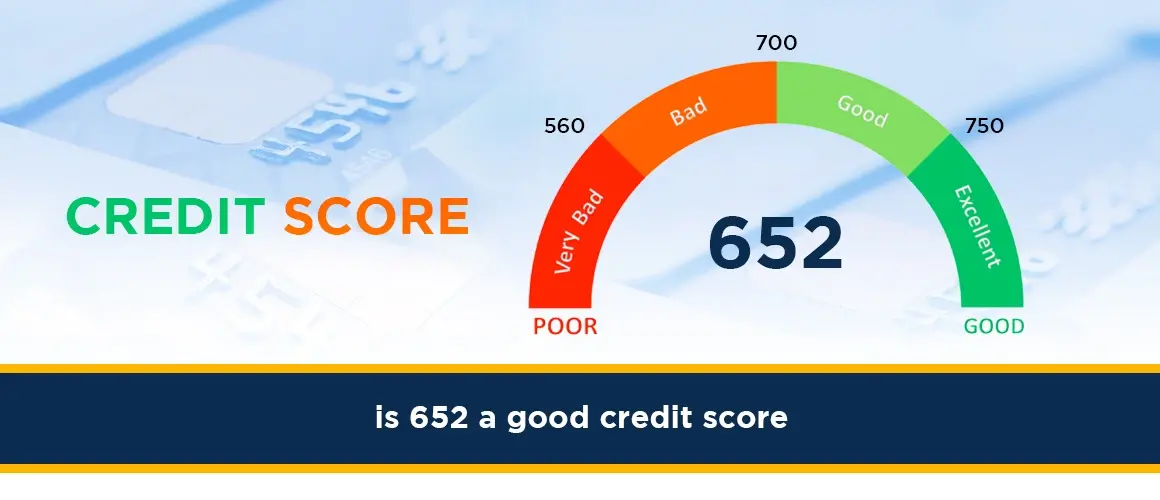
A credit score of 652 falls into the "fair" category, meaning it's neither excellent nor poor. While it's a step above subprime, it can still present challenges in securing the best loan terms. Understanding what 652 means is crucial for improving your financial future.
What is a 652 Credit Score?
A credit score is a three-digit number that lenders use to assess your creditworthiness, essentially predicting how likely you are to repay borrowed money. Scores typically range from 300 to 850, with higher scores indicating lower risk to lenders. A 652 credit score is generally considered to be in the "fair" credit range. This means that while you're not in the "poor" or "very poor" category, you're also not in the "good," "very good," or "exceptional" tiers. For many lenders, a 652 score signals a moderate level of risk. It’s a score that might qualify you for some loans, but often with less favorable terms, such as higher interest rates or larger down payments, compared to individuals with higher credit scores.
The significance of a 652 score lies in its position within the broader credit spectrum. It's a score that many Americans find themselves with at some point, often as they are rebuilding their credit or have experienced minor financial setbacks. The key takeaway is that a 652 score is not a dead end; it’s a starting point for understanding your current financial standing and charting a course for improvement. It signals that there are areas in your credit history that, if addressed strategically, can be enhanced to unlock better financial opportunities.
Understanding Credit Score Ranges
Credit scores are not arbitrary numbers; they are categorized into distinct ranges, each carrying specific implications for borrowers. While the exact cutoffs can vary slightly between credit scoring models (like FICO and VantageScore) and even between lenders, the general consensus for FICO scores, which are widely used, is as follows:
FICO Score Ranges (Approximate):
- Exceptional: 800-850
- Very Good: 740-799
- Good: 670-739
- Fair: 580-669
- Poor: 300-579
Based on these common ranges, a 652 credit score falls squarely within the fair category. This classification is important because it helps lenders quickly assess risk. A "fair" score suggests that while there's a history of credit use, it might include some negative marks or a lack of robust positive credit history. It’s a score that requires careful consideration from lenders, as it indicates a higher probability of default compared to higher score brackets.
It's important to note that VantageScore, another popular credit scoring model, has slightly different ranges:
VantageScore Ranges (Approximate):
- Excellent: 781-850
- Good: 661-780
- Fair: 601-660
- Poor: 500-600
- Very Poor: 300-499
Under the VantageScore model, a 652 score would be considered in the good range. This highlights the importance of knowing which scoring model a lender is using. However, for the purpose of general understanding and most loan applications, the FICO "fair" classification for a 652 score is the more commonly referenced benchmark. Regardless of the model, a 652 score signifies a middle-ground credit standing, presenting both opportunities and challenges.
The distinction between these ranges is not merely academic; it directly impacts your ability to access credit and the cost of that credit. As you move up the score ladder, the perceived risk decreases, and lenders are more willing to offer you their best products and rates. Conversely, a score in the fair range means you're likely to face more scrutiny and potentially higher costs.
How Lenders View a 652 Score
When a lender reviews a credit application, their primary goal is to assess the risk associated with lending money to you. A 652 credit score sends a mixed signal. It tells them that you have some experience managing credit, which is a positive. However, it also suggests that there might be aspects of your credit history that are less than ideal. Lenders generally interpret a 652 score as indicating a moderate risk of default. This means they are less likely to approve your application outright compared to someone with a score above 700. If approved, they will likely compensate for this perceived risk by offering less favorable terms.
Here’s a breakdown of how lenders might perceive a 652 score:
- Past Credit Issues: The score might reflect past late payments, high credit utilization, collections, or even a bankruptcy or foreclosure that is no longer recent but still impacts the score.
- Limited Credit History: A 652 score could also simply mean you have a relatively short credit history or not enough diverse credit accounts (e.g., only a single credit card). Lenders prefer to see a longer track record of responsible credit management.
- Potential for Higher Interest Rates: Because of the increased risk, lenders will likely offer higher Annual Percentage Rates (APRs) on loans and credit cards. This means you'll pay more in interest over the life of the loan.
- Stricter Loan Terms: You might be required to make a larger down payment for a mortgage or auto loan, or face lower credit limits on new credit cards.
- Fewer Options: The range of loan products and lenders willing to approve your application will be narrower. You might be excluded from premium rewards credit cards or loans with the most competitive rates.
For instance, consider applying for an auto loan. With a score of 652, you might be approved, but the interest rate could be significantly higher than for someone with a score of 720. This difference can translate into hundreds or even thousands of dollars in extra payments over the loan term. Similarly, for a mortgage, a 652 score might mean you qualify for fewer loan programs, or you might need a larger down payment to offset the lender's risk. Some lenders might even have a minimum score requirement that a 652 doesn't meet, leading to an automatic denial.
It's also worth noting that different types of lenders may have different thresholds. For example, a credit union might be more willing to work with a borrower with a 652 score than a large national bank, especially if you have a strong existing relationship with the credit union. Online lenders, particularly those specializing in subprime or near-prime borrowers, might offer options, but often at a premium.
Impact of a 652 Credit Score on Loans and Interest Rates
The most tangible impact of a 652 credit score is on the cost and availability of credit. When you apply for loans—whether it's a mortgage, auto loan, personal loan, or even a new credit card—your credit score is a primary factor in the lender's decision and the terms they offer. A 652 score, being in the "fair" range, generally means you'll face higher interest rates and potentially stricter loan terms compared to individuals with scores in the "good" or "excellent" categories.
Let's look at specific examples:
Mortgage Loans
For a mortgage, a 652 score can be a significant hurdle. While some loan programs might allow for scores in this range, the interest rates will likely be considerably higher. For instance, a borrower with a 740+ score might secure a mortgage at 6.5% APR, while someone with a 652 score could be looking at 7.5% or even higher. Over a 30-year mortgage, this difference can amount to tens of thousands of dollars in additional interest paid. Furthermore, lenders might require a larger down payment (e.g., 10-20% instead of 3-5%) to mitigate their risk.
Auto Loans
Similar to mortgages, auto loan rates are heavily influenced by credit scores. A 652 score could mean an APR of 10-15% or more, whereas a borrower with excellent credit might get rates as low as 4-6%. For a $30,000 auto loan over five years, this difference could mean paying an extra $5,000 to $10,000 in interest. You might also face stricter terms, such as a shorter loan term or a requirement for a co-signer.
Personal Loans
Personal loans are often unsecured, making lenders more cautious. With a 652 score, you may find it harder to get approved for a personal loan, and if you are, the interest rates can be quite high, often in the 15-30% range or even higher, depending on the lender and your overall financial profile. These high rates make borrowing expensive and can make it difficult to pay off the loan quickly.
Credit Cards
While you can likely still get approved for credit cards with a 652 score, they will probably be "fair" credit cards or secured credit cards. These cards often come with lower credit limits, higher APRs, and potentially annual fees. They might not offer the rewards or benefits found on cards for individuals with better credit.
Other Financial Products
Beyond loans, a 652 score can also affect your ability to rent an apartment (landlords often check credit), get approved for certain utilities without a security deposit, or even influence your insurance premiums in some states. The ripple effect of a fair credit score touches many aspects of financial life.
The key takeaway is that while a 652 credit score doesn't necessarily mean you'll be denied credit, it almost always means you'll pay more for it. Improving your score should be a priority to unlock access to more favorable terms and save money in the long run. For more details on how credit scores impact specific loan types, consider reading our guide on Credit Scores and Loan Approvals.
Factors Influencing a 652 Credit Score
Understanding what contributes to your credit score is the first step toward improving it. A 652 score is a reflection of your credit behavior over time. Several key factors, weighted differently by scoring models, determine your creditworthiness. By examining these components, you can identify areas for improvement.
Payment History (Approximately 35% of FICO Score)
This is the most critical factor. Late payments, missed payments, or defaults on loans or credit cards significantly drag down your score. Even one 30-day late payment can have a noticeable negative impact. A 652 score might indicate a history of occasional late payments or perhaps a more severe delinquency that has since been resolved but still lingers on your report.
Amounts Owed / Credit Utilization Ratio (Approximately 30% of FICO Score)
This refers to the amount of credit you're using compared to your total available credit. High credit utilization (using a large percentage of your available credit limit) signals to lenders that you might be overextended and at a higher risk of defaulting. Ideally, this ratio should be kept below 30%, and even better, below 10%. A 652 score could be influenced by consistently high balances on credit cards.
Length of Credit History (Approximately 15% of FICO Score)
The longer you've had credit accounts open and in good standing, the better. A longer history allows lenders to see a more complete picture of your credit management habits. If your 652 score is due to a relatively short credit history, building more positive history over time will help.
Credit Mix (Approximately 10% of FICO Score)
Having a mix of different types of credit—such as credit cards, installment loans (like mortgages or auto loans), and potentially a line of credit—can be beneficial. It shows you can manage various forms of debt responsibly. However, this factor is less impactful than payment history or utilization. A 652 score is unlikely to be solely due to a poor credit mix unless it's the only significant factor.
New Credit (Approximately 10% of FICO Score)
Opening multiple new credit accounts in a short period can lower your score. Each application for credit typically results in a hard inquiry on your credit report, which can temporarily ding your score. A 652 score might be affected if you've recently applied for and opened several new credit lines.
Example Scenario:
Let's say someone has a 652 credit score. Their credit report might show:
- Payment History: One 30-day late payment on a credit card two years ago, but all other payments on time.
- Credit Utilization: Two credit cards, each with a $1,000 limit. One card has a balance of $800 (80% utilization), and the other has a balance of $500 (50% utilization). The overall utilization is high.
- Length of Credit History: Credit cards opened five years ago.
- Credit Mix: Two credit cards.
- New Credit: No new credit applications in the last year.
In this scenario, the high credit utilization is a major drag on the score, pushing it down from what could potentially be a higher "good" score. The single late payment also contributes negatively.
To improve from a 652, focusing on reducing credit utilization and ensuring all payments are made on time are the most effective strategies. For a deeper dive into how these factors work, explore our article on What Makes Up Your Credit Score.
Strategies to Improve a 652 Credit Score
Improving a 652 credit score from "fair" to "good" or "very good" is achievable with consistent effort and a strategic approach. The goal is to demonstrate to lenders that you are a reliable borrower. Here are actionable steps you can take:
1. Pay All Bills On Time, Every Time
This is the single most important factor. Even one late payment can significantly harm your score. If you have a history of late payments, make it your top priority to ensure all future payments are made by the due date. Consider setting up automatic payments or calendar reminders to avoid missing deadlines.
2. Reduce Credit Card Balances (Lower Utilization Ratio)
High credit utilization is a major factor pulling down a 652 score. Aim to get your credit utilization ratio below 30% on each card and overall. Ideally, keep it below 10%.
- Pay down balances: Focus on paying down the balances on your credit cards, especially those with high utilization.
- Request credit limit increases: If your payment history is good, you might be able to request a credit limit increase from your current card issuers. This will lower your utilization ratio without you having to pay down debt immediately, provided you don't increase your spending.
- Balance transfers: Consider a balance transfer to a card with a 0% introductory APR. Be mindful of transfer fees and ensure you have a plan to pay off the balance before the promotional period ends.
3. Avoid Opening Too Many New Accounts
While new credit can eventually help build your credit mix, opening multiple accounts in a short period can hurt your score due to hard inquiries and a shorter average account age. Only apply for credit when you genuinely need it.
4. Dispute Errors on Your Credit Report
Mistakes on your credit report can negatively impact your score. Obtain copies of your credit reports from all three major bureaus (Equifax, Experian, and TransUnion) and review them carefully for inaccuracies. If you find any errors (e.g., accounts that aren't yours, incorrect late payment markers), dispute them with the credit bureau and the creditor. You can learn more about this process in our guide on How to Dispute Credit Report Errors.
5. Consider a Secured Credit Card
If you're struggling to get approved for unsecured credit cards, a secured credit card can be a valuable tool. You provide a cash deposit, which becomes your credit limit. Use it for small purchases and pay it off in full each month to build a positive payment history.
6. Become an Authorized User
If you have a trusted friend or family member with excellent credit, they might be willing to add you as an authorized user on their credit card. Their positive payment history and low utilization can then reflect positively on your credit report. However, ensure the primary cardholder manages the account responsibly, as their mistakes could also affect you.
7. Be Patient
Credit repair takes time. Negative marks on your credit report typically remain for seven years (though their impact lessens over time), and bankruptcies can stay for up to 10 years. Consistent positive behavior is key to gradually increasing your score.
By implementing these strategies, you can systematically improve your credit profile and work towards a higher credit score, opening doors to better financial opportunities. For a detailed plan, consult our Step-by-Step Credit Improvement Guide.
Building Credit from Scratch vs. Improving a 652 Score
The journey to a good credit score differs significantly depending on whether you're starting from zero or working to improve an existing score like 652. Both paths require diligence, but the strategies and timelines can vary.
Building Credit from Scratch
For individuals with no credit history (often referred to as "credit invisibles"), the primary challenge is establishing a credit record. Lenders have no data to assess their creditworthiness. The initial steps often involve:
- Secured Credit Cards: As mentioned, these require a cash deposit and are designed for those with no credit history. They are crucial for building a foundation.
- Credit-Builder Loans: These are small loans where the borrowed amount is held in an account by the lender and released to you after you've made all the payments. This demonstrates your ability to make loan payments.
- Becoming an Authorized User: This can be an early step, but it's often better to establish your own credit accounts first.
- Store Credit Cards: Sometimes easier to obtain than general-purpose cards, but often come with high interest rates.
The focus here is on establishing any positive credit activity. It's about proving you can handle credit responsibly, even in small amounts. The timeline to build a decent score from scratch can be anywhere from 6 months to 2 years, depending on the consistency of positive actions.
Improving a 652 Credit Score
For someone with a 652 score, there's already a credit history, but it contains elements that are preventing the score from reaching higher tiers. The strategies are more about refining existing credit behavior and correcting past issues:
- Addressing Payment History: If there are late payments, the focus is on ensuring no more occur and allowing the impact of older late payments to diminish over time.
- Reducing Credit Utilization: This is often the most impactful area for improvement. Paying down balances on existing credit cards can significantly boost a score in a relatively short period (often within 1-3 months of balances reflecting lower utilization).
- Disputing Errors: If inaccuracies exist, removing them can provide an immediate score increase.
- Strategic Use of Existing Accounts: Maintaining a good mix and length of credit history is important.
The advantage of improving from a 652 is that you have established accounts. By managing them better, you can see faster improvements than someone starting from zero. For example, lowering credit utilization from 80% to 20% can potentially add 20-50 points to a score within a few billing cycles. The goal is to transition from "fair" to "good" and then "very good" by demonstrating consistent, responsible credit management.
In essence, building credit from scratch is about creating a positive credit footprint, while improving a 652 score is about optimizing and repairing an existing one. Both require patience and consistent adherence to good financial habits. For more on building a strong credit foundation, see our article on Credit Building Fundamentals.
Credit Monitoring and Dispute Processes
Maintaining a healthy credit score requires ongoing vigilance. Credit monitoring services and understanding the dispute process are essential tools for managing your credit health, especially when aiming to improve a score like 652.
Credit Monitoring
Credit monitoring services provide regular updates on your credit reports and scores. They alert you to significant changes, such as new accounts opened in your name, hard inquiries, or negative information like late payments or collections. This proactive approach allows you to:
- Detect identity theft Early: Quick detection of fraudulent activity is crucial for minimizing damage.
- Track Score Improvement: See how your efforts to improve your score are paying off.
- Identify Errors: Catch mistakes on your credit report before they cause significant harm.
Many credit card issuers and financial institutions now offer free credit score monitoring as a benefit to their customers. Additionally, paid services provide more comprehensive monitoring across all three credit bureaus and often include identity theft protection features.
The Credit Dispute Process
If you find an error on your credit report, you have the right to dispute it. The process is governed by the Fair Credit Reporting Act (FCRA) and involves these steps:
- Gather Evidence: Collect all relevant documentation that supports your claim (e.g., payment confirmations, statements, correspondence).
- Identify the Error: Clearly state what information is incorrect on your credit report.
- Contact the Credit Bureau: You can file a dispute online, by mail, or by phone with each of the three major credit bureaus (Equifax, Experian, TransUnion). Most people start with online submissions.
- Contact the Furnisher: You can also (and often should) dispute the information directly with the company that reported it (the "furnisher"). This can sometimes resolve the issue more quickly.
- Investigation: The credit bureau must investigate your dispute, usually within 30 days (or 45 days if you provide additional information after the initial filing). They will contact the furnisher of the information to verify its accuracy.
- Resolution: If the information is found to be inaccurate or incomplete, it must be corrected or removed. You will be notified of the outcome, and you'll receive an updated credit report.
Example: Suppose your credit report incorrectly shows a credit card account as delinquent. You would gather your statements showing all payments were on time, then file a dispute with the credit bureau, providing copies of your statements as evidence. The bureau would then contact the credit card company to verify the information. If the company confirms the error, they will correct it.
Understanding and utilizing these processes is vital for maintaining accurate credit reports and ensuring your score accurately reflects your creditworthiness. For detailed guidance, refer to our article on How to Dispute Credit Report Errors.
Alternative Lending Options for 652 Scores
While a 652 credit score might limit your options with traditional lenders, there are still avenues for obtaining credit. These alternative options may come with different terms, fees, or requirements, so it's crucial to understand them thoroughly.
Online Lenders
Many online lenders specialize in serving borrowers with fair or limited credit. They often have more flexible underwriting criteria than traditional banks and can provide faster approvals. However, interest rates and fees can be higher. Examples include lenders offering personal loans, auto loans, and even some small business loans.
Credit Unions
Credit unions are member-owned financial cooperatives that often have a more community-focused approach. They may be more willing to work with members who have fair credit, especially if you have a solid relationship with them, a stable income, and a reasonable explanation for any past credit issues. They might offer lower rates than online lenders or traditional banks for similar loan products.
Secured Loans
Secured loans require collateral, such as a car title or savings account. Because the lender has an asset to seize if you default, they are less risky for the lender, making them more accessible for borrowers with fair credit. Examples include:
- Auto Title Loans: Use your car title as collateral. These typically have very high interest rates and short repayment terms, so they should be approached with extreme caution.
- Savings-Secured Loans: Borrow against funds held in a savings account or certificate of deposit. These usually have lower interest rates than other secured options.
Peer-to-Peer (P2P) Lending
Platforms like LendingClub or Prosper connect borrowers directly with individual investors. While creditworthiness is still assessed, some platforms may offer options for borrowers with fair credit. Rates can vary widely based on risk assessment.
Buy Now, Pay Later (BNPL) Services
Services like Afterpay, Klarna, or Affirm allow you to split purchases into installments. While they don't always check traditional credit scores for smaller purchases, they do report payment activity to credit bureaus. Using them responsibly can help build credit, but over-reliance can lead to debt.
Co-signers
If you have a friend or family member with excellent credit who is willing to co-sign a loan, this can significantly improve your chances of approval and may even lead to better interest rates. However, remember that the co-signer is equally responsible for the debt, and their credit will be negatively impacted if you miss payments.
When considering alternative lending options, always:
- Read the fine print carefully.
- Understand all fees and interest rates.
- Compare offers from multiple providers.
- Ensure the loan fits your budget and repayment capabilities.
Exploring these options can provide necessary financing, but it's always best to aim for improving your credit score to access more favorable traditional lending products in the future. For more on credit alternatives, see our guide on Financing with Fair Credit.
Future Outlook with a 652 Score
A 652 credit score is a pivotal point in your financial journey. It's not an insurmountable obstacle, but it does require attention and strategic management. The outlook with a 652 score is one of potential and opportunity, provided you take the right steps. While you might face challenges in securing the most competitive loan terms today, this score serves as a clear indicator of areas where you can make improvements that will yield significant long-term benefits.
The immediate future might involve higher costs for borrowing, more scrutiny from lenders, and potentially fewer choices for financial products. However, the good news is that credit scores are dynamic. By focusing on the key factors that influence your score—payment history, credit utilization, and the length of your credit history—you can actively work towards a higher score. For instance, consistently paying bills on time and reducing credit card balances can lead to noticeable score increases within a few months.
As your score climbs into the "good" and "very good" categories (e.g., 700+), your financial landscape will transform. You'll gain access to a wider array of loan products with lower interest rates, saving you substantial amounts of money over time. This improved access to credit can facilitate major life goals, such as buying a home with favorable mortgage terms, purchasing a reliable vehicle without excessive interest, or consolidating debt at a lower rate. Furthermore, a strong credit score can impact other areas of your life, potentially leading to lower insurance premiums and easier approval for rental properties.
The journey from a 652 score to a higher one is a testament to responsible financial behavior. It demonstrates your ability to learn, adapt, and manage your finances effectively. This journey not only improves your creditworthiness but also builds confidence and financial discipline. The future outlook is bright for those who are committed to improving their credit. It's about unlocking a more secure and prosperous financial future, where credit is a tool that empowers you, rather than a barrier that limits you. By understanding the implications of your current score and implementing the strategies discussed, you are well-equipped to navigate your credit journey successfully.
In conclusion, a 652 credit score is a fair assessment of your creditworthiness, indicating a moderate level of risk to lenders. While it presents challenges, it also offers a clear roadmap for improvement. By diligently focusing on timely payments, reducing credit utilization, and monitoring your credit reports for errors, you can systematically enhance your score. The long-term benefits of achieving a good or excellent credit score—including lower borrowing costs and greater financial flexibility—make this effort incredibly worthwhile. Your future financial well-being is directly tied to the health of your credit, and a 652 score is a solid starting point for building a stronger financial foundation.