Is 653 a Good Credit Score? A Comprehensive Guide
What is a Credit Score?
A credit score is a three-digit number that lenders use to assess your creditworthiness, essentially predicting how likely you are to repay borrowed money. It's a crucial component of your financial health, influencing your ability to secure loans, mortgages, credit cards, and even rent an apartment or get certain jobs. This score is derived from the information in your credit reports, compiled by major credit bureaus like Equifax, Experian, and TransUnion.
Understanding Credit Score Ranges
Credit scores typically fall within a range, most commonly from 300 to 850. While different scoring models exist (like FICO and VantageScore), they generally categorize scores into distinct tiers. Understanding these ranges is vital for interpreting your own score and knowing where you stand in the eyes of lenders. These ranges are not absolute, and lenders may have their own internal criteria, but they provide a solid framework for assessment.
Here's a general breakdown of credit score ranges as of 2025:
| Score Range | Rating | Description |
|---|---|---|
| 800-850 | Exceptional | Excellent credit; you'll likely qualify for the best interest rates and terms. |
| 740-799 | Very Good | Strong credit; most lenders will approve your applications with favorable terms. |
| 670-739 | Good | Above average; you'll likely qualify for most loans, though perhaps not the absolute best rates. |
| 580-669 | Fair | Below average; you may face higher interest rates and stricter loan terms, or outright rejection from some lenders. |
| 300-579 | Poor | Very risky; it will be difficult to get approved for credit, and if you are, expect very high interest rates and fees. |
Is 653 a Good Credit Score? The Verdict
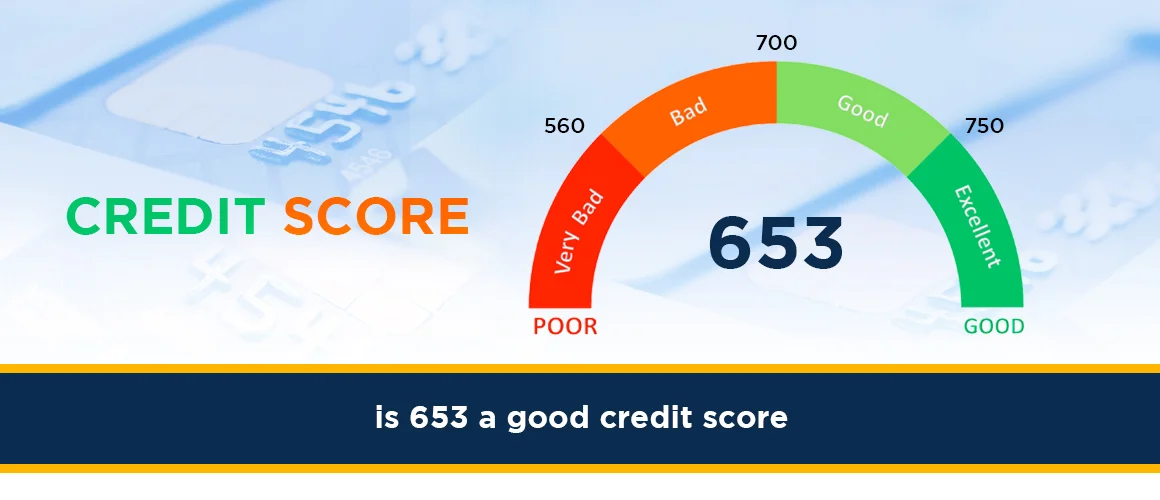
So, is a credit score of 653 considered good? Based on the common scoring ranges, a 653 falls squarely within the "Fair" category (580-669). This means it's not considered "poor," but it's also not yet in the "good" or "very good" tiers. A 653 credit score indicates that you have some positive credit history, but there are likely areas that need improvement to be seen as a low-risk borrower by lenders.
While a 653 score might not qualify you for the most competitive interest rates on loans or credit cards, it doesn't necessarily mean you're shut out from all credit opportunities. Many lenders consider a 653 score to be on the cusp of "good," and with some strategic efforts, you can significantly improve it. The key is understanding what a 653 score signifies and taking proactive steps to address any underlying issues that are holding it back.
In 2025, the lending landscape continues to evolve, but the fundamental principles of credit scoring remain consistent. A 653 score suggests that while you've managed some credit responsibly, there might be factors like a limited credit history, a high credit utilization ratio, or past late payments that are impacting your overall score. It's a score that requires attention and a plan for improvement rather than being a cause for immediate despair. The good news is that it's entirely within your power to raise this number.
Factors Affecting Your Credit Score
Your credit score isn't a static number; it's a dynamic reflection of your financial behavior over time. Several key factors contribute to its calculation, and understanding these is paramount to improving your score, especially when starting from a 653. The most influential elements, according to major scoring models like FICO, are:
Payment History (Approximately 35% of your score)
This is the single most important factor. It reflects whether you pay your bills on time.
- On-time payments: Consistently paying your credit card bills, loan installments, and other debts by their due date is crucial.
- Late payments: Even a single 30-day late payment can significantly damage your score. Longer delinquencies (60, 90+ days) have an even more severe impact.
- Collections and charge-offs: Accounts sent to collections or written off by the lender are major red flags.
Credit Utilization Ratio (Approximately 30% of your score)
This measures how much of your available credit you are currently using. It's calculated by dividing the total balance on your revolving credit accounts (like credit cards) by your total credit limit.
- Ideal ratio: Lenders prefer to see a credit utilization ratio below 30%. For a 653 score, keeping this even lower, ideally below 10%, can have a substantial positive impact.
- High utilization: Using a large portion of your available credit can signal to lenders that you are overextended and may struggle to manage your debt.
Length of Credit History (Approximately 15% of your score)
This refers to how long your credit accounts have been open and the average age of your accounts. A longer credit history generally indicates more experience managing credit.
- Older accounts: Keeping older, well-managed accounts open, even if you don't use them often, can benefit your score.
- New accounts: While opening new accounts is sometimes necessary, opening too many in a short period can lower the average age of your accounts and negatively affect your score.
Credit Mix (Approximately 10% of your score)
This factor considers the variety of credit accounts you have. Lenders like to see that you can responsibly manage different types of credit.
- Revolving credit: Credit cards, lines of credit.
- Installment loans: Mortgages, auto loans, personal loans.
- Diversity: Having a mix of both can be beneficial, but it's less critical than payment history and utilization. Don't open accounts you don't need just for the sake of credit mix.
New Credit (Approximately 10% of your score)
This looks at how often you apply for and open new credit accounts.
- Inquiries: Each time you apply for credit, a "hard inquiry" is placed on your credit report, which can slightly lower your score. Too many hard inquiries in a short period can be a warning sign.
- New accounts: Opening multiple new accounts quickly can signal financial distress or a higher risk of default.
Other Factors
While not directly part of the score calculation, certain negative items can severely impact your score and eligibility for credit:
- Public records: Bankruptcies, judgments, liens.
- Derogatory marks: Foreclosures, repossessions.
How to Improve a 653 Credit Score
Improving a 653 credit score from the "Fair" category to "Good" or "Very Good" is achievable with a consistent and strategic approach. The goal is to demonstrate to lenders that you are a responsible borrower. Here’s a step-by-step guide:
Step 1: Obtain and Review Your Credit Reports
Before you can improve your score, you need to understand what's on your credit reports. You are entitled to a free copy of your credit report from each of the three major credit bureaus (Equifax, Experian, TransUnion) once every 12 months at AnnualCreditReport.com.
- Check for errors: Look for any inaccuracies, such as accounts that don't belong to you, incorrect payment statuses, or outdated negative information.
- Dispute errors: If you find errors, dispute them immediately with the credit bureau and the creditor. This can take time but can significantly boost your score if successful.
Step 2: Prioritize On-Time Payments
Since payment history is the most significant factor, making all your payments on time is non-negotiable.
- Set up autopay: For recurring bills, set up automatic payments from your bank account to ensure you never miss a due date.
- Use payment reminders: If autopay isn't feasible, set calendar alerts or reminders a few days before each bill is due.
- Catch up on past due accounts: If you have any accounts that are currently past due, pay them off as soon as possible. The sooner you resolve delinquencies, the less impact they will have over time.
Step 3: Reduce Your Credit Utilization Ratio
This is often the quickest way to see a score improvement. Aim to get your credit utilization below 30%, and ideally below 10%.
- Pay down balances: Focus on paying down the balances on your credit cards. Prioritize cards with the highest utilization ratios first.
- Request credit limit increases: If you have a good payment history with a particular card issuer, you might be able to request a credit limit increase. This will lower your utilization ratio if your spending remains the same. Be cautious not to increase spending just because your limit has increased.
- Don't close unused cards: Closing a credit card reduces your total available credit, which can increase your utilization ratio, even if you don't carry a balance.
Step 4: Avoid Opening New Credit Unnecessarily
While opening new credit can eventually help with credit mix and history length, it can temporarily lower your score due to hard inquiries and a reduced average account age.
- Limit applications: Only apply for credit when you genuinely need it.
- Shop for rates strategically: If you're looking for a loan (like a mortgage or auto loan), do all your shopping within a short timeframe (typically 14-45 days, depending on the scoring model) so that multiple inquiries are treated as a single one.
Step 5: Consider a Secured Credit Card or Credit-Builder Loan
If your credit history is thin or contains negative marks, these products can help you build positive credit.
- Secured credit card: Requires a cash deposit that typically becomes your credit limit. Use it for small purchases and pay it off in full each month.
- Credit-builder loan: A small loan where the funds are held by the lender until you repay the loan. Your payments are reported to credit bureaus.
Step 6: Be Patient and Consistent
Credit scores don't improve overnight. It takes time and consistent positive financial behavior to rebuild trust with lenders. Stick to your plan, and you will see your score climb.
What Loans Can You Get with a 653 Credit Score?
A 653 credit score places you in the "Fair" credit category. This means that while you may not qualify for the most competitive loan products with the lowest interest rates, you are still likely to be approved for certain types of financing. Lenders offering loans to individuals with fair credit typically see them as higher risk, so you should anticipate higher interest rates and potentially stricter terms.
Mortgages
Securing a traditional mortgage with a 653 credit score can be challenging, especially for conventional loans. However, government-backed loans are often more accessible.
- FHA Loans: The Federal Housing Administration (FHA) insures loans for borrowers with lower credit scores. With a 653 score, you might qualify for an FHA loan, though you'll likely need a larger down payment and will have to pay mortgage insurance premiums (MIP). The minimum FHA score is typically 580 with a 3.5% down payment, but some lenders may have higher overlays.
- VA Loans: For eligible veterans and active-duty military personnel, VA loans offer excellent terms, often with no down payment required and no minimum credit score set by the VA itself. However, lenders will still have their own minimum requirements, and a 653 might be on the lower end of what they accept.
- USDA Loans: These loans are for rural homebuyers and also have flexible credit requirements, but income limits and location restrictions apply.
- Conventional Loans: While more difficult, some conventional lenders might approve a 653 score, but expect higher interest rates and a larger down payment requirement (often 10-20% or more).
Auto Loans
Getting an auto loan with a 653 credit score is generally more feasible than a mortgage.
- Dealership Financing: Many dealerships work with subprime lenders who specialize in approving borrowers with fair credit. Be prepared for higher interest rates (potentially in the double digits) and shorter loan terms, which result in higher monthly payments.
- Credit Unions and Banks: Some local credit unions and smaller banks may offer auto loans to borrowers with fair credit, sometimes with better terms than subprime lenders. It's worth shopping around.
- Online Lenders: Several online lenders cater to borrowers with fair credit. Research their reputations and compare offers carefully.
Personal Loans
Personal loans are unsecured loans, meaning they don't require collateral. This makes them riskier for lenders, so approval with a 653 score will depend heavily on other factors.
- Online Lenders: Many online lenders specialize in personal loans for fair credit. Examples include LendingClub, Prosper, and Upstart. Expect interest rates to be significantly higher than for those with good credit.
- Credit Unions: Similar to auto loans, credit unions can be a good option for personal loans.
- Co-signer: If you have a friend or family member with excellent credit who is willing to co-sign your loan, it can significantly increase your chances of approval and potentially secure a better interest rate.
Credit Cards
You can still qualify for credit cards with a 653 score, but they will likely be:
- Secured Credit Cards: As mentioned earlier, these require a cash deposit.
- Store Credit Cards: Retail stores often have more lenient approval criteria for their branded cards.
- Cards for Fair Credit: Some issuers offer cards specifically designed for individuals rebuilding their credit. These may come with annual fees and higher interest rates.
The key takeaway for a 653 credit score is that while options exist, you must be diligent in comparing offers, understanding the terms and conditions, and being prepared for higher costs due to increased risk. Your primary focus should also be on improving your score to unlock better opportunities.
Alternatives to Traditional Loans
If you're struggling to get approved for traditional loans with a 653 credit score, or if the offered terms are too unfavorable, there are several alternative financing options to consider. These can help you meet your financial needs while you work on improving your creditworthiness.
Secured Loans
Secured loans require you to put up collateral, such as a car, savings account, or other assets. This reduces the risk for the lender, making approval more likely.
- Savings-Secured Loans: You can borrow against the money in your savings account. The loan amount is usually a percentage of your savings balance.
- Certificate of Deposit (CD)-Secured Loans: Similar to savings-secured loans, you borrow against the value of a CD.
- Car Title Loans: While technically an option, these are extremely high-risk and should be avoided if at all possible due to predatory interest rates and the risk of losing your vehicle.
Co-signer or Guarantor
As mentioned, a co-signer is someone with good or excellent credit who agrees to be legally responsible for the loan if you fail to repay it.
- Benefits: Significantly increases your chances of approval and can help you secure a lower interest rate.
- Risks: If you default, it will damage your co-signer's credit score and could lead to legal action against them. Ensure you can repay the loan to protect your co-signer.
Payday Alternative Loans (PALs)
Offered by some federal credit unions, PALs are designed as a more affordable alternative to traditional payday loans. They have lower interest rates and longer repayment terms.
- Eligibility: You typically need to be a credit union member for at least one month.
- Loan amounts: Generally range from $200 to $1,000.
Borrowing from Friends or Family
This can be a viable option for smaller amounts, but it's crucial to approach it professionally.
- Formalize the agreement: Draft a clear loan agreement outlining the amount, interest rate (if any), repayment schedule, and consequences of default.
- Maintain transparency: Open communication is key to preserving relationships.
Peer-to-Peer (P2P) Lending Platforms
While many P2P platforms cater to borrowers with good credit, some may offer options for fair credit borrowers, though rates will be higher. These platforms connect borrowers directly with individual investors.
Secured Credit Cards and Prepaid Cards
While not loans, these can help you manage spending and build credit history.
- Prepaid Cards: These are not credit and do not build credit history, but they can help you manage your spending and avoid debt.
- Secured Credit Cards: As discussed, these are excellent tools for building credit when traditional cards are out of reach.
When considering alternatives, always read the fine print carefully, understand all fees and interest rates, and ensure you can comfortably afford the repayments. The goal is to find a solution that meets your immediate needs without creating further financial strain or damaging your credit further.
Managing Debt with a 653 Credit Score
Managing existing debt effectively is crucial for improving your 653 credit score and achieving better financial health. High debt levels, especially on credit cards, significantly impact your credit utilization ratio, which is a major component of your score.
Debt Reduction Strategies
Several proven strategies can help you tackle your debt:
- Debt Snowball Method: Pay off your smallest debts first while making minimum payments on larger ones. Once the smallest is paid off, roll that payment amount into the next smallest debt. This method provides psychological wins that can keep you motivated.
- Debt Avalanche Method: Prioritize paying off debts with the highest interest rates first, while making minimum payments on others. This method saves you the most money on interest over time.
- Debt Consolidation: This involves combining multiple debts into a single new loan, ideally with a lower interest rate and a manageable monthly payment.
- Personal Loans: You might qualify for a debt consolidation loan with a 653 score, but the interest rate could be high.
- Balance Transfer Credit Cards: Some cards offer 0% introductory APR on balance transfers. This can be very effective if you can pay off the balance before the introductory period ends. Be aware of balance transfer fees.
Negotiating with Creditors
If you are struggling to make payments, don't hesitate to contact your creditors.
- Payment Plans: Many creditors are willing to work with you to set up a more manageable payment plan, especially if you have a history of on-time payments before falling into hardship.
- Hardship Programs: Some lenders offer temporary hardship programs that might include reduced payments or interest.
- Settlement: In some cases, you might be able to negotiate a settlement for less than the full amount owed, especially if the debt is old or has been sent to collections. However, this can still negatively impact your credit score.
Budgeting and Financial Planning
A solid budget is the foundation of effective debt management.
- Track Your Spending: Understand where your money is going. Use budgeting apps or spreadsheets.
- Create a Realistic Budget: Allocate funds for necessities, debt repayment, and some discretionary spending.
- Identify Areas to Cut Back: Look for non-essential expenses that can be reduced or eliminated to free up more money for debt repayment.
Avoiding New Debt
While working to pay down existing debt, it's critical to avoid accumulating new debt.
- Live Within Your Means: Focus on spending less than you earn.
- Emergency Fund: Build a small emergency fund (even $500-$1,000) to cover unexpected expenses without resorting to credit cards or loans.
Managing debt with a 653 credit score requires discipline and a clear strategy. By employing these methods, you can systematically reduce your debt burden, improve your credit utilization, and ultimately boost your credit score.
Building Long-Term Credit Health
Improving your credit score from 653 is a significant step, but the ultimate goal is to build and maintain long-term credit health. This ensures financial stability, access to the best financial products, and peace of mind. Long-term credit health is about consistent, responsible financial behavior over years, not just months.
Cultivating a Strong Payment History
This is the bedrock of good credit.
- Automate Payments: Continue to use autopay or reliable reminders for all your bills.
- Never Miss a Payment: Even a single late payment can set you back. Make it a priority to pay on time, every time.
- Monitor Your Accounts: Regularly check your bank and credit statements for any unusual activity or missed payments.
Maintaining Low Credit Utilization
Keeping your credit utilization low demonstrates that you are not over-reliant on credit.
- Aim for Below 30%, Ideally Below 10%: This is a golden rule for optimal scores.
- Pay Down Balances Regularly: Don't wait for the statement due date; pay down balances as you incur them if possible.
- Increase Credit Limits Strategically: As your credit history improves, you may qualify for higher credit limits, which can help lower your utilization ratio if your spending remains stable.
Responsible Credit Account Management
How you manage your existing accounts matters.
- Keep Old Accounts Open: Provided they don't have annual fees you can't justify, keeping older, well-managed accounts open helps increase the average age of your credit history.
- Use Credit Sparingly: Only use credit when you need it and have a plan to repay it. Avoid impulse purchases on credit.
- Avoid Excessive Applications: Limit applications for new credit to only when necessary.
Regularly Reviewing Your Credit Reports
Your credit reports are living documents.
- Annual Check-ins: Continue to pull your free credit reports annually from AnnualCreditReport.com.
- Monitor for Changes: Look for any new accounts opened in your name, changes in account status, or new inquiries that you don't recognize.
- Dispute Inaccuracies Promptly: Address any errors immediately to protect your score.
Financial Education and Awareness
Stay informed about personal finance and credit management.
- Read Financial Blogs and Resources: Stay updated on best practices.
- Understand Credit Scoring Models: Familiarize yourself with how FICO and VantageScore work.
- Seek Professional Advice: Consider consulting a non-profit credit counselor if you need personalized guidance.
Patience and Consistency
Building excellent credit is a marathon, not a sprint. It requires consistent, responsible behavior over an extended period. By focusing on these long-term strategies, you can not only improve your current 653 credit score but also build a strong financial foundation for the future, opening doors to better loan terms, lower insurance premiums, and greater financial freedom.
Conclusion
A credit score of 653 places you in the "Fair" credit category, indicating a need for improvement but also a solid foundation upon which to build. While not ideal, it's a score that signifies you have some credit experience, and importantly, it's a score that can be significantly enhanced with focused effort. This guide has illuminated the factors that influence your credit score, from payment history to credit utilization, and provided actionable steps to elevate your 653 score.
By prioritizing on-time payments, diligently reducing your credit utilization ratio, and carefully managing new credit applications, you can steadily climb into the "Good" and "Very Good" tiers. Remember that patience and consistency are your greatest allies. While a 653 score may limit your access to the most favorable loan terms, options like FHA mortgages, certain auto loans, and personal loans from specialized lenders are often available. Furthermore, exploring alternatives like co-signers or credit-builder products can bridge any immediate financing gaps.
Ultimately, the journey from a 653 credit score to excellent credit is about demonstrating responsible financial behavior consistently. Embrace the strategies outlined here, stay vigilant in monitoring your credit reports, and commit to long-term financial health. Your efforts today will pave the way for greater financial opportunities and security tomorrow.
