Is 696 a Good Credit Score? Understanding Credit Scores and Their Implications
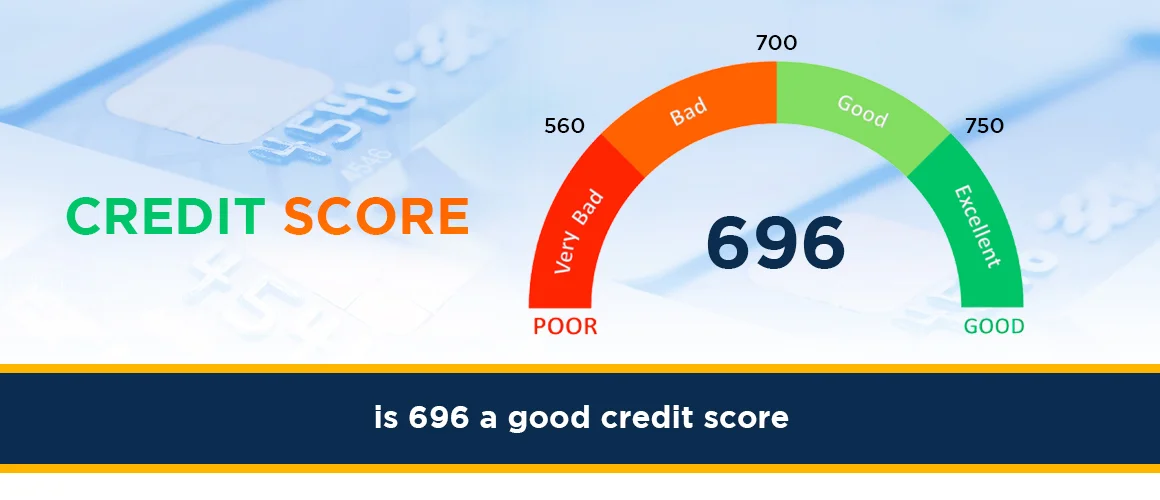
A credit score of 696 sits squarely in the "good" range, offering a solid foundation for financial opportunities. This score can unlock better interest rates on loans and credit cards, though it might not always qualify for the absolute best terms. Understanding what this score means and how to improve it is key to maximizing your financial future.
What is a Credit Score and Why Does it Matter?
At its core, a credit score is a three-digit number that represents your creditworthiness. It's a snapshot of your financial behavior, calculated by credit bureaus based on the information in your credit reports. Think of it as a financial report card that lenders use to assess the risk involved in lending you money. The higher your score, the lower the perceived risk, and the more favorable terms you're likely to receive.
The importance of a good credit score cannot be overstated in today's financial landscape. It influences not only your ability to borrow money but also the cost of that borrowing. A higher credit score can mean lower interest rates on mortgages, auto loans, and credit cards, saving you thousands of dollars over the life of a loan. Beyond loans, landlords may check your credit score when you apply to rent an apartment, and some employers may review it as part of a background check for certain positions. In essence, your credit score is a critical component of your financial health and plays a significant role in achieving major life goals, from buying a home to securing a favorable insurance premium.
Understanding Credit Score Ranges: Where Does 696 Fit?
Credit scores are typically categorized into different ranges, each signifying a different level of credit risk. While the exact ranges can vary slightly between different scoring models (like FICO and VantageScore), there's a general consensus on what constitutes poor, fair, good, very good, and excellent credit. Understanding these ranges helps contextualize your 696 score.
Generally, credit scores range from 300 to 850. Here's a common breakdown:
- Poor Credit: 300-579
- Fair Credit: 580-669
- Good Credit: 670-739
- Very Good Credit: 740-799
- Excellent Credit: 800-850
Based on these widely accepted ranges, a credit score of 696 falls comfortably within the Good Credit category. This is a significant milestone, as it indicates to lenders that you have a history of managing credit responsibly, though there's still room for improvement to reach the higher tiers.
Is 696 a Good Credit Score? The Nuances of a "Good" Score
So, is 696 a good credit score? The direct answer is yes, it is considered a good credit score. It signifies that you've demonstrated a reasonable level of financial responsibility. With a 696 score, you're likely to be approved for many types of credit, and you'll probably qualify for interest rates that are better than those offered to individuals with fair or poor credit. However, it's important to understand that "good" is not the same as "excellent."
Lenders often have tiers of approval and pricing. While a 696 score will likely get you approved for a loan or credit card, the interest rate you're offered might be higher than what someone with a score in the 740s or 800s would receive. This difference in interest rates can translate into substantial savings over time. For instance, a slightly lower interest rate on a mortgage can save tens of thousands of dollars over 30 years. Similarly, a lower APR on a credit card means you pay less in interest if you carry a balance.
The perception of a 696 score can also depend on the specific lender and the type of credit product you're applying for. Some lenders are more conservative than others. Additionally, while your credit score is a primary factor, lenders also consider other aspects of your financial profile, such as your income, employment history, and debt-to-income ratio. Therefore, while a 696 is a good score, it's always beneficial to aim higher to unlock the most favorable financial opportunities.
Factors Influencing Your Credit Score
Your credit score isn't a static number; it's a dynamic reflection of your credit behavior. Several key factors contribute to its calculation, and understanding these can help you identify areas for improvement. The most widely used scoring models, FICO and VantageScore, weigh these factors differently, but the core components remain consistent.
Here are the primary factors that influence your credit score:
1. Payment History (Approximately 35% of FICO Score)
This is the most critical factor. Making on-time payments is paramount. Late payments, missed payments, defaults, bankruptcies, and collections all have a significant negative impact. Even a single 30-day late payment can lower your score.
2. Amounts Owed (credit utilization Ratio) (Approximately 30% of FICO Score)
This refers to how much credit you're using compared to your total available credit. Keeping your credit utilization low, ideally below 30% (and even better, below 10%), is crucial. For example, if you have a credit card with a $10,000 limit, keeping your balance below $3,000 is good, and below $1,000 is excellent.
3. Length of Credit History (Approximately 15% of FICO Score)
The longer you've had credit accounts open and in good standing, the better. This demonstrates a longer track record of responsible credit management. Closing older accounts, especially those with a positive history, can shorten your average account age and potentially lower your score.
4. Credit Mix (Approximately 10% of FICO Score)
Having a mix of different types of credit, such as revolving credit (credit cards) and installment loans (mortgages, auto loans, student loans), can be beneficial. It shows that you can manage various forms of credit responsibly. However, this factor is less influential than payment history or credit utilization.
5. New Credit (Approximately 10% of FICO Score)
Opening several new credit accounts in a short period can negatively impact your score. Each application for credit typically results in a "hard inquiry" on your credit report, which can temporarily lower your score. Spreading out applications and avoiding excessive new credit is advisable.
How Credit Utilization Impacts Your Score
Credit utilization is a powerful lever for improving your credit score. It measures the ratio of your revolving credit balances to your total revolving credit limits. For example, if you have two credit cards, one with a $5,000 limit and a $2,000 balance, and another with a $3,000 limit and a $1,000 balance, your total credit limit is $8,000, and your total balance is $3,000. Your credit utilization ratio is $3,000 / $8,000 = 37.5%.
Lenders and scoring models view high credit utilization as a sign of financial distress, suggesting you might be overextended. Conversely, low utilization indicates responsible credit management. A target utilization ratio of 30% or lower is generally recommended, but aiming for below 10% can provide an even greater boost to your score. If your 696 score is being held back by high utilization, focusing on paying down balances is a highly effective strategy.
How Lenders View a 696 Credit Score
When a lender reviews an application, they're assessing risk. A 696 credit score places you in a category where the perceived risk is moderate. This means you're a much safer bet than someone with a score in the 500s or low 600s, but you're not yet in the prime territory of those with scores above 740.
Here's a breakdown of how lenders generally perceive a 696 credit score:
- Approval Likelihood: You are likely to be approved for most standard credit products, including personal loans, auto loans, and credit cards. However, for highly competitive products or those with the lowest interest rates, you might be on the borderline.
- Interest Rates: You will likely qualify for interest rates that are better than average but not the absolute lowest available. The difference in interest rates compared to someone with an excellent score could be significant, potentially adding hundreds or even thousands of dollars to the total cost of borrowing over time.
- Loan Terms: Lenders might offer standard loan terms. You might not be eligible for the most flexible repayment options or the longest loan durations that are sometimes reserved for borrowers with exceptional credit.
- Credit Limits: For credit cards and lines of credit, you can expect reasonable credit limits. However, the highest credit limits are typically reserved for individuals with excellent credit profiles.
- Down Payment Requirements: For significant loans like mortgages, a 696 score might mean you're required to make a larger down payment compared to someone with a higher score, especially if you're seeking a conventional loan. Some government-backed loans (like FHA) might have lower score requirements but could still involve mortgage insurance premiums.
It's also important to remember that lenders consider the full picture. A strong income, stable employment, and a low debt-to-income ratio can help offset a score that's not in the top tier. Conversely, even with a 696 score, a high debt load or unstable income could lead to denial or less favorable terms.
Implications of a 696 Credit Score: Loans, Mortgages, and More
A 696 credit score opens doors to many financial opportunities, but it's crucial to understand the specific implications for different types of credit.
Auto Loans
With a 696 credit score, you'll likely qualify for an auto loan. However, the interest rate you receive will be higher than for someone with excellent credit. For example, a 2025 study indicated that borrowers with scores in the 690-719 range might see APRs around 7-9% for new car loans, while those with scores above 740 could secure rates as low as 4-6%. Over a five-year loan term, this difference can amount to over $1,000 in extra interest paid.
Example: A $30,000 car loan at 8% APR for 60 months results in monthly payments of approximately $607 and total interest of $6,420. The same loan at 5% APR would have monthly payments of approximately $566 and total interest of $3,960, saving you $2,460.
Mortgages
Securing a mortgage with a 696 credit score is possible, especially with certain loan programs. Conventional loans often require higher scores for the best rates, typically starting in the mid-700s. However, FHA loans, designed for borrowers with lower credit scores, can be accessible. For instance, FHA loans can allow borrowers with scores as low as 580 to qualify with a 3.5% down payment, and even lower with a larger down payment. A 696 score is well above this minimum.
The primary implication for a 696 score on a mortgage is the interest rate and potential private mortgage insurance (PMI). Borrowers with scores below 740 on conventional loans will almost certainly pay PMI, which adds to your monthly housing cost. The rate you secure will be higher than for someone with excellent credit, impacting your monthly payment and the total interest paid over the life of a 30-year mortgage.
Credit Cards
You'll find a wide array of credit cards accessible with a 696 score. Many "good credit" cards offer decent rewards programs, introductory APR offers, and moderate credit limits. However, you might not qualify for premium travel cards or cards with the highest sign-up bonuses and the most lucrative rewards rates, which are typically reserved for excellent credit.
Table: Credit Card Tiers for a 696 Score
| Card Type | Likely Approval | Typical APR (2025 Estimate) | Credit Limit Potential |
|---|---|---|---|
| Rewards Cards (Mid-Tier) | High | 18-24% | $3,000 - $10,000 |
| Balance Transfer Cards | Moderate to High | 0% Intro APR for 12-18 months, then 18-24% | $2,000 - $8,000 |
| Secured Credit Cards (if needed) | Very High | 20-28% | Based on deposit |
| Premium Travel/Cashback Cards | Low to Moderate | 16-22% | $5,000 - $20,000+ |
Personal Loans
You should be able to qualify for personal loans with a 696 score, but again, the interest rates will be higher than for those with excellent credit. This means the cost of borrowing will be greater. For instance, a $10,000 personal loan at 12% APR for three years will cost more in interest than the same loan at 7% APR.
Renting an Apartment
Landlords often use credit scores to screen tenants, as a good score indicates a higher likelihood of paying rent on time. A 696 score is generally considered good enough to be approved for most rental properties. However, in highly competitive rental markets, landlords might prefer tenants with scores in the 700s or higher.
Insurance Premiums
In many states, insurance companies use credit-based insurance scores to help set premiums for auto and homeowners insurance. A higher credit score generally correlates with lower insurance rates because individuals with better credit history are statistically less likely to file claims. A 696 score would likely result in more favorable rates than someone with fair or poor credit, but not the absolute lowest rates available.
Strategies to Improve a 696 Credit Score
While a 696 credit score is good, aiming for "very good" or "excellent" credit can unlock significant financial benefits. Fortunately, there are several actionable strategies you can implement to boost your score.
1. Continue Paying Bills On Time, Every Time
This is the bedrock of good credit. Even with a 696 score, a single late payment can cause a significant drop. Set up automatic payments or calendar reminders to ensure you never miss a due date. If you've had past issues, focus on maintaining a perfect payment record moving forward.
2. Reduce Your Credit Utilization Ratio
This is often the quickest way to see a score increase. Aim to keep your credit utilization below 30%, and ideally below 10%. If you have balances on your credit cards, prioritize paying them down. Consider making multiple payments throughout the month to keep your reported balance low.
Actionable Step: If you have a credit card with a $5,000 limit and a $2,000 balance (40% utilization), paying down $1,000 to reach a $1,000 balance (20% utilization) can significantly boost your score.
3. Avoid Opening Too Many New Credit Accounts
While adding new credit can sometimes help with credit mix, opening multiple new accounts in a short period can hurt your score due to hard inquiries and a shortened average age of accounts. Only apply for credit when you genuinely need it.
4. Keep Old, Unused Accounts Open
As long as they don't have annual fees you're unwilling to pay or a history of mismanagement, keeping older credit accounts open can benefit your credit history length and credit utilization. Closing an old account reduces your total available credit, which can increase your utilization ratio.
5. Dispute Errors on Your Credit Report
Mistakes happen. Obtain copies of your credit reports from Equifax, Experian, and TransUnion (you can get them for free annually at AnnualCreditReport.com) and review them carefully. If you find any inaccuracies (e.g., accounts that aren't yours, incorrect late payment markers), dispute them with the credit bureau. Correcting errors can lead to a score increase.
6. Consider a Credit-Builder Loan or Secured Credit Card (If Necessary)
If your credit history is thin or you've had past issues, these tools can help. A credit-builder loan involves making payments on a loan that's held in an account, and you receive the funds after you've paid it off. A secured credit card requires a cash deposit that acts as your credit limit, allowing you to build a positive payment history.
7. Diversify Your Credit Mix (Cautiously)
If your credit history consists solely of credit cards, consider adding an installment loan, such as a small credit-builder loan or a responsibly managed car loan, if it aligns with your financial goals. However, don't take out loans solely for the purpose of improving your credit mix if you don't need them.
What to Expect When Applying for Credit with a 696 Score
Applying for credit with a 696 score is a common scenario for many consumers. It's a score that generally positions you favorably, but it's wise to manage your expectations. You're likely to be approved for many products, but not always with the most competitive terms.
When you apply for a credit card, auto loan, or personal loan, the lender will pull your credit report and score. They will assess your:
- Credit Score: As discussed, 696 is in the "good" range.
- Credit History: They'll look at the length of your credit history, the types of credit you have, and your payment patterns.
- Income and Employment: Lenders need to be confident you can repay the debt. A stable income and employment history are crucial.
- Debt-to-Income Ratio (DTI): This compares your monthly debt payments to your gross monthly income. A lower DTI is generally better.
Scenario Example: Applying for a Car Loan
Imagine you're applying for a $25,000 auto loan. With a 696 credit score, you might receive an offer with an APR of, say, 8.5%. A borrower with a 760 score might be offered 5.5% for the same loan. Over a 60-month term, this difference translates to approximately $1,600 more in interest paid for the borrower with the 696 score.
Scenario Example: Applying for a New Credit Card
You apply for a popular rewards credit card. With a 696 score, you're likely to be approved for a card that offers decent cash back or travel points. However, you might not qualify for the card with the highest sign-up bonus or the most premium travel perks, which often require scores in the 700s or higher. The credit limit you receive will also be moderate, perhaps in the $5,000-$10,000 range, compared to potentially $15,000+ for someone with excellent credit.
Key Takeaway: Be prepared for offers that are good, but not necessarily the best. This is where comparing offers from multiple lenders becomes critical. Don't accept the first offer you receive. Shop around to find the most competitive rates and terms available to you.
The Path from Good to Excellent Credit
Moving from a "good" credit score of 696 to an "excellent" score (typically 740+) is an achievable goal that requires consistent, responsible financial habits. The difference between these tiers can translate into thousands of dollars saved on interest over time, greater access to premium financial products, and more favorable terms across the board.
The journey involves reinforcing the positive behaviors that got you to a 696 score and refining them further:
- Maintain Perfect Payment History: This is non-negotiable. Continue making all payments on time, without exception. Even one late payment can derail your progress.
- Aggressively Lower Credit Utilization: Aim to keep your credit utilization ratio consistently below 10%. This might involve paying down balances significantly or requesting credit limit increases on existing cards (if you can resist the temptation to spend more). A lower utilization signals to lenders that you have ample available credit and are not reliant on it.
- Increase Credit History Length: Continue to hold onto your oldest credit accounts in good standing. Avoid closing them, as this shortens your average account age.
- Strategic Use of Credit: While avoiding excessive new credit, consider adding a new, well-managed credit account if your credit mix is limited. However, prioritize paying down existing debt before taking on new obligations.
- Monitor Your Credit Reports Regularly: Continue to check your credit reports for errors and dispute any inaccuracies promptly.
- Build a Strong Financial Profile: Beyond credit scores, focus on increasing your income, reducing your overall debt, and maintaining stable employment. Lenders look at the complete financial picture.
Example of Improvement:
Let's say someone with a 696 score has a credit utilization of 25% and an average credit history length of 5 years. To reach 740+, they might focus on:
- Reducing their utilization to 8% by paying down balances.
- Maintaining perfect payment history for another 1-2 years.
- Ensuring their oldest accounts remain open and active.
Over time, these consistent actions will demonstrate an even lower risk profile to lenders, pushing their score into the excellent range. The rewards can be substantial, often seen in significantly lower interest rates on major purchases like homes and cars.
Conclusion
A credit score of 696 is a commendable achievement, firmly placing you in the "good" credit category. This score signifies a responsible approach to managing credit, opening doors to a wide range of loan and credit card approvals with reasonable terms. You're likely to secure better interest rates than those with fair credit, saving you money on borrowing costs.
However, the financial landscape often rewards excellence. While 696 is good, striving for a score of 740 and above can unlock even more significant benefits, including lower interest rates, higher credit limits, and access to premium financial products. The key to moving forward lies in consistent, diligent financial practices: always pay bills on time, aggressively manage your credit utilization ratio, and monitor your credit reports for accuracy.
By understanding the factors that influence your score and implementing targeted strategies, you can build upon your current success. A 696 credit score is a strong foundation, and with continued effort, you can pave the way for even greater financial opportunities and savings in the years to come. Start by focusing on reducing your credit utilization and maintaining your stellar payment history to make the leap to excellent credit.
