Is 713 a Good Credit Score? Understanding Its Implications
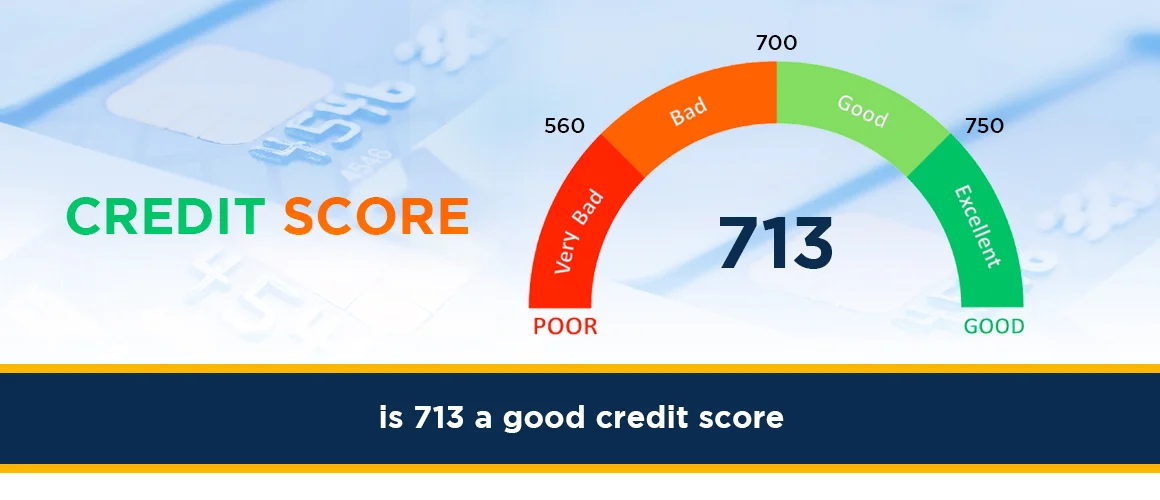
A credit score of 713 sits in a favorable position, generally considered good, offering access to better loan terms and interest rates. This score indicates responsible credit management, but there's always room for improvement to unlock even greater financial benefits. Understanding its implications is key.
Understanding the 713 Credit Score: Where Does It Stand?
In the realm of creditworthiness, a score of 713 is a significant milestone. It typically falls into the "good" to "very good" category, depending on the specific scoring model used. This means that lenders view you as a relatively low-risk borrower, which translates into tangible benefits when seeking new credit. However, it's crucial to understand that "good" is not the absolute pinnacle of credit scoring. While a 713 score opens many doors, a higher score could unlock even more favorable terms, lower interest rates, and greater financial flexibility. This post will delve into what a 713 credit score truly signifies, its implications across various financial products, and actionable strategies to potentially elevate your score even further.
Credit Score Ranges: A Comprehensive Overview
Credit scoring models, most notably FICO and VantageScore, categorize credit scores into different ranges to help lenders quickly assess risk. While the exact thresholds can vary slightly between models and over time, here's a general breakdown as of 2025:
| Score Range | Category | Implications |
|---|---|---|
| 300-579 | Very Poor | Difficult to obtain credit; high interest rates if approved. |
| 580-669 | Fair | May qualify for some credit, but with higher rates and fees. |
| 670-739 | Good | Generally considered favorable; access to better loan terms and interest rates. |
| 740-799 | Very Good | Excellent chances of approval with competitive rates and terms. |
| 800-850 | Exceptional | Top-tier borrower status; access to the best possible rates and exclusive offers. |
As you can see, a 713 credit score firmly lands within the "Good" category. This is a solid foundation, indicating that you've demonstrated a pattern of responsible credit behavior. Lenders are more likely to approve your applications for loans and credit cards, and you can typically expect more competitive interest rates compared to those with fair or poor credit. However, it also means you're within striking distance of the "Very Good" range, where even better financial opportunities await.
What a 713 Credit Score Means for You
Having a 713 credit score signifies that you have a track record of managing credit responsibly. This score suggests that you likely:
- Make payments on time, most of the time.
- Keep your credit utilization relatively low.
- Don't have a significant number of recent credit inquiries or new accounts.
- Have a mix of credit types, such as credit cards and installment loans.
- Have a reasonably established credit history.
This positive financial behavior translates into a higher degree of trust from lenders. They see you as less likely to default on your financial obligations. Consequently, a 713 credit score generally opens doors to a wider array of financial products and services, often with more favorable terms than what might be available to individuals with lower scores. It's a score that many consumers strive to achieve and maintain, as it represents a good balance between accessibility and cost-effectiveness for borrowing.
The Impact of a 713 Score on Loan Approvals and Rates
The most immediate and significant impact of a 713 credit score is on your ability to secure loans and credit cards, and at what cost. Lenders use credit scores as a primary tool to assess the risk associated with lending money. A good score like 713 signals to them that you are a reliable borrower, making them more willing to extend credit and offer better terms.
Approval Likelihood
With a 713 credit score, you are likely to be approved for most standard loan products, including mortgages, auto loans, personal loans, and credit cards. While some niche or premium products might require higher scores, a 713 score is generally sufficient for mainstream lending. This is a significant advantage, as individuals with lower scores often face rejections or are limited to subprime lenders with exorbitant fees and interest rates.
Interest Rates
Perhaps the most impactful benefit of a good credit score is the ability to secure lower interest rates. Interest is the cost of borrowing money, and a lower rate means you pay less over the life of a loan. For large loans like mortgages or auto loans, even a small difference in interest rate can translate into thousands of dollars saved.
For example, as of 2025, a borrower with a 713 credit score might qualify for an auto loan interest rate of around 7-9%, while someone with a fair credit score (e.g., 600-650) might be looking at rates of 15-20% or higher. Similarly, on a mortgage, a difference of 0.5% to 1% in interest rate can significantly alter your monthly payments and total interest paid over 30 years.
Loan Terms and Fees
Beyond interest rates, a 713 score can also influence other aspects of loan terms. You might be offered longer repayment periods, lower down payment requirements, or fewer origination fees. Lenders are more willing to be flexible and offer more competitive terms when they perceive a lower risk. This can make borrowing more manageable and affordable.
Mortgage Applications with a 713 Credit Score
Securing a mortgage is one of the most significant financial undertakings for many individuals, and your credit score plays a pivotal role. A 713 credit score is generally considered good enough to qualify for a mortgage, but it's important to understand the nuances.
Eligibility for Conventional Loans
Most conventional mortgage lenders have a minimum credit score requirement, often around 620. A 713 score comfortably exceeds this threshold, making you eligible for a wide range of conventional loan products. This includes both fixed-rate and adjustable-rate mortgages.
Interest Rates and Private Mortgage Insurance (PMI)
While a 713 score makes you eligible, it might not always secure the absolute lowest interest rates available in the market. The best rates are typically reserved for borrowers with scores in the "Very Good" (740-799) and "Exceptional" (800+) ranges. However, a 713 score will still grant you significantly better rates than those with fair credit. You can expect rates that are competitive and manageable.
Furthermore, if your down payment is less than 20%, you will likely be required to pay Private Mortgage Insurance (PMI). While a 713 score doesn't exempt you from PMI, it can sometimes lead to lower PMI premiums compared to lower credit scores. The exact PMI rate will depend on the lender and the loan-to-value ratio.
Government-Backed Loans
For borrowers with a 713 score, government-backed loans can also be an attractive option:
- FHA Loans: These loans, insured by the Federal Housing Administration, are designed for borrowers with lower credit scores. While FHA loans can be obtained with scores as low as 580 (with a 3.5% down payment) or even 500 (with a 10% down payment), a 713 score makes you a very strong candidate, likely qualifying for the lowest down payment options and competitive rates.
- VA Loans: For eligible veterans and active-duty military personnel, VA loans offer excellent benefits with no down payment requirement and no PMI. While there's no official minimum credit score set by the VA, most lenders impose their own minimums, often around 620-640. A 713 score would make you a highly qualified applicant for a VA loan.
- USDA Loans: These loans are for rural homebuyers and also have no down payment requirement. Similar to VA loans, lenders set their own credit score minimums, typically around 640. A 713 score would likely make you eligible.
In summary, a 713 credit score is a strong asset for mortgage applications, providing access to a broad spectrum of loan options and generally favorable terms, though striving for a higher score could unlock even greater savings.
Auto Loan Prospects with a 713 Credit Score
Purchasing a vehicle is a significant investment, and your credit score directly impacts the cost of financing. A 713 credit score positions you favorably for auto loans.
Approval and Rates
With a 713 score, you are highly likely to be approved for an auto loan from most major lenders. More importantly, you can expect to receive competitive interest rates. As of 2025, individuals with scores in the "Good" range (670-739) often qualify for auto loan rates that are significantly lower than those with fair or poor credit. This can translate into substantial savings over the life of a car loan, which typically ranges from 3 to 7 years.
For instance, a borrower with a 713 score might secure an interest rate of approximately 7-9% on a new car loan, whereas someone with a score of 600 might face rates of 15-20% or more. This difference could mean paying hundreds or even thousands of dollars more in interest over the loan term.
Loan Terms
Lenders are also more likely to offer favorable loan terms, such as longer repayment periods or lower down payment requirements, to borrowers with a 713 credit score. This can make purchasing a vehicle more affordable and manageable on a monthly basis.
Dealership Financing vs. Direct Lenders
It's important to compare financing offers from both dealership finance departments and direct lenders (like banks and credit unions). While dealerships can offer convenience, direct lenders might provide more competitive rates, especially if you have a good credit score. A 713 score gives you leverage to negotiate better terms wherever you choose to finance your vehicle.
Personal Loan Opportunities with a 713 Credit Score
Personal loans are versatile financial tools used for various purposes, such as debt consolidation, home improvements, medical expenses, or unexpected emergencies. A 713 credit score generally provides good access to personal loans with reasonable terms.
Access to Lenders
Most banks, credit unions, and online lenders that offer personal loans will consider a 713 credit score to be within their acceptable range for approval. This means you won't be limited to high-cost, subprime lenders. You'll have a good selection of reputable institutions to choose from.
Interest Rates and Fees
The interest rates on personal loans for individuals with a 713 score are typically competitive. While not as low as what someone with an exceptional credit score might receive, they will be significantly lower than what's offered to those with fair or poor credit. As of 2025, rates for a good credit score might range from 8% to 15%, depending on the lender, loan amount, and repayment term.
It's crucial to compare Annual Percentage Rates (APRs), which include interest and any fees, to get the true cost of the loan. Some lenders may charge origination fees, which can add to the overall expense.
Loan Amounts and Terms
With a 713 score, you are likely to qualify for a decent loan amount, often ranging from a few thousand dollars up to $50,000 or more, depending on your income and debt-to-income ratio. Repayment terms typically range from one to seven years. A shorter term means higher monthly payments but less interest paid overall, while a longer term means lower monthly payments but more interest paid.
Credit Card Eligibility with a 713 Credit Score
Credit cards are a fundamental part of credit management. A 713 credit score significantly enhances your ability to qualify for a wide range of credit cards, including those with attractive rewards and benefits.
Types of Cards You Can Get
With a 713 credit score, you are likely to be approved for:
- Rewards Credit Cards: These include cashback cards, travel rewards cards, and points-based cards that offer valuable perks for your spending.
- Low-Interest or Balance Transfer Cards: You may qualify for cards with introductory 0% APR periods, which can be beneficial for consolidating debt or making large purchases you plan to pay off over time.
- Secured Credit Cards (Less Likely Needed): While secured cards are typically for those with poor credit, a 713 score means you generally won't need one.
- Store Credit Cards: These are often easier to get but may come with higher interest rates. A 713 score will likely grant you approval.
Credit Limits and Benefits
Lenders are more willing to extend higher credit limits to individuals with a 713 credit score, recognizing their lower risk. Higher credit limits can be beneficial for managing cash flow and improving your credit utilization ratio (if you keep your balances low). Furthermore, you'll be eligible for premium cards that offer benefits like travel insurance, purchase protection, airport lounge access, and concierge services.
Avoiding High-Interest Cards
The primary advantage of a 713 score is the ability to avoid the high-interest cards often marketed to individuals with fair or poor credit. This means that if you do carry a balance (which is generally not recommended), the interest charges will be significantly lower, saving you money.
Other Financial Products and Services
Beyond traditional loans and credit cards, a 713 credit score can influence your access to and cost of other financial products and services:
Renting an Apartment
Landlords and property managers frequently check credit scores as part of the tenant screening process. A 713 score is generally considered good enough to pass most credit checks for apartment rentals. This can make it easier to secure housing in desirable locations and avoid higher security deposits or co-signer requirements.
Insurance Premiums
In many states, insurance companies (auto, home, renters) use credit-based insurance scores to help determine premiums. Studies have shown a correlation between credit history and the likelihood of filing insurance claims. A 713 credit score typically leads to lower insurance premiums compared to someone with a lower score, as you're perceived as a lower risk.
Utility Services
When setting up new utility services (electricity, gas, water, internet, mobile phone), companies may check your credit. A good credit score like 713 often means you won't have to pay a security deposit to start service. This can save you upfront costs.
Employment Screening
In certain industries, particularly those involving financial responsibility or access to sensitive information, employers may conduct credit checks as part of the background screening process. A 713 score presents you as a responsible individual, which is generally viewed favorably.
Strategies to Improve Your Credit Score from 713
While a 713 credit score is good, aiming for the "Very Good" (740+) or "Exceptional" (800+) range can unlock even greater financial advantages, such as the absolute lowest interest rates and premium credit card offers. Fortunately, improving from a 713 score is often about refining existing good habits and making strategic adjustments.
1. Maintain Stellar Payment History
This is the most critical factor. Ensure every single payment is made on time, every time. Even one late payment can significantly damage your score. Set up automatic payments or calendar reminders to avoid missing due dates.
2. Reduce Credit Utilization Ratio (CUR)
Your credit utilization ratio is the amount of credit you're using compared to your total available credit. Aim to keep this ratio below 30%, and ideally below 10%, for each card and overall. If you have a 713 score, your utilization might already be good, but lowering it further can provide a boost.
Example: If you have a credit card with a $10,000 limit and a $3,000 balance, your utilization is 30%. If you pay it down to $1,000, your utilization drops to 10%, which is much better for your score.
3. Avoid Opening Too Many New Accounts Quickly
While new credit can be beneficial in the long run (by increasing your average age of accounts and credit mix), opening multiple new accounts in a short period can lead to several hard inquiries on your credit report, temporarily lowering your score. If you're looking to improve from 713, focus on optimizing existing accounts rather than opening many new ones unless strategically planned.
4. Monitor Your Credit Reports Regularly
Obtain free copies of your credit reports from Equifax, Experian, and TransUnion annually at AnnualCreditReport.com. Review them for any errors or inaccuracies. Dispute any mistakes you find, as correcting them can potentially improve your score.
5. Keep Old, Unused Accounts Open (If No Annual Fee)
The length of your credit history is a significant factor. Keeping older credit accounts open, even if you don't use them often (provided they don't have an annual fee), can help increase the average age of your credit accounts, which is beneficial for your score.
6. Consider a Credit-Builder Loan or Secured Card (Strategic Use)
While likely not necessary to get *to* 713, if you have specific goals like increasing your credit mix or further boosting your score, a credit-builder loan or a secured card (used responsibly and then graduated to an unsecured card) could be considered. However, with a 713 score, focus on optimizing existing credit is usually more effective.
7. Be Patient
Credit scoring is a marathon, not a sprint. Significant improvements take time. Continue practicing good credit habits consistently, and your score will gradually increase.
Key Factors That Influence Your Credit Score
Understanding the components that make up your credit score is crucial for managing and improving it. While the exact weighting varies slightly between FICO and VantageScore models, the core factors remain consistent:
Payment History: The Cornerstone of Your Credit
This is the single most important factor, typically accounting for about 35% of your FICO score. It reflects whether you pay your bills on time. Late payments, missed payments, defaults, bankruptcies, and collections all negatively impact this aspect of your score. Consistently paying on time is paramount for a good credit score.
Credit Utilization: Keeping Balances Low
This factor accounts for roughly 30% of your FICO score. It measures the amount of credit you're using compared to your total available credit. A lower utilization ratio indicates to lenders that you are not overextended and can manage your credit responsibly. Keeping this ratio below 30% is a general guideline, but below 10% is even better.
Calculation: (Total Balances / Total Credit Limits) x 100 = Credit Utilization Ratio
Length of Credit History: Time as a Factor
This component, around 15% of your FICO score, considers the age of your oldest credit account, the age of your newest credit account, and the average age of all your accounts. A longer credit history generally indicates more experience managing credit, which is viewed favorably. This is why keeping older accounts open can be beneficial.
Credit Mix: Demonstrating Diverse Responsibility
Accounting for about 10% of your FICO score, the credit mix looks at the different types of credit accounts you have. This includes revolving credit (like credit cards) and installment loans (like mortgages, auto loans, or personal loans). Having a mix demonstrates that you can manage various types of credit responsibly. However, this factor is less important than payment history or utilization, and you shouldn't open accounts solely to improve your credit mix.
New Credit: Opening Accounts Wisely
This final 10% of your FICO score relates to how many new credit accounts you've opened recently and the number of hard inquiries on your credit report. Opening several new accounts in a short period can signal increased risk to lenders, potentially lowering your score temporarily. Applying for credit only when you genuinely need it is advisable.
Monitoring Your Credit: Essential for Growth
Regularly monitoring your credit is not just about spotting errors; it's about understanding your financial health and identifying opportunities for improvement. As of 2025, there are several convenient ways to do this:
- AnnualCreditReport.com: This is the official, government-mandated website where you can obtain one free credit report from each of the three major credit bureaus (Equifax, Experian, and TransUnion) every 12 months. It's essential to check these reports for accuracy.
- Credit Card Issuer Benefits: Many credit card companies now offer free access to your credit score and sometimes even credit monitoring services as a cardholder benefit. This provides a convenient way to track your score's progress regularly.
- Free Credit Monitoring Services: Numerous reputable websites and apps offer free credit scores and monitoring. While these scores might be estimates (often based on VantageScore), they provide a good indication of your credit health and can alert you to significant changes.
By staying informed about your credit reports and scores, you can proactively address any issues, celebrate your progress, and make informed decisions about your financial future. For someone with a 713 score, consistent monitoring can help identify small adjustments that could lead to a significant score increase.
Common Misconceptions About a 713 Credit Score
Even with a good credit score like 713, misconceptions can lead to poor financial decisions. Here are a few common ones:
- "My score is good, so I don't need to worry about paying bills on time." This is false. Payment history is the most crucial factor. One missed payment can drop your score significantly, negating the benefits of a good score.
- "Closing old credit cards will boost my score." Generally, the opposite is true. Closing older accounts can reduce your average credit history length and decrease your total available credit, potentially increasing your credit utilization ratio. Unless there's a compelling reason like a high annual fee, it's often better to keep old, unused accounts open.
- "Checking my own credit score hurts my credit." This is a common myth. Checking your own credit score (a "soft inquiry") does not affect your credit score. Only when you apply for new credit does a lender perform a "hard inquiry," which can slightly lower your score.
- "All credit scores are the same." There are different scoring models (FICO, VantageScore) and variations within them. While they generally track similarly, the exact number can differ. Lenders may also use industry-specific scores.
- "A 713 score is as good as an 800 score." While 713 is good, an 800+ score unlocks the absolute best rates and terms. The difference in interest paid on a large loan can be substantial.
Understanding these misconceptions helps in making informed decisions that truly benefit your credit health and financial goals.
Conclusion: Leveraging Your 713 Credit Score for Financial Success
A credit score of 713 is a strong indicator of responsible financial behavior, placing you firmly in the "good" credit category. This score opens doors to a wide array of lending opportunities, from mortgages and auto loans to personal loans and credit cards, often with competitive interest rates and favorable terms. It signifies to lenders that you are a reliable borrower, reducing their perceived risk and translating into tangible savings for you. While this score is commendable, it also presents an excellent opportunity to strive for even greater financial advantages. By focusing on consistently paying bills on time, managing credit utilization effectively, and monitoring your credit reports for accuracy, you can work towards reaching the "very good" or "exceptional" credit score tiers. Achieving a higher score can unlock the absolute lowest interest rates, premium rewards, and exclusive financial products, further enhancing your financial flexibility and saving you significant amounts of money over time. Leverage your current 713 score as a solid foundation, and continue to build upon it with disciplined financial habits for long-term success.
