Is 743 a Good Credit Score? Understanding Credit Scores and Their Impact
What is a Credit Score?
A credit score is a three-digit number that lenders use to assess your creditworthiness, essentially predicting how likely you are to repay borrowed money. It's a critical component of your financial health, influencing your ability to secure loans, rent an apartment, and even obtain certain jobs. Understanding its components and ranges is vital for making informed financial decisions.
In essence, your credit score acts as a financial report card, summarizing your borrowing and repayment history. It's a dynamic figure, constantly updated as new information is added to your credit reports. Lenders, landlords, and even insurance companies rely on this score to gauge the risk associated with extending credit or services to you. A higher score generally indicates lower risk, translating into better loan terms and more favorable interest rates. Conversely, a lower score can make it challenging to access credit and may result in higher costs.
The most widely used credit scoring models are FICO and VantageScore. While they have slightly different methodologies, they both aim to provide a consistent and objective measure of credit risk. These scores are calculated based on information found in your credit reports, which are maintained by the three major credit bureaus: Equifax, Experian, and TransUnion. Each bureau compiles a credit report for consumers, and these reports form the foundation for your credit score.
The accuracy and completeness of your credit report are paramount. Errors can negatively impact your score, making it crucial to review your reports regularly and dispute any inaccuracies. Understanding what goes into your credit score is the first step toward managing and improving it. This knowledge empowers you to make better financial choices that will benefit you in the long run, opening doors to opportunities and saving you money on interest and fees.
Understanding Credit Score Ranges
Credit scores typically fall within a range, with different segments indicating varying levels of credit risk. While the exact ranges can vary slightly between scoring models (FICO and VantageScore), they generally follow a similar pattern. Understanding these ranges helps you interpret your score and identify areas for improvement.
For the most part, credit scores range from 300 to 850. This broad spectrum is segmented to categorize borrowers into different risk profiles. These categories are not merely labels; they directly influence the terms and availability of credit products.
Here's a general breakdown of credit score ranges as of 2025, based on common FICO and VantageScore interpretations:
| Score Range | Category | Implication |
|---|---|---|
| 800-850 | Exceptional | Excellent creditworthiness; typically qualifies for the best loan terms and lowest interest rates. |
| 740-799 | Very Good | Strong credit history; likely to receive favorable loan terms and interest rates. |
| 670-739 | Good | Acceptable creditworthiness; generally qualifies for most loans, though terms might not be the absolute best. |
| 580-669 | Fair | Limited credit history or some past issues; may qualify for loans but with higher interest rates and potentially stricter terms. |
| 300-579 | Poor | Significant credit challenges; difficult to obtain credit, and if approved, will likely face very high interest rates and fees. |
It's important to note that these are general guidelines. Lenders may have their own internal scoring systems or specific thresholds they use for approvals and rate setting. However, these ranges provide a solid framework for understanding where you stand financially. A score in the "Good" or "Very Good" range is generally considered desirable for most lending purposes.
The goal for most consumers is to achieve a score that falls into the "Very Good" or "Exceptional" categories. This not only opens up a wider array of financial products but also saves significant amounts of money over the life of loans due to lower interest rates. For instance, a difference of even a few percentage points in an interest rate on a mortgage can amount to tens of thousands of dollars over 30 years.
Understanding these ranges is the first step in evaluating your own credit score. If your score falls into the "Fair" or "Poor" categories, it signifies a need to focus on improving your credit habits. Conversely, if you're in the "Good" or "Very Good" ranges, maintaining those habits and aiming higher can unlock even greater financial benefits. The journey to a better credit score is a marathon, not a sprint, and understanding the benchmarks is crucial for setting realistic goals and tracking progress.
Is 743 a Good Credit Score? The Verdict
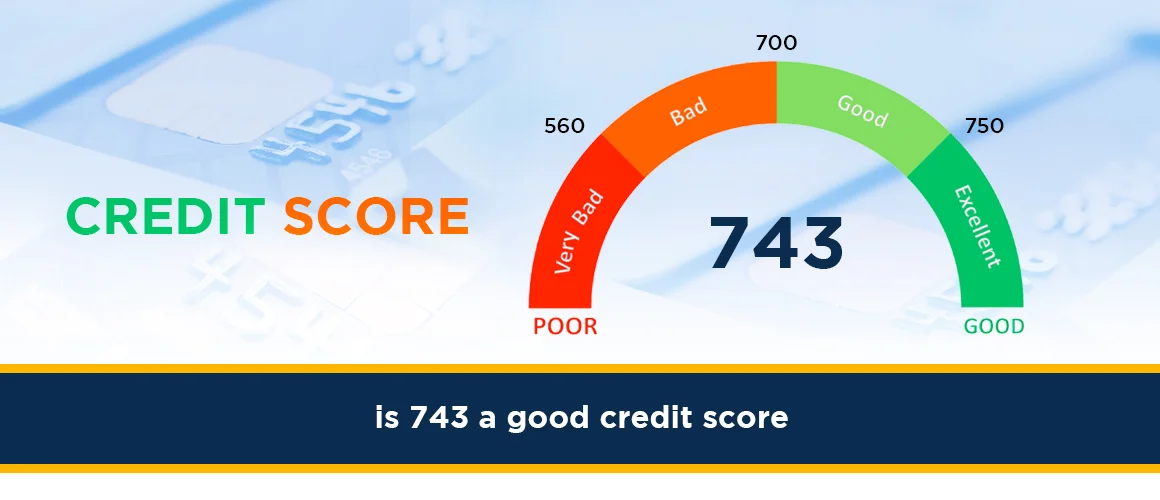
So, is a credit score of 743 considered good? The straightforward answer is: **Yes, a credit score of 743 is generally considered a very good credit score.**
Let's break down why 743 lands you in a favorable position. Referencing the typical credit score ranges we discussed, a 743 falls squarely within the "Very Good" category. This means you're well above the average credit score and are viewed by lenders as a relatively low-risk borrower. This is a significant achievement and reflects positively on your credit management habits.
What does this "Very Good" status translate to in practical terms? It means you're likely to:
- Qualify for a wide range of loans, including mortgages, auto loans, and personal loans.
- Receive competitive interest rates, saving you money over the life of any borrowed funds.
- Have a higher chance of loan approval with fewer hurdles.
- Potentially secure better terms on credit cards, including higher credit limits and attractive rewards programs.
- Face fewer difficulties when applying for rental properties or negotiating insurance premiums.
While 743 is a strong score, it's also important to acknowledge that it's not yet in the "Exceptional" tier (typically 800+). This means there's still room for improvement, and reaching that top tier could unlock even more advantageous financial opportunities. However, the difference in benefits between a 743 and a score in the high 700s might be marginal for many standard loan products. The primary advantage of pushing into the "Exceptional" range often comes with the very best, most exclusive offers and the absolute lowest interest rates available.
For most lending scenarios in 2025, a 743 credit score places you in a very strong position. You're likely to be approved for most credit products with favorable terms. For example, when applying for a mortgage, a 743 score could mean qualifying for interest rates significantly lower than someone with a "Fair" or "Good" score. Similarly, for an auto loan, you'd likely be offered rates that make the overall cost of the vehicle much more manageable.
It's also worth noting that different lenders and different types of credit products might have slightly different benchmarks. Some subprime lenders might approve borrowers with scores in the 600s, but with very high rates. Conversely, some premium credit cards or specialized loans might require scores in the high 700s or even 800s for their most exclusive benefits. However, for the vast majority of mainstream financial products, a 743 is a score to be proud of and one that opens many doors.
In summary, a 743 credit score is definitively good. It signifies responsible credit management and positions you as a low-risk borrower. While striving for an even higher score is always a worthwhile long-term goal, you can confidently leverage a 743 score to your advantage in your financial pursuits.
Factors That Influence Your Credit Score
Your credit score isn't a static number; it's a dynamic reflection of your financial behavior. Several key factors contribute to its calculation, and understanding these elements is crucial for maintaining and improving your score. The most common scoring models, like FICO, weigh these factors differently, but the core components remain consistent.
Here are the primary factors that influence your credit score, along with their general weighting:
1. Payment History (Approximately 35% of Score)
This is the single most important factor. It reflects whether you pay your bills on time. Late payments, missed payments, defaults, bankruptcies, and collections all have a significant negative impact. Conversely, a consistent history of on-time payments is the bedrock of a good credit score.
Example: Making all your credit card payments, mortgage payments, and loan installments by their due dates will positively influence this category. Even one 30-day late payment can ding your score. Multiple late payments or a bankruptcy will have a severe and long-lasting negative effect.
2. Amounts Owed / credit utilization Ratio (Approximately 30% of Score)
This factor looks at how much credit you're using compared to your total available credit. This is often expressed as the credit utilization ratio (CUR). It's generally recommended to keep your CUR below 30%, and ideally below 10%, for the best results. A high CUR suggests you might be overextended and at higher risk of defaulting.
Example: If you have a credit card with a $10,000 limit and you owe $5,000 on it, your CUR is 50%. This could negatively impact your score. If you owe only $1,000, your CUR is 10%, which is much better. This applies to all your revolving credit accounts combined.
3. Length of Credit History (Approximately 15% of Score)
This factor considers how long your credit accounts have been open and the average age of your accounts. A longer credit history generally suggests more experience managing credit, which is viewed favorably. This doesn't mean you should keep old, unused accounts open indefinitely, but it highlights the benefit of responsible, long-term credit management.
Example: Having a credit card account that you opened 10 years ago and have managed responsibly will contribute more positively than only having accounts that are a year old.
4. Credit Mix (Approximately 10% of Score)
This factor considers the different types of credit you have, such as revolving credit (credit cards) and installment loans (mortgages, auto loans, student loans). Having a mix of credit types can demonstrate your ability to manage various forms of debt responsibly. However, this is a less significant factor, and you shouldn't open new accounts solely to diversify your credit mix.
Example: Having both a mortgage and a credit card is generally better than having only credit cards. However, having multiple credit cards and no installment loans is also a mix. The key is demonstrating responsible management across different credit types.
5. New Credit (Approximately 10% of Score)
This factor looks at how often you apply for and open new credit accounts. Opening several new accounts in a short period can be a red flag to lenders, suggesting potential financial distress or increased risk. Each hard inquiry (when a lender checks your credit for an application) can slightly lower your score.
Example: Applying for three new credit cards within a month might lower your score more than applying for one new car loan every few years. Shopping for a mortgage or auto loan within a short, concentrated period (e.g., 14-45 days, depending on the scoring model) is usually treated as a single inquiry for rate comparison purposes.
Understanding these factors allows you to focus your efforts on the areas that will yield the most significant improvements. For someone with a 743 score, maintaining a perfect payment history and keeping credit utilization low are paramount to preserving and potentially increasing their score. Addressing any weaknesses in these areas can help push that 743 score into the "Exceptional" range.
How to Improve a 743 Credit Score
While a 743 credit score is already very good, there's always potential for improvement. Reaching the "Exceptional" tier (800+) can unlock the absolute best financial products and lowest interest rates. Fortunately, improving a score that's already in the "Very Good" range often involves refining existing good habits and addressing minor issues. Here’s a step-by-step guide to potentially boost your 743 score even higher.
1. Maintain Impeccable Payment History
This is non-negotiable. Ensure every single bill is paid on time, every time. Even a single late payment can significantly drop your score. Set up automatic payments for all your accounts to avoid accidental misses. If you have any recurring issues with remembering due dates, consider using calendar reminders or budgeting apps.
Actionable Step: Review all your recurring bills and set up automatic payments from your bank account or ensure you have calendar alerts for each due date. Double-check that you have sufficient funds in your account to cover these payments.
2. Optimize Credit Utilization Ratio (CUR)
For a 743 score, your CUR is likely already good, but aiming for below 10% across all your revolving credit accounts can make a difference. If your CUR is currently between 10-30%, focus on paying down balances. If you have a high balance on one card, consider paying it down aggressively or transferring some of the balance to another card with a lower utilization (if your credit limit allows and there are no excessive fees).
Actionable Step: Calculate your total credit card balances and your total credit card limits. Divide the balances by the limits to get your overall CUR. If it's above 10%, make a plan to pay down balances. Consider making multiple payments throughout the month rather than one large payment before the due date.
3. Keep Old Accounts Open (If No Annual Fee)
Your length of credit history is a significant factor. As mentioned, older accounts contribute positively to this. If you have old credit cards that you no longer use but don't have an annual fee, keep them open. Closing them can reduce your average account age and potentially increase your overall credit utilization ratio if you have balances on other cards.
Actionable Step: Review your credit accounts. Identify any old, unused cards that don't carry an annual fee. Use them for a small, recurring purchase (like a streaming service) and pay it off immediately each month to keep them active. This also helps maintain your average account age.
4. Limit New Credit Applications
While you might be tempted to apply for new credit to increase your credit mix or take advantage of offers, avoid doing so unnecessarily. Each hard inquiry can slightly lower your score. Focus on optimizing your existing credit first. If you do need new credit, space out applications strategically.
Actionable Step: Before applying for any new credit, ask yourself if it's truly necessary. If you're just looking for a better rewards card, weigh the potential score dip against the benefits. If you're shopping for a mortgage or auto loan, do so within a short timeframe to minimize the impact of multiple inquiries.
5. Monitor Your Credit Reports for Errors
Even with a good score, errors can exist on your credit reports. These could be incorrect late payment notations, accounts that aren't yours, or incorrect balances. Regularly reviewing your reports from Equifax, Experian, and TransUnion is essential. If you find errors, dispute them immediately with the credit bureau and the creditor.
Actionable Step: Visit AnnualCreditReport.com to get your free credit reports from all three bureaus annually. Review each report carefully for any discrepancies and follow the dispute process if necessary.
6. Consider a Secured Credit Card or Credit-Builder Loan (If Necessary)
While likely not needed for a 743 score, if you find yourself with a specific negative mark or want to diversify your credit mix further with a small, manageable installment loan, these tools can be helpful. A secured credit card requires a cash deposit that becomes your credit limit, and responsible use builds credit. A credit-builder loan functions similarly, with loan funds held by the lender until you pay off the loan.
Actionable Step: This is generally a last resort if other methods aren't yielding results or if you've had a specific recent issue. For a 743 score, focus on the other steps first. If you choose this route, ensure the issuer reports to all three credit bureaus.
By diligently applying these strategies, you can solidify your strong credit standing and potentially nudge that 743 score into the "Exceptional" category, unlocking the very best financial opportunities available in 2025 and beyond.
The Impact of a 743 Credit Score on Loans
Having a 743 credit score significantly influences your ability to secure various types of loans and the terms you'll receive. This score places you in a strong position, often qualifying you for the most competitive interest rates and favorable loan conditions. Let's explore the impact across different loan categories.
Mortgage Loans
A 743 credit score is excellent for mortgage applications. Lenders view you as a low-risk borrower, meaning you're highly likely to be approved. More importantly, you'll typically qualify for the lowest interest rates available for conventional loans. Even a small difference in interest rates can save you tens of thousands of dollars over the 15- to 30-year life of a mortgage. For instance, a 0.5% difference on a $300,000 loan could save you over $50,000 in interest.
Example: A borrower with a 743 score might secure a 30-year fixed-rate mortgage at 6.0%, while someone with a 680 score might be offered 6.75%. This difference is substantial.
Auto Loans
For auto loans, a 743 score is also highly advantageous. You'll likely be approved for financing with very competitive interest rates, making your car purchase more affordable. Dealerships and lenders often reserve their best rates for borrowers with scores in the 740+ range. This can significantly reduce the total cost of the vehicle over the loan term.
Example: On a $30,000 car loan over five years, a rate of 5.0% (achievable with a 743 score) would result in monthly payments of approximately $566 and total interest of about $3,960. A rate of 7.0% (more likely for a score in the low 700s) would mean monthly payments of about $607 and total interest of roughly $6,420.
Personal Loans
Personal loans are often used for debt consolidation, home improvements, or unexpected expenses. With a 743 credit score, you'll have access to a wide array of personal loan options from banks, credit unions, and online lenders. You can expect to receive competitive interest rates, making these loans more manageable and cost-effective. Lenders are more willing to offer larger loan amounts and better repayment terms to borrowers with such strong credit profiles.
Example: A borrower with a 743 score might qualify for a $20,000 personal loan at 8% APR, while someone with a lower score might be offered the same amount at 15% APR or higher, or might not be approved at all.
Credit Cards
A 743 credit score opens doors to premium credit cards offering attractive rewards, travel perks, and sign-up bonuses. You'll likely qualify for cards with no annual fees, higher credit limits, and excellent benefits like cashback programs, travel miles, or purchase protection. While not all premium cards require scores above 800, a 743 score puts you in a strong position to apply for many of them.
Example: You could qualify for travel rewards cards that offer significant sign-up bonuses and ongoing benefits, maximizing your spending power and rewards potential.
Student Loans (Private)
While federal student loans don't typically require a credit check for the student borrower (though a credit check might be needed for a cosigner), private student loans do. A 743 score would likely allow you to qualify for private student loans with favorable interest rates, especially if you have a creditworthy cosigner. This can make financing higher education more affordable.
Rental Applications
Landlords often check credit scores to assess the reliability of potential tenants. A 743 score makes you a highly desirable tenant. It signals that you are responsible with financial obligations, making it more likely that you'll pay rent on time. This can give you an edge in competitive rental markets and may even allow you to negotiate more favorable lease terms.
Insurance Premiums
In many states, insurance companies use credit-based insurance scores to help set premiums for auto and homeowners insurance. A higher credit score generally correlates with lower insurance premiums, as studies suggest a link between credit management and the likelihood of filing claims. A 743 score should help you secure lower insurance rates.
In conclusion, a 743 credit score is a powerful financial asset. It demonstrates responsible credit behavior and positions you as a low-risk borrower. This translates into significant savings through lower interest rates on loans, better terms on credit cards, and improved chances of approval for various financial products and services. While aiming for an "Exceptional" score is always a good long-term goal, a 743 score provides substantial advantages in today's lending landscape.
Credit Score Myths and Realities
The world of credit scores is often shrouded in misconceptions. Understanding the realities behind these myths is crucial for effective credit management. Many people hold beliefs about credit scores that are either entirely false or oversimplified, leading to poor financial decisions. Let's debunk some common credit score myths and highlight the truths.
Myth 1: Checking Your Own Credit Score Lowers It.
Reality: This is one of the most persistent myths. Checking your own credit score, whether through a free service, your bank, or a credit monitoring app, is considered a "soft inquiry." Soft inquiries do not affect your credit score in any way. Only "hard inquiries," which occur when a lender checks your credit as part of a loan application, can have a minor, temporary impact on your score.
Myth 2: You Need to Carry a Balance on Your Credit Card to Build Credit.
Reality: You do not need to carry a balance to build or maintain a good credit score. In fact, carrying a balance incurs interest charges, which is an unnecessary expense. The most important factor for building credit is making on-time payments. Using your credit card for small purchases and paying the statement balance in full by the due date is the most effective and cost-efficient strategy.
Myth 3: Your Credit Score is the Same Everywhere.
Reality: While the underlying data comes from your credit reports, there are different scoring models (FICO, VantageScore) and different versions of these models. Lenders may also use industry-specific scores or their own proprietary scoring systems. Additionally, your score can vary slightly between the three major credit bureaus (Equifax, Experian, TransUnion) if there are minor discrepancies in your credit reports. However, the general range and implications of your score will be similar across most reputable models.
Myth 4: Co-signing a Loan Helps the Co-signer Build Credit.
Reality: While the primary borrower's payment history on a co-signed loan is reported to the credit bureaus, it's the primary borrower's score that is primarily affected by the loan. The co-signer's credit report will show the debt, and if payments are missed or late, it will negatively impact the co-signer's score significantly. Co-signing is a risky proposition and doesn't guarantee credit-building benefits for the co-signer without careful management and understanding.
Myth 5: Closing Old Credit Card Accounts Will Improve Your Score.
Reality: Generally, closing old credit card accounts can hurt your score. This is because it can reduce your average length of credit history and increase your credit utilization ratio (if you have balances on other cards). It's usually best to keep older, unused credit cards open, especially if they don't have an annual fee, as long as they are managed responsibly.
Myth 6: Your Credit Score is Based Solely on Your Income.
Reality: Your income is not a direct factor in calculating your credit score. Credit scores are based on your credit behavior – how you manage borrowed money. While income is important for lenders to determine your ability to repay a loan, it does not appear on your credit report and is not used in the credit scoring formulas. Someone with a high income but poor credit habits can have a lower score than someone with a modest income but excellent credit management.
Myth 7: Paying Off Collections Immediately Fixes Your Score.
Reality: While paying off collections is generally a good financial move and can improve your score over time, it doesn't instantly erase the negative mark. A collection account can remain on your credit report for up to seven years from the date of the original delinquency. Paying it off will update its status to "paid collection," which is better than unpaid, but the negative history still influences your score for the duration it remains on your report.
Understanding these realities is key to navigating your credit journey effectively. A 743 credit score is a testament to good credit habits, but it's important to continue practicing sound financial management and avoid falling prey to common credit score myths. Continuous education and vigilance are your best tools for maintaining and improving your financial standing.
Managing Your Credit Score Long-Term
Achieving a good credit score like 743 is a significant accomplishment, but maintaining and further improving it requires ongoing diligence and smart financial practices. Long-term credit management is about consistency and understanding how your financial decisions impact your score over time. Here’s how to ensure your credit score remains strong for years to come.
1. Consistent On-Time Payments
This cannot be stressed enough. The most critical factor for your credit score is your payment history. Make it a habit to pay all your bills on time, every time. Set up automatic payments for recurring bills like credit cards, loans, and utilities. If you prefer manual payments, use calendar reminders or budgeting apps to ensure you never miss a due date. Even one late payment can significantly damage a good score.
2. Keep Credit Utilization Low
Aim to keep your credit utilization ratio (CUR) below 30%, and ideally below 10%, across all your revolving credit accounts. This means using only a small portion of your available credit. If you have a high balance on a credit card, prioritize paying it down. Consider making multiple payments throughout the month to keep the reported balance low. A low CUR signals to lenders that you are not overly reliant on credit.
3. Monitor Your Credit Reports Regularly
Your credit reports are the foundation of your credit score. Obtain your free credit reports from Equifax, Experian, and TransUnion annually via AnnualCreditReport.com. Review them carefully for any errors, such as incorrect personal information, accounts you don't recognize, or inaccurate payment statuses. If you find any inaccuracies, dispute them immediately with the credit bureau and the creditor involved. Vigilance can prevent potential damage to your score.
4. Avoid Unnecessary Hard Inquiries
While applying for new credit is sometimes necessary, avoid applying for multiple credit accounts in a short period. Each hard inquiry can slightly lower your score. Only apply for credit when you genuinely need it and after researching which lenders are most likely to approve you. For rate shopping on mortgages or auto loans, do so within a concentrated timeframe (typically 14-45 days) to minimize the impact.
5. Maintain a Healthy Credit Mix
Having a mix of credit types, such as revolving credit (credit cards) and installment loans (mortgages, auto loans), can be beneficial. It demonstrates your ability to manage different forms of debt. However, don't open new accounts solely to improve your credit mix if you don't need them. Focus on managing the credit you already have responsibly.
6. Be Patient with Negative Information
Negative information, such as late payments or collections, can remain on your credit report for up to seven years. While paying off debts is always recommended, understand that the negative impact lessens over time. The best strategy is to avoid accumulating negative marks in the first place. Focus on building a strong positive history that will eventually outweigh any past issues.
7. Consider Credit Monitoring Services
While not essential, credit monitoring services can provide timely alerts about significant changes to your credit report, such as new accounts opened in your name or significant drops in your score. This can help you detect identity theft or other fraudulent activity quickly. Many banks and credit card issuers offer free credit monitoring as a perk to their customers.
8. Educate Yourself Continuously
The world of credit and finance is always evolving. Stay informed about changes in credit scoring models, lending practices, and financial regulations. Understanding these changes can help you adapt your financial strategies accordingly. Resources like reputable financial websites, consumer advocacy groups, and your financial institutions can be valuable sources of information.
Managing your credit score long-term is an ongoing process that pays significant dividends. By consistently practicing good financial habits, staying informed, and being proactive, you can maintain your 743 score and continue to unlock the best financial opportunities available. A strong credit score is not just a number; it's a reflection of your financial responsibility and a key enabler of your financial goals.
In conclusion, a credit score of 743 is undeniably a good score, placing you in the "Very Good" category. This signifies a strong financial standing, offering access to competitive loan rates and favorable credit terms. While the journey to an "Exceptional" score is achievable by refining existing habits like maintaining perfect payment history and optimizing credit utilization, your current score of 743 is a powerful asset. By understanding the factors that influence your score, debunking common myths, and committing to long-term credit management strategies, you can confidently leverage your 743 score to achieve your financial objectives and continue building a robust financial future.
