Is 752 a Good Credit Score? Understanding Credit Scores and Their Impact
What is a Credit Score?
Your credit score is a three-digit number that lenders use to assess your creditworthiness. It's a snapshot of your financial reliability, indicating how likely you are to repay borrowed money. A higher score generally means you're a lower risk, making it easier to secure loans and better terms. Understanding this number is crucial for your financial health.
In essence, your credit score is a numerical representation of your credit history. It's calculated based on the information in your credit reports, which detail your borrowing and repayment habits over time. Lenders, landlords, insurers, and even some employers use this score to make decisions about whether to extend credit, offer services, or hire you. A good credit score can unlock a world of financial opportunities, while a poor one can present significant obstacles. This guide will delve deep into what makes a credit score good, with a specific focus on the 752 mark.
Understanding Credit Score Ranges
Credit scores are not a single, universal number but rather fall into broad ranges that categorize a consumer's credit risk. While different scoring models exist, the most common range is from 300 to 850, with higher numbers indicating better creditworthiness. Understanding these ranges is fundamental to interpreting your own score and setting realistic financial goals. For instance, a score of 752 sits comfortably within a desirable bracket, but knowing where it truly stands requires a look at the broader spectrum.
The FICO score and the VantageScore are the two most widely used credit scoring models in the United States. Both use similar methodologies to calculate scores, but their specific ranges and category definitions can vary slightly. However, the general consensus on what constitutes "good" credit remains largely consistent across both platforms. Let's break down these ranges to provide context for a 752 credit score.
FICO Score Ranges (2025)
The FICO score is the most prevalent credit scoring model. Its ranges are typically defined as follows:
- Exceptional: 800-850
- Very Good: 740-799
- Good: 670-739
- Fair: 580-669
- Poor: 300-579
VantageScore Ranges (2025)
VantageScore, a newer model developed by the three major credit bureaus (Experian, Equifax, and TransUnion), also offers a comprehensive range:
- Excellent: 781-850
- Good: 661-780
- Fair: 601-660
- Poor: 500-600
- Very Poor: 300-499
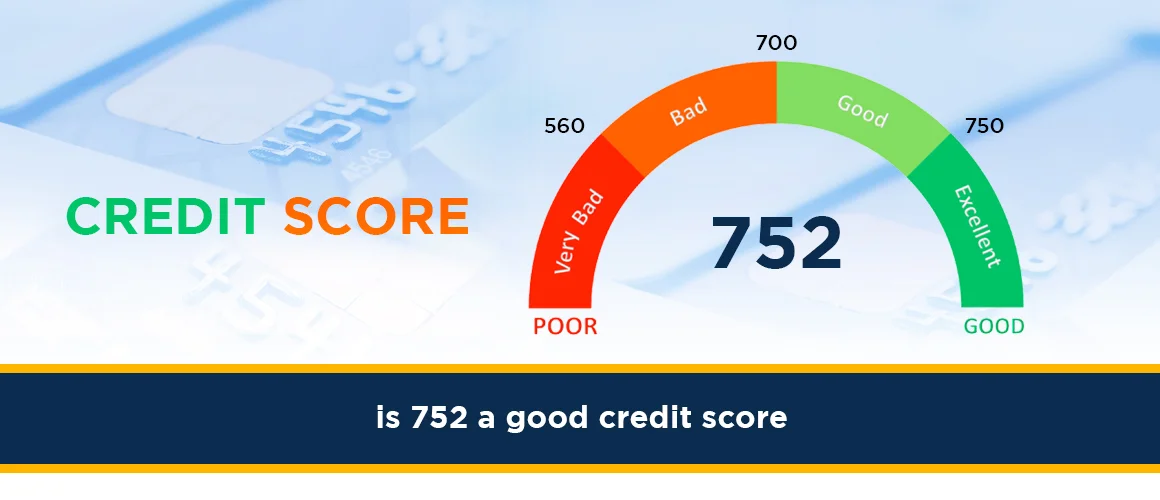
As you can see, the definitions and numerical boundaries can differ. However, the overarching trend is clear: the higher your score, the better. A score of 752, according to these widely accepted ranges, generally falls into the "Very Good" or "Good" category, depending on the specific model used. This is a significant achievement and positions you favorably in the eyes of most lenders.
Is 752 a Good Credit Score?
So, is 752 a good credit score? The short answer is: **Yes, a credit score of 752 is considered good to very good.** This score places you in a strong position to qualify for a wide range of credit products, often with favorable interest rates and terms. It signifies to lenders that you have a history of responsible credit management.
Let's elaborate on what this means in practical terms. A 752 score generally indicates that you are a lower risk borrower. This is because it suggests you have a track record of paying bills on time, managing debt effectively, and utilizing credit responsibly. Lenders view individuals with scores in this range as reliable and less likely to default on their financial obligations. This perception translates into tangible benefits when you apply for loans, credit cards, mortgages, or even rent an apartment.
To put it into perspective, a 752 score is significantly above the national average credit score. While averages fluctuate, they typically hover in the mid-600s. This means that with a 752, you are outperforming a substantial portion of the population in terms of creditworthiness. This advantage can open doors that might remain closed to those with lower scores.
However, it's also important to note that while 752 is good, it's not yet in the "exceptional" or "excellent" tier (typically 800+). This means there's still room for improvement if your goal is to achieve the absolute best terms and rates available. But for most everyday financial needs, a 752 score will serve you very well. It's a solid foundation upon which to build further financial success.
The exact classification of a 752 score can depend on the specific credit scoring model used (FICO or VantageScore) and the lender's internal criteria. Some lenders might consider 752 to be in their "very good" category, while others might place it in the higher end of their "good" category. Regardless of the precise label, it's a score that commands respect and offers significant advantages.
Consider this: If you were applying for a mortgage, a 752 credit score would likely qualify you for competitive interest rates, potentially saving you tens of thousands of dollars over the life of the loan compared to someone with a lower score. Similarly, for an auto loan, you'd be looking at attractive financing options. For credit cards, you'd be eligible for premium rewards cards with generous benefits.
The journey to achieving a 752 credit score is a testament to responsible financial behavior. It signifies that you've likely demonstrated consistency in managing your credit obligations. The next step is to understand how this score is determined and how you can potentially leverage it or improve it further.
Factors That Influence Your Credit Score
Your credit score isn't a static number; it's a dynamic reflection of your financial habits. Several key factors contribute to its calculation, and understanding these elements is crucial for both maintaining a good score like 752 and improving it further. These factors are weighted differently in scoring models, meaning some have a more significant impact than others.
The major credit bureaus and scoring agencies emphasize the following components:
1. Payment History (Approximately 35% of FICO Score)
This is the single most important factor. It reflects whether you pay your bills on time. Late payments, missed payments, defaults, bankruptcies, and collections all negatively impact your score. Conversely, a consistent history of on-time payments is the bedrock of a strong credit score.
- On-time payments: Crucial for building and maintaining a good score.
- Late payments: Even a single 30-day late payment can significantly drop your score. The longer the delinquency (60, 90 days, etc.), the more severe the damage.
- Collections and charge-offs: Accounts sent to collections or written off by the creditor are highly damaging.
- Public records: Bankruptcies, liens, and judgments are severe negative marks.
2. Amounts Owed / credit utilization (Approximately 30% of FICO Score)
This factor looks at how much debt you carry, particularly on revolving credit lines like credit cards. Credit utilization ratio (CUR) is the amount of credit you're using compared to your total available credit. Keeping this ratio low is vital.
- Credit Utilization Ratio (CUR): Calculated by dividing your total credit card balances by your total credit card limits. For example, if you have $2,000 in balances across cards with a total limit of $10,000, your CUR is 20%.
- Recommended CUR: Experts generally advise keeping your CUR below 30%, and ideally below 10%, for the best results. A 752 score likely indicates a good handle on this.
- High balances: Even if you pay on time, carrying high balances can suggest financial strain and negatively affect your score.
3. Length of Credit History (Approximately 15% of FICO Score)
This refers to the age of your oldest credit account, the age of your newest credit account, and the average age of all your accounts. A longer credit history generally contributes positively to your score, as it provides more data for lenders to assess your long-term behavior.
- Average age of accounts: A longer history demonstrates sustained responsible behavior.
- Age of oldest account: Your oldest account, especially if well-managed, can be a strong positive factor.
- New accounts: Opening many new accounts in a short period can temporarily lower your score due to the associated hard inquiries and reduced average age.
4. Credit Mix (Approximately 10% of FICO Score)
This factor considers the different types of credit you manage. Lenders like to see that you can handle various forms of credit responsibly, such as revolving credit (credit cards) and installment loans (mortgages, auto loans, personal loans).
- Revolving credit: Credit cards, lines of credit.
- Installment credit: Mortgages, auto loans, student loans, personal loans.
- Diversification: Having a mix can be beneficial, but it's not worth opening new accounts solely for this purpose if you don't need them.
5. New Credit (Approximately 10% of FICO Score)
This factor looks at how often you apply for and open new credit accounts. Applying for multiple credit accounts in a short period can signal increased risk to lenders, as it might suggest you are in financial distress or taking on too much debt.
- Hard inquiries: Each time you apply for credit, a lender pulls your credit report, resulting in a hard inquiry. Too many hard inquiries in a short time can lower your score.
- Rate shopping: For mortgages and auto loans, credit scoring models often allow a window (e.g., 14-45 days) for multiple inquiries to be treated as a single one, encouraging consumers to find the best rates.
- New accounts: Opening new accounts, as mentioned, also impacts this factor.
Understanding these components is the first step toward maintaining and improving your credit score. A 752 score indicates that you are likely doing well in most, if not all, of these areas, particularly payment history and credit utilization.
How to Improve a 752 Credit Score
While a 752 credit score is already strong, there's always potential for improvement, especially if you aim for the "exceptional" or "excellent" tiers (800+). Moving from a 752 to an 800+ score requires consistent effort and strategic financial management. The good news is that the principles for improvement are the same as those for achieving a good score in the first place, but with a heightened focus on optimization.
Here’s a step-by-step guide to potentially boost your 752 score:
Step 1: Maintain Stellar Payment History
This is non-negotiable. Since payment history is the most heavily weighted factor, any slip-up here can undo progress. Ensure every single payment is made on time, every time.
- Set up automatic payments: For bills like credit cards, loans, and utilities, automate payments to avoid missing due dates.
- Use calendar reminders: If you prefer manual payments, set multiple reminders a few days before the due date.
- Pay at least the minimum: If you're ever short on funds, always pay at least the minimum amount due to avoid a late payment mark. Then, pay the rest as soon as possible.
Step 2: Optimize Credit Utilization Ratio (CUR)
To push your score higher, aim to reduce your credit utilization even further. While 30% is good and 10% is better, aiming for below 5% on each card and overall can significantly impact your score.
- Pay down balances: Focus on paying down credit card balances aggressively.
- Request credit limit increases: If your income has increased and your payment history is excellent, ask your credit card issuers for a credit limit increase. This will lower your CUR without you having to spend less, provided you don't increase your spending. Be aware that some issuers may perform a hard inquiry for this.
- Spread out balances: If you have multiple cards, try to keep balances relatively low across all of them, rather than maxing out one card while others are at zero.
Step 3: Lengthen Your Credit History
While you can't magically age your accounts, you can avoid actions that shorten your average credit age.
- Keep old accounts open: If you have old credit cards that you no longer use but have a good payment history on, keep them open. Closing an old account reduces your average credit age and can increase your overall credit utilization if it had a high limit.
- Use old accounts occasionally: To prevent them from being closed by the issuer due to inactivity, make a small purchase on an old card every few months and pay it off immediately.
Step 4: Diversify Your Credit Mix (Carefully)
If your credit profile consists solely of credit cards, and you are in a stable financial position, consider adding an installment loan. However, this should only be done if you genuinely need the loan and can manage the payments responsibly.
- Consider a small personal loan: A small, manageable personal loan that you pay back consistently over time can demonstrate your ability to handle installment debt.
- Avoid unnecessary debt: Do not take out loans or open credit lines you don't need, as the hard inquiries and new debt could outweigh the benefits.
Step 5: Manage New Credit Wisely
Limit applications for new credit to essential needs.
- Space out applications: If you need to apply for new credit, do so sparingly and spread out applications over several months.
- Focus on rate shopping for specific loans: When applying for a mortgage or auto loan, take advantage of rate-shopping windows where multiple inquiries count as one.
Step 6: Monitor Your Credit Reports
Regularly checking your credit reports for errors is crucial. Mistakes can artificially lower your score.
- Obtain free reports: You are entitled to a free credit report from each of the three major bureaus (Equifax, Experian, TransUnion) annually via AnnualCreditReport.com.
- Dispute errors: If you find any inaccuracies (e.g., incorrect late payments, accounts that aren't yours), dispute them immediately with the credit bureau and the creditor.
By diligently applying these strategies, you can steadily climb from a 752 score towards the higher tiers, unlocking even greater financial benefits.
Benefits of a Good Credit Score
Achieving and maintaining a good credit score, like 752, opens up a wealth of financial advantages. It's not just a number; it's a key that unlocks better opportunities and saves you money. Lenders and service providers see a strong credit score as a sign of reliability and trustworthiness, translating into tangible benefits across various aspects of your financial life.
Here are some of the most significant benefits of having a credit score in the 752 range:
1. Lower Interest Rates on Loans
This is perhaps the most impactful benefit. Lenders offer their best interest rates to borrowers they perceive as low-risk. With a 752 score, you are highly likely to qualify for lower Annual Percentage Rates (APRs) on mortgages, auto loans, personal loans, and credit cards.
- Mortgages: A lower mortgage rate can save you tens of thousands of dollars over the 15-30 year life of the loan.
- Auto Loans: You'll pay less in interest on your car payments, making the vehicle more affordable.
- Personal Loans: Access to lower rates makes consolidating debt or financing large purchases more cost-effective.
- Credit Cards: Even if you carry a balance occasionally, a good score means a lower APR, reducing the cost of borrowing.
2. Easier Approval for Credit Cards and Loans
A 752 score significantly increases your chances of getting approved when you apply for new credit. This means you'll have more options when choosing credit cards, loans, or even apartment rentals.
- Premium Credit Cards: You'll likely qualify for rewards cards, travel cards, and cashback cards with generous sign-up bonuses and ongoing perks.
- Higher Credit Limits: Lenders are more willing to extend higher credit limits to individuals with strong credit histories.
- Rental Applications: Landlords often check credit scores to assess a tenant's reliability. A good score can make it easier to secure your desired rental property.
3. Better Insurance Premiums
In many states, insurance companies use credit-based insurance scores to help determine premiums for auto and homeowners insurance. Individuals with better credit scores often pay lower premiums because statistically, they are less likely to file claims.
- Auto Insurance: Lower premiums can lead to significant annual savings.
- Homeowners Insurance: Reduced costs for protecting your property.
4. Favorable Terms and Conditions
Beyond just interest rates, a good credit score can also lead to more favorable terms on financial products.
- Lower Fees: Some financial products come with annual fees or other charges that might be waived or reduced for borrowers with excellent credit.
- More Flexible Repayment Options: Lenders may offer more flexible repayment schedules or terms to highly creditworthy individuals.
5. Utility Deposits May Be Waived
When setting up services like electricity, gas, water, or even a cell phone plan, companies often check your credit. A good score can mean you won't have to pay a security deposit, saving you upfront costs.
6. Easier to Get Approved for Mobile Phone Contracts
Similar to utility companies, mobile carriers often check credit. A strong score can help you get approved for the latest smartphones with monthly payment plans without a hefty deposit.
7. Increased Negotiating Power
When you have a strong credit score, you are a desirable customer. This can give you more leverage when negotiating terms with lenders or even when making large purchases, as they are more eager to earn your business.
In summary, a 752 credit score is a valuable financial asset. It signifies responsible financial behavior and translates into real-world savings and opportunities. It's a testament to your ability to manage credit effectively, and the benefits are substantial and far-reaching.
Impact of Credit Scores on Loans and Interest Rates
The relationship between credit scores and interest rates is one of the most critical aspects of personal finance. For anyone seeking to borrow money, understanding this connection is paramount to saving money and achieving financial goals. A credit score acts as a primary indicator of risk for lenders, and the interest rate they charge is a direct reflection of that perceived risk. A higher credit score, like 752, significantly reduces the cost of borrowing.
Let's explore how credit scores influence loan approvals and, more importantly, the interest rates you'll be offered.
The Risk-Based Pricing Model
Lenders operate on a risk-based pricing model. This means they assess the likelihood that a borrower will repay a loan. Borrowers with higher credit scores are considered less risky because their credit history suggests a strong ability and propensity to repay debts on time. Consequently, lenders can afford to offer them lower interest rates because the probability of losing money on the loan is minimized.
Conversely, borrowers with lower credit scores are seen as higher risks. There's a greater chance they might default on the loan. To compensate for this increased risk, lenders charge higher interest rates. This higher rate acts as a form of insurance for the lender, making the loan potentially more profitable even if some borrowers do default.
Illustrative Examples (2025 Data)
To truly grasp the impact, let's look at hypothetical scenarios for a $300,000 mortgage over 30 years. These figures are illustrative and can vary based on market conditions, lender policies, and other borrower qualifications.
| Credit Score Range | Estimated Interest Rate (APR) | Monthly Payment | Total Interest Paid Over 30 Years |
|---|---|---|---|
| Exceptional (800+) | 6.5% | $1,896 | $382,560 |
| Very Good (740-799) - e.g., 752 | 6.8% | $1,958 | $404,880 |
| Good (670-739) | 7.3% | $2,059 | $441,240 |
| Fair (580-669) | 8.5% | $2,354 | $547,440 |
| Poor (Below 580) | 10%+ | $2,700+ | $672,000+ |
Note: These rates are illustrative for 2025 and can fluctuate.
As you can see from the table, a difference of just 0.3% in interest rate (from 6.5% to 6.8%) for someone with a 752 score compared to an 800+ score results in paying an additional $22,320 in interest over 30 years. The gap widens dramatically as the score decreases. A borrower with a "Fair" credit score might pay over $160,000 more in interest than someone with an "Exceptional" score for the same loan amount.
Impact on Other Loan Types
The principle extends to all forms of credit:
- Auto Loans: A difference of 1-2% in APR on a $30,000 car loan over 5 years can mean paying hundreds or even thousands of dollars more in interest. For instance, a 7% APR might result in a total interest cost of $4,700, while a 9% APR could push that closer to $6,000.
- Personal Loans: These often have higher interest rates to begin with. A score of 752 might secure a personal loan at 10-12% APR, whereas a lower score could mean rates of 15-25% or even higher, making debt consolidation or large purchases significantly more expensive.
- Credit Cards: While not typically expressed as a total interest paid over a loan term, the APR on credit cards directly impacts how quickly you can pay down debt. A 752 score might qualify you for cards with APRs in the high teens, while a lower score could mean rates in the mid-20s or higher.
Beyond Interest Rates: Other Impacts
Credit scores also affect:
- Loan Approval Likelihood: A 752 score makes approval for most loans highly probable. Lower scores can lead to outright rejections.
- Loan Terms: Lenders might offer shorter repayment terms or require larger down payments for borrowers with lower scores.
- Fees: Some loans come with origination fees or other charges that can be higher for riskier borrowers.
In conclusion, a credit score of 752 is a powerful tool. It signifies that you are likely to receive competitive interest rates, saving you substantial amounts of money over time. Continuously monitoring and working to improve your score will ensure you always have access to the most favorable borrowing terms available.
Credit Scoring Models Explained
The world of credit scoring can seem complex, but it boils down to sophisticated mathematical algorithms designed to predict a borrower's likelihood of repaying debt. While the underlying principles are similar, there are two dominant credit scoring models used in the United States: FICO Scores and VantageScore. Understanding these models helps demystify how your credit score is calculated and why it matters.
FICO Scores
Developed by the Fair Isaac Corporation, FICO scores have been the industry standard for decades. They are widely used by lenders across various industries, including mortgages, auto loans, and credit cards. FICO offers several versions of its scoring model, with different versions being more relevant for specific types of lending (e.g., FICO Score 8, FICO Score 9, and industry-specific scores like FICO Auto Score and FICO Bankcard Score).
The FICO score typically ranges from 300 to 850. Its calculation is based on the five key factors we discussed earlier:
- Payment History (35%): The most influential factor.
- Amounts Owed (30%): Focuses on credit utilization.
- Length of Credit History (15%): Age of accounts.
- Credit Mix (10%): Variety of credit types.
- New Credit (10%): Recent credit activity.
FICO scores are known for their robustness and are deeply integrated into the lending ecosystem. Lenders often rely on specific FICO versions tailored to their industry.
VantageScore
VantageScore is a newer credit scoring model developed collaboratively by the three major credit bureaus: Experian, Equifax, and TransUnion. It was created to provide a more consistent and accessible scoring model across the bureaus. VantageScore also typically ranges from 300 to 850.
While VantageScore uses similar categories to FICO, the weighting and specific definitions can differ. The factors considered by VantageScore (as of its latest versions, e.g., VantageScore 4.0) include:
- Payment History: Still the most critical factor.
- Credit Utilization: Emphasis on the percentage of credit used.
- Credit Age and Mix: Combines the length of credit history with the variety of credit types.
- New Credit: Looks at recent credit inquiries and new accounts.
- Available Credit: Considers the total amount of unused credit.
VantageScore aims to be more inclusive, often providing scores for individuals with thinner credit files (fewer credit accounts). It also tends to be more sensitive to recent credit behavior.
Key Differences and Similarities
- Consistency: VantageScore aims for greater consistency across the three credit bureaus, whereas FICO scores can sometimes vary slightly depending on which bureau's data is used.
- Weighting: While both prioritize payment history and credit utilization, the exact percentage weights can differ.
- Inclusivity: VantageScore has historically been designed to score a larger percentage of the population, including those with limited credit history, sometimes referred to as "credit invisibles."
- Model Versions: Both FICO and VantageScore release new versions periodically, which may incorporate updated algorithms and scoring methodologies. Lenders choose which version they use.
Which Score Matters Most?
For consumers, the most practical advice is to understand that lenders use one or both of these models. A score of 752 on a FICO scale might be slightly different on a VantageScore, but it will generally fall into a similar "good" to "very good" category. The best approach is to aim for a high score across all major scoring models.
When you check your credit score through a credit card provider, a credit monitoring service, or directly from a bureau, it's important to note which model and version is being reported. This will help you understand how lenders might perceive your creditworthiness.
Ultimately, the principles of building and maintaining good credit are consistent regardless of the specific scoring model. Focusing on on-time payments, low credit utilization, and a long, diverse credit history will serve you well with any scoring system.
Credit Reports vs. Credit Scores
It's common for people to use the terms "credit report" and "credit score" interchangeably, but they are distinct yet interconnected components of your financial identity. Understanding the difference is crucial for effective credit management. Think of your credit report as the raw data and your credit score as the summary derived from that data.
What is a Credit Report?
A credit report is a detailed record of your credit history, compiled by the three major credit bureaus: Experian, Equifax, and TransUnion. It contains comprehensive information about your borrowing and repayment activities. Key information found on a credit report includes:
- Personal Information: Your name, address (current and previous), Social Security number, and date of birth.
- Credit Accounts: Details of all your credit cards, loans (mortgages, auto loans, student loans, personal loans), and other lines of credit. This includes the creditor's name, account number (often partially masked), date opened, credit limit or loan amount, current balance, and payment history (dates and amounts paid).
- Public Records: Information from public sources, such as bankruptcies, liens, judgments, and sometimes evictions.
- Credit Inquiries: A list of entities that have recently accessed your credit report. These are categorized as "hard inquiries" (when you apply for credit) and "soft inquiries" (e.g., when you check your own score, or when a potential employer or landlord reviews your credit as part of a background check).
Your credit report is the foundation upon which your credit score is built. The accuracy and completeness of your report directly influence your score.
What is a Credit Score?
A credit score is a three-digit number, typically ranging from 300 to 850, that is calculated based on the information contained in your credit report. It's a predictive tool used by lenders to quickly assess your credit risk. As we've discussed, the most common scoring models are FICO and VantageScore.
The score distills the vast amount of data in your credit report into a single number that represents your creditworthiness at a specific point in time. Different scoring models weigh the various components of your credit report differently, which is why your score might vary slightly depending on the source.
The Relationship Between Them
- Data Source: Your credit report is the source data for your credit score. Without a credit report, you cannot have a credit score.
- Accuracy is Key: Errors on your credit report (e.g., incorrect late payments, accounts that don't belong to you) can lead to an inaccurate credit score, potentially costing you money or preventing you from getting approved for credit.
- Dynamic Nature: Both your credit report and credit score are dynamic. As you use credit and make payments, the information on your report changes, which in turn can affect your score.
Why Both Matter
Credit Report:
- Provides Detail: Lenders review your credit report to understand the specifics of your credit history, not just the summary number.
- Identifies Issues: It's where you'll find the details of any negative marks (late payments, collections) that are impacting your score.
- Essential for Disputes: You need your credit report to identify and dispute errors.
Credit Score:
- Quick Assessment: Provides lenders with an immediate snapshot of your credit risk.
- Determines Terms: Heavily influences the interest rates, loan terms, and fees you'll be offered.
- Sets Eligibility: Often the primary factor in determining whether you're approved for credit.
Regularly reviewing your credit reports (available for free annually from each bureau at AnnualCreditReport.com) and monitoring your credit score are essential practices for maintaining good financial health. A 752 score is excellent, but ensuring its accuracy by checking your reports is a vital step.
Monitoring Your Credit Score
Having a strong credit score like 752 is a significant financial achievement, but it's not a "set it and forget it" situation. The financial landscape is always shifting, and your credit score can fluctuate based on your ongoing financial activities and even changes in scoring models. Therefore, consistent monitoring is crucial to ensure your score remains strong and to catch any potential issues early.
Regularly checking your credit score and credit reports allows you to:
- Track Progress: See how your efforts to improve or maintain your score are paying off.
- Detect Errors: Identify and correct any inaccuracies on your credit reports that could be negatively impacting your score.
- Prevent Identity Theft: Spot unauthorized credit inquiries or new accounts opened in your name, which are red flags for identity theft.
- Stay Informed: Understand how different financial decisions (e.g., applying for new credit, paying down debt) affect your score.
- Prepare for Major Financial Events: Knowing your score beforehand is essential when applying for a mortgage, auto loan, or other significant credit.
How to Monitor Your Credit Score
Fortunately, monitoring your credit score has become more accessible than ever:
- Credit Card Issuers: Many major credit card companies offer free access to your FICO Score or VantageScore directly through their online portals or mobile apps. This is often updated monthly.
- Banks and Credit Unions: Similar to credit card issuers, many financial institutions provide free credit score access to their customers.
- Free Credit Monitoring Services: Several reputable websites and apps offer free credit scores and monitoring. These often provide monthly updates and alerts for significant changes to your credit report. Examples include Credit Karma, Credit Sesame, and others. Be aware that these services may offer financial products and services, which they disclose.
- AnnualCreditReport.com: While this site doesn't provide your score directly, it is the official source for obtaining your free credit reports from Equifax, Experian, and TransUnion. You are entitled to one free report from each bureau every 12 months. It's essential to check these reports at least annually to ensure accuracy.
- Paid Credit Monitoring Services: For a fee, you can subscribe to more comprehensive credit monitoring services that offer more frequent updates, detailed alerts, and sometimes identity theft protection.
What to Look For When Monitoring
- Your Score: Track the numerical value and note any significant jumps or drops.
- Credit Utilization: Ensure your credit card balances remain low relative to your limits.
- Payment History: Confirm that all payments are being reported as on time.
- New Inquiries: Review hard inquiries to ensure you recognize all applications for credit.
- New Accounts: Verify that no new accounts have been opened without your knowledge.
- Public Records: Check for any unexpected liens or judgments.
- Personal Information: Ensure your address and other personal details are accurate.
A score of 752 is a strong indicator of responsible credit management. By actively monitoring your credit score and reports, you can protect this asset, identify opportunities for further improvement, and ensure you continue to benefit from the advantages a good credit score provides. It’s an ongoing process that pays significant dividends in the long run.
In conclusion, a credit score of 752 is a solid achievement, placing you in a favorable position for obtaining credit and favorable financial terms. Understanding the components that build this score, the benefits it offers, and how to monitor it diligently will empower you to leverage this financial asset effectively. While 752 is good, continuous attention to your credit health can lead to even greater financial advantages.
