Is 795 a Good Credit Score? Understanding Credit Scores and Their Implications
What is a Credit Score and Why Does It Matter?
Your credit score is a three-digit number that acts as a snapshot of your creditworthiness, a critical factor in your financial life. Lenders and creditors use it to assess the risk involved in lending you money, influencing everything from loan approvals to interest rates. Understanding your score is the first step toward unlocking better financial opportunities and achieving your goals.
In essence, a credit score is a numerical representation of how reliably you've managed credit in the past. It's calculated based on information found in your credit reports, which detail your borrowing and repayment history. A higher score generally indicates a lower risk to lenders, making it easier to qualify for loans, mortgages, credit cards, and even rental agreements or insurance policies. Conversely, a lower score can lead to rejections, higher interest rates, and more stringent terms, significantly impacting your financial flexibility and overall economic well-being. In today's financial climate, particularly looking ahead to 2025, a strong credit score is not just beneficial; it's often a necessity for navigating major life events and securing favorable financial products.
Understanding Credit Score Ranges
Credit scores are not arbitrary numbers; they fall within specific ranges, each signifying a different level of credit risk. While different scoring models exist, the most widely used is the FICO score, which typically ranges from 300 to 850. Understanding these ranges is crucial for interpreting your own score and setting realistic financial goals.
Generally, credit scores are categorized as follows:
- Exceptional: 800-850. This is the pinnacle of creditworthiness, indicating an extremely low risk to lenders. Individuals with scores in this range typically receive the best interest rates and terms on loans and credit products.
- Very Good: 740-799. Scores in this range are highly desirable and demonstrate a strong credit history. You'll likely qualify for most loans and receive competitive interest rates.
- Good: 670-739. This range signifies a respectable credit history. You'll likely be approved for many credit products, though interest rates might be slightly higher than those offered to individuals with "Very Good" or "Exceptional" scores.
- Fair: 580-669. Scores in this range indicate some credit challenges. You may face difficulties in getting approved for new credit, and if approved, you'll likely encounter higher interest rates and potentially less favorable terms.
- Poor: 300-579. This range signifies significant credit risk. Approval for new credit will be difficult, and you may be limited to subprime lenders with very high interest rates and fees.
It's important to note that these ranges can vary slightly depending on the specific credit scoring model used (e.g., FICO Score 8, FICO Score 9, VantageScore 4.0). However, the general principle remains the same: higher scores equate to better financial standing and more favorable lending terms. As we look towards 2025, these established ranges are expected to remain the benchmark for evaluating creditworthiness.
Is 795 a Good Credit Score? The Verdict
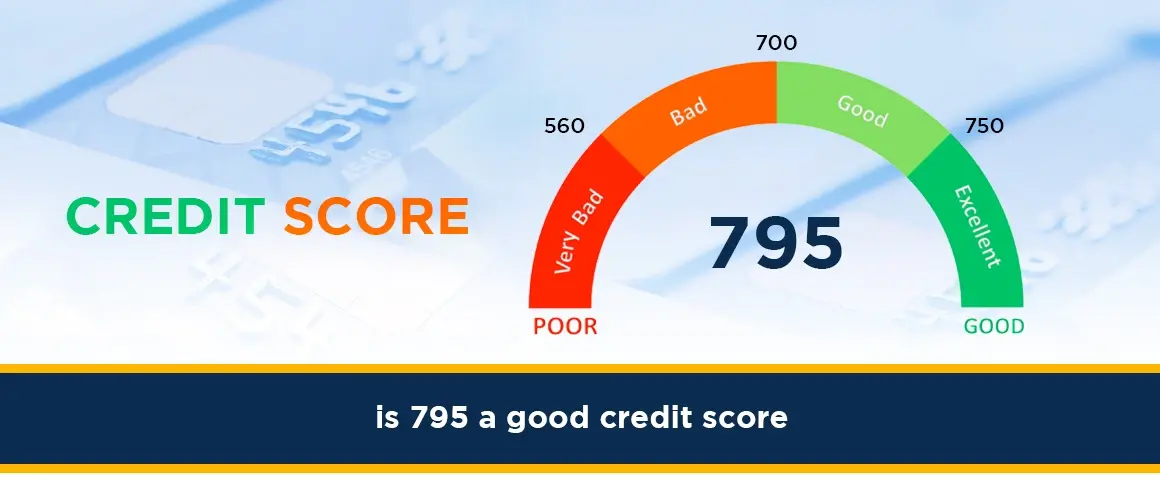
Let's get straight to the point: Yes, a credit score of 795 is an excellent credit score. It firmly places you in the "Very Good" to "Exceptional" range, depending on the specific scoring model used. This score signifies that you are a low-risk borrower, and lenders view you very favorably.
In the context of the widely used FICO scoring system, a 795 is just shy of the top tier (800-850). However, the difference in benefits between a 795 and an 800+ score is often marginal. For most lenders, a 795 credit score will unlock the best available interest rates and terms for a wide array of financial products. This score demonstrates a consistent history of responsible credit management, which is highly valued by financial institutions. As of 2025, this score will continue to be a powerful asset in your financial toolkit.
To put it into perspective, consider the average credit scores. While averages fluctuate, they often hover in the mid-700s. A score of 795 significantly surpasses the average, indicating a superior financial profile. This means you are not only likely to be approved for credit but also to receive preferential treatment from lenders, translating into substantial savings over time through lower interest payments.
The implications of a 795 credit score are far-reaching. It opens doors to competitive mortgage rates, making homeownership more affordable. It allows for easier approval of auto loans with attractive financing options. It can also lead to higher credit limits on credit cards, better insurance premiums, and even smoother rental application processes. Essentially, a 795 credit score empowers you with financial flexibility and confidence.
Comparing 795 to Other Scores
To truly appreciate the strength of a 795 credit score, it's helpful to compare it to other common score ranges. This comparison highlights the significant advantages that come with achieving such a high score.
| Credit Score Range | Category | Lender Perception | Likely Loan Terms |
|---|---|---|---|
| 800-850 | Exceptional | Extremely Low Risk | Best possible interest rates and terms. |
| 740-799 | Very Good | Low Risk | Highly competitive interest rates and favorable terms. |
| 670-739 | Good | Moderate Risk | Generally approved with standard interest rates. |
| 580-669 | Fair | Higher Risk | May face higher interest rates and stricter terms, or denial. |
| 300-579 | Poor | Very High Risk | Difficult to obtain credit, often with very high costs. |
As you can see, a 795 score places you in the elite category, right behind the absolute top tier. The difference between a 795 and a 730, for instance, can translate into thousands of dollars saved on a mortgage over 30 years. The difference between a 795 and a 650 is even more dramatic, potentially meaning the difference between loan approval and denial.
What Lenders See in a 795 Score
When a lender reviews an application with a 795 credit score, they see a borrower who has consistently demonstrated responsibility in managing their financial obligations. This score suggests:
- Payment History: You have a strong track record of making payments on time, every time. This is the most significant factor in credit scoring.
- credit utilization: You likely keep your credit card balances low relative to your credit limits, indicating you don't rely heavily on borrowed money.
- Credit Age: You have a history of managing credit for a substantial period, showing experience and stability.
- Credit Mix: You may have a healthy mix of different credit types (e.g., credit cards, installment loans), demonstrating you can manage various forms of debt.
- New Credit: You haven't opened an excessive number of new accounts recently, which can signal desperation or increased risk.
In essence, a 795 credit score tells lenders that you are a reliable borrower who is likely to repay debts as agreed. This confidence allows them to offer you their best products and pricing.
The Advantages of Having a 795 Credit Score
Achieving a credit score of 795 unlocks a world of financial benefits. It's not just a number; it's a key that opens doors to significant savings, greater flexibility, and peace of mind. Here's a breakdown of the tangible advantages you can expect with a score in this excellent range, looking ahead to 2025 and beyond.
Lower Interest Rates on Loans
This is arguably the most significant benefit. Lenders offer lower interest rates to borrowers they perceive as low-risk. With a 795 score, you'll qualify for the prime or super-prime interest rates on mortgages, auto loans, personal loans, and other forms of credit. Over the life of a loan, especially a long-term one like a mortgage, these lower rates can save you tens of thousands of dollars.
Example: Consider a $300,000 mortgage over 30 years. A borrower with a 795 credit score might secure a rate of 6.5%, while someone with a 700 score might get 7.5%. The difference in monthly payments would be substantial, and the total interest paid over 30 years could be over $100,000 more for the borrower with the lower score.
Easier Loan and Credit Card Approvals
A 795 credit score dramatically increases your chances of being approved for credit. Whether you're applying for a new credit card, a personal loan, or a mortgage, lenders are more likely to give you the green light. This means less stress and fewer rejections when you need to access credit for major purchases or emergencies.
Higher Credit Limits
With a strong credit score like 795, credit card issuers and lenders are more willing to extend higher credit limits. This can be beneficial for several reasons: it can help keep your credit utilization ratio low (which further boosts your score), and it provides more financial flexibility for larger purchases or unexpected expenses.
Better Terms on Financial Products
Beyond just interest rates, a 795 score can lead to more favorable terms across the board. This might include:
- Reduced or waived fees: Some lenders may waive application fees or offer lower annual fees on credit cards for top-tier customers.
- More flexible repayment options: You might have more leeway in repayment schedules or be offered more attractive loan structures.
- Rewards programs: Premium credit cards with lucrative rewards (cash back, travel points) are often reserved for individuals with excellent credit.
Favorable Insurance Premiums
In many states, insurance companies (auto, homeowners) use credit-based insurance scores as a factor in determining premiums. A higher credit score generally correlates with lower insurance rates, as statistically, individuals with better credit tend to file fewer claims. A 795 score will likely contribute to securing some of the lowest insurance premiums available.
Easier Rental Approvals
Landlords often check credit scores to assess the reliability of potential tenants. A 795 score signals that you are a responsible individual who is likely to pay rent on time and take care of the property. This can give you an edge in competitive rental markets.
Potential for Better Utility and Cell Phone Plans
Utility companies and mobile phone providers may also check credit scores. A strong score can mean you won't have to pay a security deposit when setting up new services or that you can qualify for the most competitive plans without extra fees.
Key Factors Influencing Your Credit Score
Understanding what goes into your credit score is essential for maintaining and improving it. While the exact algorithms are proprietary, credit bureaus and scoring models like FICO and VantageScore agree on the primary factors that influence your score. For 2025, these factors remain the bedrock of credit scoring.
Payment History (35% of FICO Score)
This is the single most important factor. It reflects whether you pay your bills on time. Late payments, missed payments, defaults, bankruptcies, and collections can severely damage your score. Conversely, a consistent history of on-time payments is the strongest positive influence.
Key Takeaway: Always aim to pay at least the minimum amount due by the due date for all your credit accounts.
Amounts Owed (Credit Utilization Ratio) (30% of FICO Score)
This refers to the amount of credit you're using compared to your total available credit. It's often expressed as a percentage, known as the Credit Utilization Ratio (CUR). Keeping your CUR low is crucial. Experts generally recommend keeping it below 30%, and ideally below 10% for the best results.
Calculation: (Total Balances / Total Credit Limits) x 100 = CUR
Example: If you have a credit card with a $10,000 limit and a balance of $2,000, your CUR for that card is 20%. If you have multiple cards totaling $30,000 in limits and $6,000 in balances, your overall CUR is 20%.
Key Takeaway: Pay down credit card balances as much as possible. Don't max out your cards.
Length of Credit History (15% of FICO Score)
This factor considers the age of your oldest account, the age of your newest account, and the average age of all your accounts. A longer credit history generally indicates more experience managing credit, which is viewed positively. This is why it's generally not advisable to close old, unused credit cards if they don't have an annual fee.
Key Takeaway: The longer you responsibly manage credit, the better this factor becomes.
Credit Mix (10% of FICO Score)
This refers to the variety of credit accounts you have. Lenders like to see that you can successfully manage different types of credit, such as revolving credit (credit cards) and installment loans (mortgages, auto loans, personal loans). However, this factor is less impactful than payment history or utilization.
Key Takeaway: Having a mix of credit types can be beneficial, but don't open new accounts solely to improve your credit mix.
New Credit (10% of FICO Score)
This factor looks at how many new credit accounts you've opened and how many hard inquiries you've had on your credit report recently. Opening many new accounts in a short period can signal increased risk. A hard inquiry occurs when a lender checks your credit for a loan or credit card application. Shopping for a mortgage or auto loan within a short window (typically 14-45 days) usually counts as a single inquiry.
Key Takeaway: Apply for new credit sparingly and only when necessary.
Understanding Your Credit Reports
Your credit score is derived from the information in your credit reports, maintained by the three major credit bureaus: Equifax, Experian, and TransUnion. It's crucial to review these reports regularly for accuracy. You are entitled to a free credit report from each bureau annually at AnnualCreditReport.com. Disputing any errors can significantly impact your score.
Strategies to Achieve and Maintain a 795 Credit Score
Reaching a 795 credit score is a testament to responsible financial habits. Maintaining it requires ongoing diligence. Here are actionable strategies to build and preserve an excellent credit standing, relevant for 2025 and beyond.
1. Establish and Maintain a Positive Payment History
This is non-negotiable. Make all your payments on time, every time. If you anticipate a late payment, contact your creditor immediately to see if arrangements can be made. Setting up automatic payments or payment reminders can be incredibly helpful.
Actionable Tip: Set up auto-pay for at least the minimum amount due on all your credit accounts. This ensures you never miss a payment due to forgetfulness.
2. Manage Credit Utilization Wisely
Keep your credit card balances low. Aim to keep your overall credit utilization ratio below 30%, and ideally below 10% for optimal scoring. This means not only making payments but also paying down balances strategically.
Actionable Tip: If you have multiple credit cards, focus on paying down the one with the highest interest rate first (debt avalanche method) or the smallest balance first (debt snowball method) to gain momentum. Consider requesting a credit limit increase on existing cards if you have a good payment history; this can lower your utilization ratio without you spending more.
3. Keep Old Accounts Open
The length of your credit history matters. As long as an old credit card account doesn't have an annual fee and you've managed it responsibly, keeping it open contributes positively to your average account age and your overall credit utilization ratio (by increasing your total available credit). If you're concerned about not using an old card, make a small purchase on it occasionally and pay it off immediately.
Actionable Tip: Resist the urge to close old credit accounts, even if you no longer use them frequently. Their continued existence can be a net positive for your credit score.
4. Avoid Unnecessary New Credit Applications
Each time you apply for new credit, it typically results in a hard inquiry on your credit report, which can slightly lower your score. While one or two inquiries won't make a huge difference, multiple applications in a short period can be a red flag. Only apply for credit when you truly need it.
Actionable Tip: When shopping for loans (like a mortgage or auto loan), try to do all your comparison shopping within a 14-45 day period, as credit scoring models often treat multiple inquiries for the same type of loan within this window as a single event.
5. Monitor Your Credit Reports Regularly
Mistakes on credit reports are common and can negatively impact your score. Obtain your free credit reports from Equifax, Experian, and TransUnion annually via AnnualCreditReport.com. Review them carefully for any inaccuracies, such as accounts you don't recognize, incorrect payment statuses, or wrong personal information. Dispute any errors promptly.
Actionable Tip: Set a calendar reminder to check your credit reports at least twice a year from different bureaus. If you find an error, follow the bureau's dispute process immediately.
6. Consider a Secured Credit Card or Credit-Builder Loan (If Needed)
If you are building credit from scratch or recovering from past issues, these tools can be invaluable. A secured credit card requires a cash deposit, which becomes your credit limit. A credit-builder loan involves borrowing a small amount that is held in an account and released to you after you've made all the payments. Both report to credit bureaus, helping you establish a positive history.
Actionable Tip: If you're using a secured card, treat it like a regular credit card: make small purchases and pay them off in full and on time each month. This demonstrates responsible usage.
7. Be Patient and Consistent
Building and maintaining an excellent credit score takes time. There are no quick fixes. Focus on consistent, responsible financial behavior over the long term. Small, consistent efforts will yield significant results over months and years.
Actionable Tip: Celebrate small victories, like consistently paying down debt or seeing your score tick up. Stay focused on your long-term financial health.
What If My Score is Lower Than 795? Improving Your Credit
If your credit score is below 795, don't despair. Improving your credit is achievable with a strategic approach and consistent effort. The good news is that the factors influencing your score are within your control. Here’s a roadmap to elevate your credit standing, applicable in 2025 and beyond.
Step 1: Obtain and Review Your Credit Reports
Before you can improve your score, you need to understand where you stand and identify potential issues. Get your free credit reports from Equifax, Experian, and TransUnion at AnnualCreditReport.com. Scrutinize each report for errors, such as incorrect personal information, accounts you don't recognize, or inaccurate payment statuses. If you find any discrepancies, dispute them immediately with the respective credit bureau.
Why it matters: Errors can artificially lower your score, and correcting them can provide an instant boost.
Step 2: Address Late Payments and Collections
Payment history is the most significant factor in your credit score. If you have late payments or accounts in collections on your report, these are major drags on your score. Prioritize bringing any past-due accounts current. For collection accounts, consider negotiating a "pay-for-delete" agreement with the collection agency, although this is not always possible.
Actionable Tip: If you have multiple late payments, focus on making all future payments on time. The impact of past late payments diminishes over time, especially as you build a new history of on-time payments.
Step 3: Reduce Credit Utilization
High credit utilization is another major score killer. If your credit card balances are high relative to your credit limits, focus on paying them down. Aim to get your utilization ratio below 30%, and ideally below 10% for the best results.
Actionable Tip: Make more than the minimum payment whenever possible. Consider transferring balances to a lower-interest card if you can qualify, but be mindful of transfer fees and ensure you pay down the balance aggressively.
Step 4: Avoid Opening Too Many New Accounts
While you might be tempted to open new credit accounts to improve your credit mix or get a fresh start, opening too many accounts in a short period can negatively impact your score due to multiple hard inquiries and the decrease in the average age of your accounts.
Actionable Tip: Only apply for credit when you genuinely need it and have a good chance of being approved. Space out applications if possible.
Step 5: Consider Credit-Building Tools
If your credit history is thin or damaged, tools like secured credit cards or credit-builder loans can help. Use these responsibly by making small purchases and paying them off in full and on time each month. This demonstrates to lenders that you can manage credit effectively.
Actionable Tip: Choose a secured credit card with no annual fee and report to all three major credit bureaus. Use it for small, recurring expenses you would pay for anyway, like a streaming service subscription.
Step 6: Be Patient and Consistent
Credit repair doesn't happen overnight. It requires consistent, responsible behavior over time. The impact of positive actions, like on-time payments and reduced utilization, builds gradually. Stick with your plan, and your score will improve.
Actionable Tip: Track your progress by checking your credit score regularly (many credit card companies offer free access). This can help you stay motivated.
Example Scenario of Credit Improvement
Let's say Sarah has a credit score of 620. She obtains her credit reports and finds:
- Two late payments from 18 months ago.
- A credit card with a $5,000 balance and a $5,000 limit (100% utilization).
- An average credit history of 5 years.
Sarah's plan:
- Focus on Payments: She commits to paying all bills on time going forward.
- Reduce Utilization: She aggressively pays down her credit card balance. Within six months, she reduces the balance to $1,000 (20% utilization).
- Monitor Reports: She checks her reports annually and sees the late payments are aging off.
Within 12-18 months, Sarah can realistically expect her score to climb significantly, potentially into the 700s, by implementing these steps consistently.
Debunking Common Credit Score Myths
The world of credit scores is often shrouded in misinformation. Understanding the realities behind common myths is crucial for effective credit management. Here, we clarify some of the most prevalent misconceptions, relevant for navigating the credit landscape in 2025.
Myth 1: Closing Unused Credit Cards Instantly Boosts Your Score
Reality: Closing a credit card can actually hurt your score. It reduces your total available credit, which can increase your credit utilization ratio. It also shortens the average age of your credit history. Unless a card has a high annual fee you can't afford, it's often better to keep old, unused accounts open.
Myth 2: Checking Your Own Credit Score Hurts It
Reality: This is false. When you check your own credit score or review your credit report, it's considered a "soft inquiry." Soft inquiries do not affect your credit score. Only "hard inquiries," which occur when lenders check your credit for a loan or credit card application, can have a minor, temporary impact.
Myth 3: You Need to Carry a Balance to Build Credit
Reality: This is a dangerous myth. Carrying a balance means you are paying interest, which is costly. The most effective way to build credit is to make all payments on time and keep your credit utilization low. You can achieve this by making small purchases and paying them off in full each month.
Myth 4: Your Credit Score is Fixed and Cannot Change
Reality: Your credit score is dynamic and changes based on your credit activity. By practicing good financial habits—paying bills on time, managing debt, and monitoring your reports—you can significantly improve your score over time.
Myth 5: A Medical Collection Account is the Same as a Credit Card Debt
Reality: As of recent changes, medical debt that has been paid or is no longer in collections generally does not appear on credit reports. Additionally, paid medical collection accounts are often excluded from scoring models. While unpaid medical collections can still impact your score, the rules are evolving to be more lenient.
Myth 6: Bankruptcy Ruins Your Credit Forever
Reality: Bankruptcy has a significant negative impact, but it does not ruin your credit forever. Chapter 7 bankruptcy typically stays on your report for up to 10 years, and Chapter 13 for up to 7 years. However, with diligent credit management after bankruptcy, it is possible to rebuild your credit and achieve a good score.
Myth 7: credit repair companies Can Remove Accurate Information
Reality: Legitimate credit repair companies can help you identify and dispute errors on your credit report. However, they cannot remove accurate, negative information. Be wary of companies that promise to remove all negative marks, as this is often a sign of a scam.
The Evolving Landscape of Credit Scoring
The world of credit scoring is not static. As technology advances and financial behaviors change, credit scoring models are continuously updated to better reflect creditworthiness. For 2025 and beyond, several trends are shaping how credit scores are calculated and used.
The Rise of Alternative Data
Traditional credit scores rely heavily on credit card and loan payment history. However, a growing trend is the inclusion of "alternative data." This can include:
- Rent payments: Many lenders are now considering on-time rent payments, which can be particularly helpful for individuals with limited credit history.
- Utility payments: Consistent payment of utility bills (electricity, gas, water) is also being incorporated.
- Bank account data: Information about how individuals manage their checking and savings accounts, including average balances and overdraft history, can provide insights into financial stability.
These alternative data points can help paint a more comprehensive picture of an individual's financial responsibility, potentially opening up credit opportunities for those who have been historically underserved by traditional credit systems.
Advancements in Scoring Models
Scoring models like FICO and VantageScore are regularly updated (e.g., FICO Score 10, VantageScore 4.0). Newer versions often:
- Give more weight to trended data: Instead of just looking at a snapshot of your credit at a single point in time, newer models analyze your credit behavior over time. For instance, consistently reducing credit card balances might be viewed more favorably than a single instance of high utilization.
- Refine the impact of different factors: The weight assigned to various scoring factors may be adjusted to better predict future credit performance.
- Incorporate more sophisticated algorithms: Machine learning and artificial intelligence are being used to develop more predictive and nuanced scoring models.
Increased Focus on Financial Wellness
There's a growing emphasis on financial wellness, not just creditworthiness. This means lenders and financial institutions are increasingly looking at an applicant's overall financial health. Factors like consistent savings, responsible budgeting, and a lack of excessive debt are becoming more important.
Regulatory Considerations and Fairness
As credit scoring evolves, regulators are paying close attention to ensure fairness and prevent discrimination. There's ongoing discussion about how to use data responsibly and ensure that scoring models do not inadvertently disadvantage certain demographic groups. This includes considerations around data privacy and the transparency of scoring algorithms.
The Role of Technology
Fintech companies are at the forefront of innovation in credit scoring. They are leveraging technology to streamline the application process, analyze data more effectively, and offer personalized financial products. This technological integration is likely to continue, making credit access more efficient and potentially more inclusive.
For individuals aiming for a score like 795, understanding these evolving trends is important. While the core principles of responsible credit management remain constant, staying informed about new data sources and scoring methodologies can help you optimize your financial profile for the future.
Conclusion
A credit score of 795 is unequivocally an excellent score, placing you in a highly advantageous position within the financial landscape. It signifies a strong history of responsible credit management, making you a low-risk prospect for lenders. This translates directly into tangible benefits, including access to the lowest interest rates on loans, easier approvals for credit products, higher credit limits, and more favorable terms overall. From securing a mortgage to obtaining a competitive auto loan or even renting an apartment, a 795 credit score opens doors and saves you significant money over time.
The key to achieving and maintaining such a score lies in understanding and consistently practicing the core principles of credit health: a stellar payment history, low credit utilization, a lengthy credit history, a healthy credit mix, and prudent management of new credit. By diligently monitoring your credit reports, addressing any inaccuracies, and making informed financial decisions, you can not only attain a 795 score but also preserve it for long-term financial security. Even if your current score is lower, the strategies outlined provide a clear path for improvement. Remember, credit building is a marathon, not a sprint, and consistent, positive actions will pave the way to a stronger financial future. In 2025 and beyond, your 795 credit score will remain a powerful asset, empowering you to achieve your financial aspirations with confidence and ease.
