Is 812 a Good Credit Score? Your Comprehensive Guide
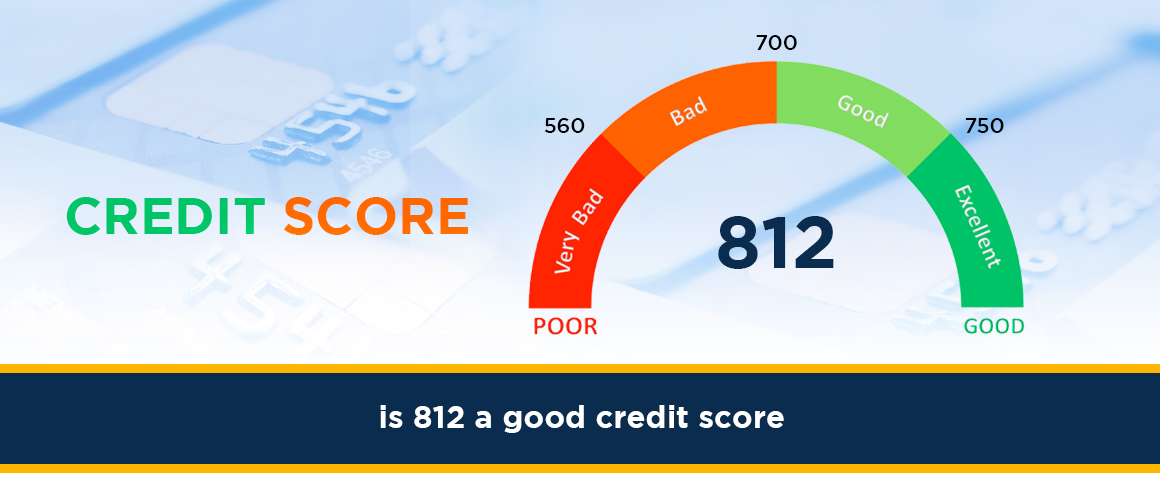
An 812 credit score is exceptional, placing you in the top tier of borrowers. This guide will explore what this score signifies, its advantages, and how to maintain this excellent financial standing in 2025.
What is an 812 Credit Score?
An 812 credit score is unequivocally excellent. It signifies a history of responsible credit management, minimal risk to lenders, and a strong financial reputation. In the world of credit scoring, scores typically range from 300 to 850, with higher numbers indicating better creditworthiness. An 812 falls squarely within the highest echelon, often referred to as "superprime" or "exceptional." This score suggests that you have consistently paid your bills on time, managed your debt levels wisely, and demonstrated a long-standing pattern of reliable financial behavior. Lenders, from mortgage providers to auto loan companies and credit card issuers, view individuals with scores in the 800s as highly desirable borrowers. This means you are likely to qualify for the best possible interest rates, terms, and loan products available in the market. Understanding the nuances of an 812 score is crucial for leveraging its full potential and ensuring its continued strength.
The FICO and VantageScore Systems
Credit scores are primarily generated by two major scoring models: FICO and VantageScore. While both aim to predict the likelihood of a borrower repaying debt, they have slightly different methodologies and score ranges. FICO scores, the most widely used, typically range from 300 to 850. VantageScores, a newer competitor, also generally fall within a similar range, though their exact calculations and tier definitions can differ. For the purpose of this guide, we will focus on the common understanding of an 812 score as being exceptionally high within either system. An 812 FICO score, for instance, is considered excellent, while an 812 VantageScore also represents top-tier creditworthiness. The underlying principles of what constitutes a good score—timely payments, low credit utilization, and a healthy credit mix—remain consistent across both models. When lenders refer to a credit score, they are most often referring to a FICO score, but understanding both is beneficial.
Key Factors Influencing Your Score
Several key factors contribute to the calculation of your credit score, regardless of whether it's FICO or VantageScore. These include:
- Payment History (35% of FICO score): This is the most critical factor. Making on-time payments consistently is paramount. Late payments, defaults, bankruptcies, and collections significantly damage your score.
- Amounts Owed (30% of FICO score): This refers to your credit utilization ratio – the amount of credit you're using compared to your total available credit. Keeping this ratio low (ideally below 30%, and even lower for top scores) is vital.
- Length of Credit History (15% of FICO score): A longer history of responsible credit use generally leads to a higher score. This includes the age of your oldest account, the age of your newest account, and the average age of all your accounts.
- Credit Mix (10% of FICO score): Having a mix of different credit types, such as credit cards, installment loans (like mortgages or auto loans), and retail accounts, can positively impact your score, provided you manage them well.
- New Credit (10% of FICO score): Opening several new credit accounts in a short period can lower your score. Each hard inquiry from a credit application can have a small, temporary negative impact.
An 812 score indicates that you have excelled in all these areas, particularly payment history and amounts owed. You've likely maintained a perfect or near-perfect payment record for many years, kept your credit card balances very low, and have a well-established credit history with a diverse range of credit products.
Understanding Credit Score Ranges
To fully appreciate the significance of an 812 credit score, it's essential to understand how it fits within the broader spectrum of credit scores. Credit bureaus and scoring models categorize scores into different ranges, each signifying varying levels of creditworthiness and associated risk for lenders. These ranges provide a standardized way to interpret credit scores and make lending decisions. While the exact terminology and numerical boundaries can vary slightly between FICO and VantageScore, the general tiers are quite consistent. Knowing where you stand within these ranges helps you understand your financial standing and what opportunities are available to you.
FICO Score Ranges (as of 2025)
The FICO scoring model is the most prevalent in the lending industry. While the core factors remain the same, the interpretation of score ranges can evolve slightly with market conditions and lender preferences. For 2025, the general FICO score ranges are widely understood as follows:
| Score Range | Category | Implication |
|---|---|---|
| 800-850 | Exceptional | Top-tier borrower; likely to receive the best rates and terms. Minimal risk. |
| 740-799 | Very Good | Strong borrower; likely to qualify for favorable rates and terms. Low risk. |
| 670-739 | Good | Acceptable borrower; generally qualifies for standard rates and terms. Moderate risk. |
| 580-669 | Fair | Subprime borrower; may face higher interest rates, lower credit limits, or require a co-signer. Higher risk. |
| 300-579 | Poor | High-risk borrower; difficult to qualify for credit, often requires significant down payments or collateral. Very high risk. |
As you can see, an 812 credit score falls squarely into the "Exceptional" category. This is the pinnacle of credit scoring, indicating that you are among the most creditworthy individuals in the country. Lenders consider borrowers with exceptional scores to be virtually risk-free, making them highly sought after.
VantageScore Ranges (as of 2025)
VantageScore, developed by the three major credit bureaus (Equifax, Experian, and TransUnion), offers an alternative scoring model. While it shares many similarities with FICO, its specific ranges and proprietary algorithms differ. For 2025, the VantageScore 4.0 model, which is widely used, has the following general ranges:
| Score Range | Category | Implication |
|---|---|---|
| 781-850 | Excellent | Top-tier borrower; best interest rates and terms. Minimal risk. |
| 661-780 | Good | Strong borrower; favorable rates and terms. Low to moderate risk. |
| 561-660 | Fair | Subprime borrower; may face higher rates or limited options. Moderate to high risk. |
| 300-560 | Poor | High-risk borrower; difficult to obtain credit. Very high risk. |
In the VantageScore system, an 812 score also places you in the highest tier, typically labeled "Excellent." This reinforces the notion that regardless of the specific model, a score in the low 800s signifies outstanding creditworthiness. The consistent classification across both major scoring models underscores the universal recognition of an 812 score as a mark of financial excellence.
Why These Ranges Matter
These score ranges are not arbitrary; they are directly linked to the likelihood of default. Lenders use these ranges to assess risk. A borrower with an "Exceptional" or "Excellent" score is statistically far less likely to miss payments or default on a loan compared to someone with a "Fair" or "Poor" score. This reduced risk translates into tangible benefits for the borrower, primarily in the form of lower interest rates. Over the life of a significant loan, such as a mortgage, even a small difference in interest rate can amount to tens of thousands of dollars saved. Furthermore, high credit scores open doors to premium credit cards with generous rewards, higher credit limits, and easier approval for rental properties or even certain job positions.
How Lenders View an 812 Credit Score
For lenders, an 812 credit score is a beacon of financial responsibility. It signals that you are a low-risk borrower, someone who has demonstrated a consistent ability to manage debt and meet financial obligations. This perception significantly influences how they evaluate your loan applications and the terms they are willing to offer. In the lending landscape, credit scores are a primary tool for quickly assessing a borrower's creditworthiness. An 812 score immediately places you in the most desirable category, minimizing the perceived risk for the lender and maximizing your potential benefits.
Reduced Risk Profile
When a lender sees an 812 credit score, they interpret it as a strong indicator that you are highly unlikely to default on a loan. This is based on extensive statistical data that shows individuals with scores in this range have a very low history of delinquency or default. This reduced risk profile means lenders are more eager to extend credit to you. They see you as a reliable customer who will repay the borrowed funds as agreed. This confidence allows them to offer more competitive terms, as their potential for loss is significantly minimized. For them, approving a loan for someone with an 812 score is a sound business decision, as it is highly probable to result in a profitable transaction with minimal complications.
Access to the Best Interest Rates
One of the most significant advantages of an 812 credit score is access to the lowest available interest rates. Interest rates are directly tied to the perceived risk of lending money. Borrowers with higher credit scores are seen as less risky, so lenders can afford to offer them lower interest rates. For major purchases like homes or cars, this can result in substantial savings over the life of the loan. For example, on a $300,000 mortgage, a difference of just 1% in interest rate can save you over $100,000 in interest payments over 30 years. An 812 score ensures you are at the front of the line for these prime rates, making borrowing significantly more affordable.
Higher Approval Odds and Credit Limits
Beyond just interest rates, an 812 credit score dramatically increases your chances of getting approved for various types of credit. Whether you're applying for a mortgage, an auto loan, a personal loan, or a new credit card, lenders are far more likely to approve your application. Furthermore, lenders are often willing to offer higher credit limits on credit cards and larger loan amounts to individuals with exceptional credit scores. This is because they are confident in your ability to manage a larger debt burden responsibly. This can be beneficial for managing large expenses, consolidating debt, or simply having greater financial flexibility.
Favorable Loan Terms and Perks
Lenders often offer additional perks and more flexible terms to borrowers with top-tier credit scores. This can include:
- No or low origination fees: Some lenders waive or reduce fees for borrowers with excellent credit.
- Waiver of certain penalties: For example, some credit cards may waive annual fees or late payment fees for their most valued customers.
- Pre-approval and expedited processing: Lenders may prioritize applications from borrowers with exceptional scores, leading to faster approval times.
- Access to premium products: This includes exclusive credit cards with premium rewards, travel benefits, and concierge services.
These benefits, while not always monetary, contribute to a more advantageous and convenient borrowing experience. Lenders want to attract and retain customers with excellent credit, so they often sweeten the deal with these additional incentives.
Benefits of an 812 Credit Score
Possessing an 812 credit score unlocks a wealth of financial advantages that can significantly impact your life. It's more than just a number; it's a testament to your financial discipline and a key that opens doors to opportunities that may be inaccessible to others. The benefits extend beyond just getting approved for loans; they encompass saving money, gaining flexibility, and enjoying peace of mind. In 2025, with fluctuating economic conditions, having an exceptional credit score provides a robust financial safety net and a competitive edge.
Saving Money on Interest
This is arguably the most significant and tangible benefit. As discussed earlier, lower interest rates translate directly into substantial savings. Let's illustrate with a real-world example for a mortgage in 2025:
- Loan Amount: $400,000
- Loan Term: 30 years
- Scenario 1 (812 Credit Score): Interest Rate = 6.0%
- Scenario 2 (680 Credit Score): Interest Rate = 7.5%
Using a mortgage calculator for 2025:
- Scenario 1 Monthly Payment: ~$2,398
- Scenario 1 Total Interest Paid: ~$463,280
- Scenario 2 Monthly Payment: ~$2,797
- Scenario 2 Total Interest Paid: ~$606,920
The difference in total interest paid over 30 years is a staggering $143,640. This clearly demonstrates how an 812 credit score can save you a fortune, allowing you to pay off your home faster or have more disposable income.
Easier Approval for Loans and Credit Cards
An 812 score makes you a preferred applicant for almost any type of credit. This includes:
- Mortgages: Higher loan amounts, better rates, and potentially lower down payment requirements.
- Auto Loans: Access to 0% APR offers or very low interest rates, saving you thousands on a new vehicle.
- Personal Loans: Larger loan amounts and more competitive rates for debt consolidation, home improvements, or unexpected expenses.
- Credit Cards: Approval for premium travel rewards cards, cashback cards with high limits, and cards with attractive introductory offers.
This ease of access to credit provides financial flexibility and security, allowing you to make significant purchases or manage financial needs with confidence.
Better Terms on Insurance Premiums
In many states, insurance companies (auto, homeowners, renters) use credit-based insurance scores to help determine premiums. These scores are derived from your credit history and are used as a predictor of the likelihood of filing a claim. Individuals with higher credit scores are generally considered less likely to file claims, leading to lower insurance premiums. An 812 credit score will likely qualify you for the lowest possible insurance rates, saving you money year after year. For example, studies in 2025 continue to show that drivers with excellent credit can save up to 20% on their auto insurance compared to those with poor credit.
Improved Rental Application Success
Landlords and property managers often run credit checks on prospective tenants to assess their reliability and ability to pay rent on time. An 812 credit score signals to a landlord that you are a responsible individual who is likely to pay your rent consistently and take care of the property. This can give you a significant advantage in competitive rental markets, making it easier to secure desirable apartments or houses, sometimes even with lower security deposit requirements.
Potential for Lower Security Deposits
When setting up utilities (electricity, gas, water, internet, mobile phone plans), companies often require a security deposit if a customer has a low credit score or no credit history. With an 812 credit score, you demonstrate a low risk of non-payment, and many utility providers will waive these security deposits altogether. This can save you hundreds of dollars upfront when moving into a new home or setting up new services.
Negotiating Power
An exceptional credit score gives you significant negotiating power. When you're shopping for a car, a loan, or even negotiating terms with a service provider, your 812 credit score tells them you have options and are a valuable customer. This can empower you to ask for better deals, lower rates, and more favorable terms, as lenders and businesses are eager to earn your business.
How to Achieve and Maintain an 812 Score
Achieving an 812 credit score is a significant accomplishment, but maintaining it requires ongoing diligence and adherence to sound financial practices. It's not a set-it-and-forget-it situation. The factors that contribute to a high score are dynamic and require consistent attention. By understanding the core principles and applying them consistently, you can not only reach this benchmark but also safeguard it for years to come. In 2025, with evolving credit scoring algorithms, staying informed and proactive is key.
1. Pay All Bills On Time, Every Time
This is the cornerstone of a high credit score. Payment history accounts for the largest portion of your FICO score (35%).
- Set up Autopay: For recurring bills like credit cards, loans, and utilities, set up automatic payments from your bank account. Ensure you always have sufficient funds to cover these payments.
- Use Calendar Reminders: For bills that cannot be automated, set up calendar alerts on your phone or computer a few days before the due date.
- Round Up Your Payments: If you're concerned about exact amounts, consider rounding up your payment to the nearest dollar or ten dollars to ensure you never miss a payment.
- Address Delinquencies Immediately: If you do miss a payment, pay it as soon as possible. Contact the creditor to explain the situation and see if they can waive any late fees or negative reporting. The sooner you rectify it, the less impact it will have.
2. Keep Credit Utilization Low
Amounts owed, particularly your credit utilization ratio (CUR), is the second most important factor (30% of FICO score). An 812 score typically requires a CUR well below 30%, ideally below 10%.
- Pay Down Balances: Aim to pay off your credit card balances in full each month. If you carry a balance, make more than the minimum payment.
- Request Credit Limit Increases: If you have a good payment history with a particular card issuer, consider requesting a credit limit increase. This can lower your CUR without you spending more, provided you don't increase your spending accordingly.
- Spread Your Spending: If you have multiple credit cards, try to distribute your spending across them rather than maxing out one card.
- Monitor Your CUR: Regularly check your credit card statements and online portals to monitor your balances and utilization ratios.
3. Maintain a Long Credit History
The length of your credit history (15% of FICO score) matters. A longer history of responsible credit management is beneficial.
- Avoid Closing Old Accounts: Unless an old account has a high annual fee that you can no longer justify, consider keeping it open, especially if it has a zero balance. Closing old accounts can reduce your average account age and potentially increase your utilization ratio.
- Use Old Accounts Periodically: If you have an older credit card that you don't use often, make a small purchase on it every few months and pay it off immediately to keep the account active.
4. Diversify Your Credit Mix
A healthy credit mix (10% of FICO score) shows you can manage different types of credit responsibly.
- Consider Different Credit Products: Having a mix of revolving credit (credit cards) and installment loans (mortgage, auto loan, personal loan) can be beneficial. However, do not open new accounts solely for the sake of credit mix if you don't need them.
- Manage All Accounts Wisely: The key is not just having different types of credit but managing them all responsibly with on-time payments and low balances.
5. Be Strategic About New Credit
Opening too much new credit too quickly (10% of FICO score) can negatively impact your score.
- Limit Applications: Only apply for credit when you genuinely need it. Each application for new credit typically results in a hard inquiry, which can slightly lower your score for a short period.
- Space Out Applications: If you need to apply for multiple credit products, space out your applications over several months.
- Understand Hard vs. Soft Inquiries: Hard inquiries occur when you apply for credit, while soft inquiries (like checking your own score) do not affect your credit.
6. Monitor Your Credit Reports Regularly
Your credit reports are the foundation of your credit score. Errors on these reports can negatively impact your score.
- Get Free Annual Reports: You are entitled to a free credit report from each of the three major credit bureaus (Equifax, Experian, TransUnion) every year at AnnualCreditReport.com.
- Review for Accuracy: Carefully review each report for any inaccuracies, such as incorrect personal information, accounts you don't recognize, or incorrect payment statuses.
- Dispute Errors: If you find any errors, dispute them immediately with the credit bureau and the creditor.
7. Avoid High-Risk Behaviors
Certain actions can severely damage your credit score, regardless of how good it is.
- Never Co-sign for Someone Else: Unless you are fully prepared to take on the debt if the primary borrower defaults, avoid co-signing. Their payment behavior will directly impact your credit.
- Be Wary of Credit Repair Scams: Legitimate credit improvement takes time and consistent effort. Be skeptical of services promising quick fixes or guaranteed score increases.
- Understand the Impact of Collections and Charge-offs: These are serious negative marks that can significantly lower your score and take years to remove.
Maintaining an 812 score is about consistent, responsible financial behavior. It's a marathon, not a sprint, and by diligently following these steps, you can ensure your credit remains in the exceptional category.
Common Misconceptions About High Credit Scores
Even with an excellent credit score like 812, there are prevalent myths and misunderstandings that can lead individuals to make suboptimal financial decisions. It's crucial to separate fact from fiction to truly leverage the power of a high credit score. In 2025, as financial products and credit scoring evolve, these misconceptions can become even more confusing. Understanding what a high score *doesn't* mean is as important as understanding what it *does* mean.
Misconception 1: "My Score is Too High to Improve Further."
While an 812 is already at the top tier, there's always room for minor optimization, and more importantly, the focus shifts to *maintaining* that score. The concept of "improvement" might be marginal in terms of numerical value (e.g., going from 812 to 820), but it can involve strengthening credit report details, such as increasing the average age of accounts or further reducing credit utilization to near zero. The real goal is to solidify the "exceptional" status and ensure no negative marks appear.
Misconception 2: "I Don't Need to Check My Credit Report Anymore."
This is a dangerous assumption. Even with an excellent score, errors can appear on your credit report. identity theft can lead to fraudulent accounts being opened in your name, and administrative mistakes can occur. Regularly checking your credit reports (at least annually from each bureau) is essential to catch any inaccuracies or fraudulent activity early, which could otherwise silently damage your score.
Misconception 3: "Having Many Credit Cards is Bad, Even If I Pay Them Off."
This isn't necessarily true. If managed correctly, having multiple credit cards, especially if they are older accounts with good payment histories, can actually benefit your credit score. It demonstrates a longer credit history and can increase your total available credit, thereby lowering your credit utilization ratio. The key is responsible management – paying off balances in full and on time for all cards. The negative impact comes from applying for too many cards too quickly or carrying high balances.
Misconception 4: "I Can't Get Denied for Credit Anymore."
While an 812 score makes denials highly unlikely, it's not impossible. Lenders have other criteria besides credit scores, such as income, debt-to-income ratio, employment history, and the specific loan product's requirements. For instance, if you apply for a mortgage that requires a very low debt-to-income ratio and your existing debts are high relative to your income, you could still be denied, even with an 812 score. Additionally, some lenders have proprietary overlays or specific risk tolerances that might lead to a denial.
Misconception 5: "Closing Old Credit Card Accounts Will Boost My Score."
This is generally false and often counterproductive. Closing an old credit card account can:
- Reduce your average age of credit history, which is a negative factor.
- Decrease your total available credit, which can increase your credit utilization ratio, another negative factor.
Unless an account has a significant annual fee that outweighs its benefits, it's usually best to keep older, well-managed accounts open, even if you use them infrequently.
Misconception 6: "My Credit Score is All That Matters for a Loan."
While your credit score is a primary factor, it's not the *only* factor. Lenders look at the complete financial picture. This includes your income, employment stability, debt-to-income ratio (DTI), assets, and the loan-to-value ratio (LTV) for secured loans like mortgages and auto loans. A high credit score can compensate for minor weaknesses in other areas, but significant issues in income or DTI can still lead to denial or less favorable terms.
Misconception 7: "A High Credit Score Guarantees the Best Possible Deal."
While an 812 score guarantees access to the best *advertised* rates, it doesn't always mean you're getting the absolute best deal available. It's still wise to shop around and compare offers from multiple lenders. Sometimes, promotional offers or specific lender incentives might provide a slightly better deal for a particular product, even if your score is already excellent. Your negotiating power is enhanced, but active comparison shopping is still recommended.
Dispelling these myths ensures you continue to manage your credit effectively and maximize the benefits of your 812 score in 2025 and beyond.
What if Your Score is Slightly Lower?
It's common for individuals to strive for an 812 score and find themselves hovering just below it, perhaps in the high 700s or even low 800s. This is still an excellent position to be in, but understanding the nuances can help you make the final push or ensure you don't slip. Scores in the 740-799 range are considered "Very Good" by FICO, and scores in the 781-850 range are "Excellent" by VantageScore. While these are incredibly strong scores, there might be subtle differences in the absolute best rates or terms compared to a true 812.
Understanding the "Very Good" Category
If your score is in the high 700s (e.g., 760-799), you are still considered a prime borrower. You will likely qualify for most loans and credit cards with very competitive interest rates. The difference in rates between a 770 and an 812 might be minimal, perhaps a quarter of a percent or less on some products. However, for very large loans, this small difference can still add up over time. Lenders view this range as very low risk, and you'll enjoy many of the same benefits as someone with an 812 score.
Identifying Potential Gaps
If your score is slightly lower than 812, consider these potential areas for improvement:
- Credit Utilization: Even if it's low, could it be even lower? Aiming for under 5% utilization can sometimes provide a small boost.
- Age of Oldest Account: If your oldest account is relatively new, this factor will naturally limit your score's growth until it ages.
- Credit Mix: While not a primary driver, ensuring you have a mix of credit types (if appropriate for your financial situation) can help.
- Recent Inquiries: If you've had several recent credit applications, waiting for them to age off your report can help.
Strategies for Reaching 812
If you're close, here are targeted strategies:
- Maintain Perfect Payment History: This is non-negotiable. Any slip-up will hinder your progress.
- Aggressively Reduce Credit Card Balances: Pay down any revolving debt to as close to zero as possible.
- Wait for Inquiries to Age: If you have hard inquiries from the past year or two, simply waiting for them to become less impactful can help.
- Avoid New Credit Applications: For a few months, refrain from applying for new credit to let your score stabilize and potentially rise.
- Review Credit Reports for Optimization: Sometimes, minor tweaks or ensuring all positive information is accurately reported can help.
When an 812 Score Isn't Strictly Necessary
It's important to recognize that for many lending decisions, scores in the high 700s are perfectly adequate. For example, a car loan might offer the best rates starting at a FICO score of 740. A mortgage might offer excellent rates for scores above 760. While an 812 score guarantees you the absolute pinnacle, scores in the "Very Good" and "Excellent" categories (depending on the scoring model) will likely secure you the best available terms for most common financial products. The marginal difference in savings between a 780 and an 812 might not be worth the intense effort for some individuals, especially if their current score already provides access to highly favorable rates.
The pursuit of an 812 score is commendable, but understanding that scores in the high 700s are also incredibly powerful is key to financial satisfaction and strategic decision-making.
Maximizing Your 812 Credit Score
Having an 812 credit score is a fantastic achievement, but the goal isn't just to reach it; it's to maintain it and leverage it to its fullest potential. Maximizing your score involves not only adhering to best practices but also strategically using your excellent creditworthiness to your advantage. In 2025, with a dynamic financial landscape, proactive management and smart utilization of your credit are crucial.
1. Strategic Use of Credit Cards
With an 812 score, you likely qualify for premium credit cards. Use these strategically:
- Maximize Rewards: Choose cards that offer the best rewards (cash back, travel points, miles) for your spending habits. Use these cards for everyday purchases to earn rewards.
- Take Advantage of Sign-Up Bonuses: Many premium cards offer substantial sign-up bonuses after meeting a minimum spending requirement. With your excellent credit, you'll easily qualify.
- Maintain Low Utilization: Even with premium cards, always pay your balances in full and on time. This ensures you benefit from rewards without incurring interest charges, and keeps your utilization low.
2. Leverage for Major Purchases
Your score makes you an ideal candidate for favorable terms on large purchases:
- Mortgage Shopping: When buying a home, shop around with multiple lenders. Your 812 score will help you secure the lowest possible interest rate, saving you tens or even hundreds of thousands of dollars over the life of the loan. Consider getting pre-approved early in your home search.
- Auto Loans: Look for 0% APR financing offers on new vehicles. With your credit score, you'll likely qualify, allowing you to finance a car without paying any interest. If 0% isn't available, you'll still get the lowest market rates.
- Personal Loans: If you need funds for home renovations, debt consolidation, or other significant expenses, your score will help you secure larger loan amounts with competitive rates.
3. Consider Balance Transfers (Strategically)
If you have existing high-interest debt on a credit card, your excellent score might qualify you for balance transfer offers with 0% introductory APRs. This can be a powerful tool to pay down debt faster without accruing interest. However, always be aware of balance transfer fees and the APR after the introductory period ends. Ensure you have a solid plan to pay off the transferred balance before the promotional period expires.
4. Build an Emergency Fund
While your credit score provides a safety net for borrowing, it's not a substitute for savings. A robust emergency fund (ideally 3-6 months of living expenses) is crucial. It prevents you from needing to rely on credit cards for unexpected expenses, which can negatively impact your utilization and potentially lead to debt if not managed carefully. Your excellent credit score means you can access funds quickly if absolutely necessary, but savings should always be your first line of defense.
5. Stay Vigilant with credit monitoring
Even with an 812 score, continuous monitoring is key. Utilize free credit monitoring services offered by your bank or credit card companies, or check your reports annually. This helps you stay aware of any changes, potential fraud, or errors that could affect your score. Early detection is vital for maintaining your excellent standing.
6. Optimize Credit Utilization
While paying balances in full is ideal, if you do carry a balance, aim to keep it as low as possible. Even a small balance reported to the credit bureaus can impact your score if it represents a significant percentage of your credit limit. Consider making multiple payments throughout the month to keep your reported balance low.
7. Review and Optimize Credit Accounts
Periodically review your credit accounts. Are there any that are no longer serving you (e.g., high annual fees with low rewards)? While closing old accounts can be detrimental, if an account is actively costing you money and not providing value, consider closing it after careful consideration of its impact on your average account age and utilization. More often, it's beneficial to keep older, well-managed accounts open.
Maximizing your 812 credit score is about smart financial strategy. It's about using your excellent credit to save money, achieve financial goals, and maintain a strong financial foundation for the future.
Conclusion
An 812 credit score is an exceptional financial asset, placing you in the highest tier of creditworthiness. This score signifies a proven track record of responsible financial behavior, making you a highly desirable borrower for lenders. In 2025, such a score translates into significant advantages, including access to the lowest interest rates on mortgages, auto loans, and personal loans, potentially saving you thousands of dollars. It also opens doors to premium credit cards, better insurance rates, and smoother rental applications. Maintaining this score requires consistent diligence: always pay bills on time, keep credit utilization low, and monitor your credit reports for accuracy. While reaching 812 is a significant achievement, understanding its benefits and actively managing your credit will ensure you continue to reap its rewards for years to come. Your 812 score is a powerful tool; use it wisely to achieve your financial aspirations.
