Is 823 a Good Credit Score? A Comprehensive Guide
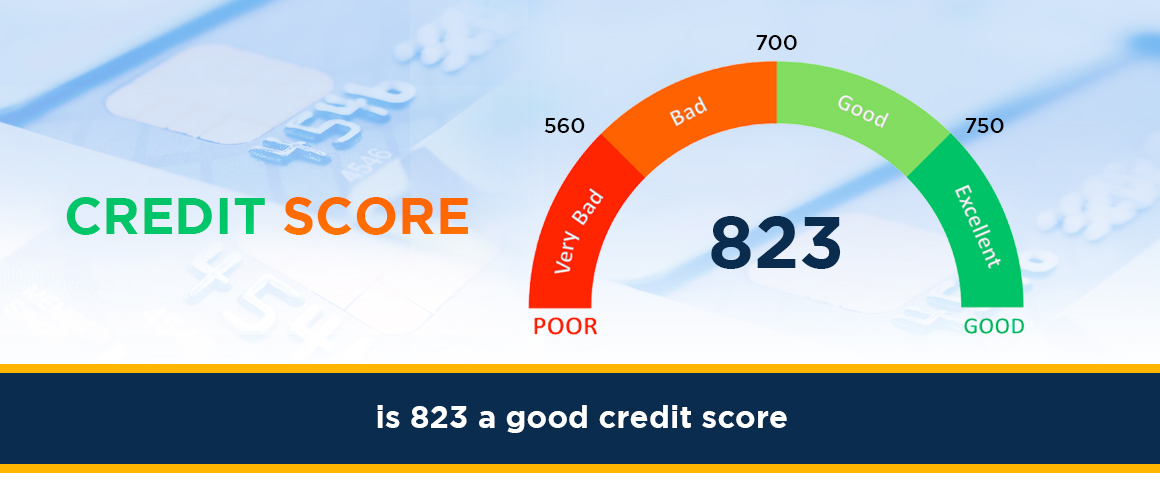
An 823 credit score is exceptionally good, placing you in the top tier of borrowers. This guide will delve into what this score signifies, its benefits, and how to maintain or even improve it further for maximum financial advantage in 2025.
Understanding Credit Scores: The Foundation
Before we dive deep into the specifics of an 823 credit score, it’s crucial to understand what a credit score is and why it matters. Think of your credit score as a three-digit number that acts as a financial report card, summarizing your creditworthiness. Lenders, landlords, insurers, and even some employers use this score to gauge the likelihood that you will repay borrowed money or fulfill contractual obligations.
In essence, your credit score is a snapshot of your financial behavior over time, particularly how you manage debt. It's calculated based on information found in your credit reports, which are maintained by the three major credit bureaus: Equifax, Experian, and TransUnion. These reports detail your credit history, including loan payments, credit card usage, and any instances of default or late payments.
The most widely used credit scoring model is the FICO score, though VantageScore is also gaining traction. Both models aim to predict your risk as a borrower. While the exact algorithms are proprietary, they generally consider similar factors. Understanding these foundational elements is key to appreciating the significance of a score like 823.
What Does an 823 Credit Score Mean?
An 823 credit score is a testament to excellent credit management. It signifies that you have consistently demonstrated responsible financial behavior, making it highly probable that you will repay debts as agreed. This score places you in the highest echelon of borrowers, often referred to as "prime" or "superprime" borrowers.
When lenders see a score of 823, they perceive you as a very low-risk individual. This means you are likely to be approved for credit products with favorable terms, such as lower interest rates, higher credit limits, and more flexible repayment options. It indicates a history of timely payments, responsible credit utilization, and a well-established credit profile.
Having an 823 credit score is not just about getting approved for loans; it’s about accessing the best financial products available in the market. It opens doors to opportunities that might be out of reach for individuals with lower scores. It's a powerful tool that can save you significant amounts of money over time through reduced interest payments and fees.
Credit Score Ranges in 2025: Where 823 Stands
Credit scoring models categorize scores into different ranges, each corresponding to a different level of credit risk. While the exact ranges can vary slightly between FICO and VantageScore, and even between different versions of their models, the general sentiment remains consistent. For 2025, here’s a typical breakdown:
FICO Score Ranges (Commonly Used)
| Score Range | Rating | Implication |
|---|---|---|
| 800-850 | Exceptional | Excellent creditworthiness; best terms and rates available. |
| 740-799 | Very Good | Strong credit history; qualifies for most favorable terms. |
| 670-739 | Good | Decent credit history; may qualify for good rates, but not the best. |
| 580-669 | Fair | Limited credit history or some past issues; higher interest rates likely. |
| 300-579 | Poor | Significant credit problems; difficult to obtain credit, high rates if approved. |
VantageScore Ranges (Also Widely Used)
| Score Range | Rating | Implication |
|---|---|---|
| 781-850 | Excellent | Top-tier borrowers; access to the best financial products. |
| 661-780 | Good | Solid credit standing; generally good terms available. |
| 601-660 | Fair | Moderate credit risk; may face higher rates or limited options. |
| 500-600 | Poor | High risk; difficult to get approved for credit. |
As you can see, an 823 credit score falls squarely within the "Exceptional" (FICO) or "Excellent" (VantageScore) categories. This is the highest possible tier, indicating that you are among the most creditworthy consumers in the country. This score is significantly above average and opens up a world of financial advantages.
For context, the average FICO score in the U.S. hovers around the mid-700s. Achieving an 823 means you are not only better than average but are in the top percentage of consumers, often cited as being in the top 1-2% of all credit users. This elite status is earned through years of diligent financial management.
The Perks of an 823 Credit Score: Unlocking Opportunities
Possessing an 823 credit score provides a significant competitive edge in the financial marketplace. The benefits are numerous and can translate into substantial savings and greater financial flexibility. Here are some of the key advantages:
1. Access to the Best Interest Rates
This is arguably the most significant benefit. Lenders offer their lowest interest rates to borrowers with exceptional credit scores because they represent the lowest risk. For large loans like mortgages or auto loans, even a small difference in interest rate can save you tens of thousands of dollars over the life of the loan. For instance, on a $300,000 mortgage, a 1% difference in interest rate can mean paying over $100,000 more in interest over 30 years.
Example: A borrower with an 823 score might qualify for a 30-year fixed-rate mortgage at 6.0%, while someone with a "Fair" score might be offered 7.5%. This difference is substantial.
2. Higher Approval Odds for Loans and Credit Cards
When you apply for credit, whether it's a personal loan, a credit card, or a new car loan, lenders are more likely to approve your application with an 823 score. Your score signals reliability and a proven track record of managing debt responsibly. This means fewer rejections and a smoother application process.
3. Larger Credit Limits
Credit card issuers and lenders are willing to extend higher credit limits to individuals with exceptional credit scores. This can be beneficial for managing cash flow, making large purchases, or simply having a larger safety net. It also helps maintain a low credit utilization ratio, which is beneficial for your score.
4. Better Terms and Perks on Credit Cards
Premium credit cards, often offering lucrative rewards programs (cash back, travel points, airline miles), sign-up bonuses, and valuable perks like airport lounge access, travel insurance, and concierge services, are typically reserved for applicants with excellent credit. An 823 score makes you a prime candidate for these high-end cards.
5. Favorable Terms for Renting and Utilities
Landlords often check credit scores to assess the reliability of potential tenants. An 823 score can make you a highly desirable tenant, potentially leading to easier approval for rental properties and possibly lower security deposits. Similarly, utility companies may waive security deposits for customers with excellent credit.
6. Lower Insurance Premiums
In many states, insurance companies use credit-based insurance scores to help determine premiums for auto and homeowners insurance. A higher score often correlates with lower premiums, as studies suggest a link between credit behavior and insurance risk. An 823 score can lead to significant savings on your insurance policies.
7. Negotiating Power
When you have an exceptional credit score, you have more leverage to negotiate terms with lenders. You can shop around for the best offers and often get lenders to compete for your business, potentially securing even better rates or terms than initially advertised.
8. Access to Specialized Financial Products
Some financial products, like certain investment opportunities or specialized loan programs, may have credit score requirements that only those with top-tier scores can meet. An 823 score opens doors to these exclusive options.
How to Achieve and Maintain an 823 Credit Score
Achieving an 823 credit score is a marathon, not a sprint. It requires consistent, responsible financial habits over an extended period. Maintaining it involves continuing these practices diligently. Here’s a breakdown of the key strategies:
1. Pay All Bills On Time, Every Time
Payment history is the single most important factor influencing your credit score, accounting for about 35% of your FICO score. Even a single late payment can significantly drop your score.
- Action: Set up automatic payments for all your bills (credit cards, loans, utilities, rent) to ensure you never miss a due date. If you can’t automate, set calendar reminders well in advance.
- Tip: If you do miss a payment, pay it as soon as possible. The sooner it's paid, the less impact it will have. Contact the creditor to see if they can remove the late mark, especially if it’s a first-time occurrence.
2. Keep Credit Utilization Low
Credit utilization ratio (CUR) is the amount of credit you're using compared to your total available credit. It accounts for about 30% of your FICO score. Experts recommend keeping your CUR below 30%, but for an exceptional score like 823, aiming for below 10% is ideal.
- Action: Aim to pay down your credit card balances significantly before the statement closing date.
- Tip: If you have multiple credit cards, focus on paying down the one with the highest utilization ratio first. Alternatively, request a credit limit increase on your existing cards (if you can trust yourself not to spend more) to lower your overall utilization.
3. Maintain a Long Credit History
The length of your credit history accounts for about 15% of your FICO score. A longer history of responsible credit use is generally better.
- Action: Avoid closing old, unused credit accounts, especially if they have no annual fee. These accounts contribute to your average account age and your overall available credit.
- Tip: If an old card has a small balance or inactivity fee, consider keeping it open and using it for a small, recurring purchase (like a streaming service) that you pay off immediately each month.
4. Diversify Your Credit Mix
Having a mix of different types of credit (e.g., credit cards, installment loans like mortgages or auto loans) can positively impact your score, accounting for about 10% of your FICO score. This shows lenders you can manage various forms of debt.
- Action: You don't need to open new accounts solely for this purpose. If you have a mortgage or an auto loan, these contribute to your credit mix.
- Caution: Don't take on unnecessary debt just to diversify. The benefits are marginal compared to the risks of over-borrowing.
5. Limit New Credit Applications
When you apply for new credit, lenders typically perform a hard inquiry on your credit report. Too many hard inquiries in a short period can slightly lower your score, accounting for about 10% of your FICO score.
- Action: Only apply for credit when you truly need it.
- Tip: If you're rate shopping for a mortgage or auto loan, try to do so within a short timeframe (usually 14-45 days, depending on the scoring model). These inquiries are often treated as a single event by scoring models to allow for comparison shopping.
6. Regularly Monitor Your Credit Reports
Errors on your credit report can negatively impact your score. It's essential to check your reports from Equifax, Experian, and TransUnion regularly for any inaccuracies or fraudulent activity.
- Action: You are entitled to a free credit report from each of the three major bureaus every week through AnnualCreditReport.com.
- Tip: If you find an error, dispute it immediately with the credit bureau and the creditor that reported the information.
Factors Influencing Your Credit Score
Understanding the mechanics behind your credit score is vital for maintaining an exceptional rating like 823. The FICO scoring model, which is the most prevalent, breaks down the calculation into five key categories:
1. Payment History (35%)
This is the most critical component. It reflects whether you pay your bills on time. Late payments, bankruptcies, collections, and foreclosures will significantly damage this aspect of your score.
What matters:
- Timeliness of payments.
- Severity of delinquency (e.g., 30 days late vs. 90 days late).
- Presence of negative public records (bankruptcies, judgments).
2. Amounts Owed (30%)
This category looks at how much debt you carry, particularly on revolving credit accounts like credit cards. The credit utilization ratio is a major part of this.
- Credit Utilization Ratio (CUR): As mentioned, keeping this low is key. For an 823 score, staying below 10% is optimal.
- Total Debt: The overall amount of debt you owe across all accounts.
- Number of Accounts with Balances: Having balances on many accounts can be viewed negatively.
3. Length of Credit History (15%)
This considers the age of your oldest account, the age of your newest account, and the average age of all your accounts. A longer, established history of responsible credit use is beneficial.
What matters:
- Average age of your credit accounts.
- Age of your oldest credit account.
4. Credit Mix (10%)
This factor assesses the variety of credit you manage. Lenders like to see that you can handle different types of credit responsibly, such as revolving credit (credit cards) and installment loans (mortgages, auto loans, personal loans).
- Diversity: Having both types of credit is generally positive.
- Management: Successfully managing both types is crucial.
5. New Credit (10%)
This category looks at how many new accounts you've opened and how many hard inquiries you have on your report. Opening too many new accounts in a short period can signal increased risk.
- Inquiries: Hard inquiries occur when you apply for new credit. Too many can lower your score.
- New Accounts: Opening several new accounts quickly can also be a red flag.
For an 823 score, you are likely excelling in all these categories, particularly payment history and credit utilization. Maintaining these high standards is paramount.
Potential Challenges for High Scorers
While an 823 credit score is fantastic, it's not entirely immune to challenges. Sometimes, individuals with excellent scores face specific hurdles or misconceptions. Understanding these can help you navigate them effectively.
1. Over-Reliance on Credit
With easy access to credit and high limits, there's a temptation to overspend or rely too heavily on credit for everyday purchases without a clear repayment plan. This can quickly lead to high utilization and potential debt accumulation, even for those with excellent scores.
2. Accidental Errors or Mismanagement
Even the most diligent individuals can make mistakes. A forgotten payment due to a change in billing cycles, a technical glitch with automatic payments, or an unexpected financial emergency can lead to a missed payment, which can have a disproportionate impact on an already high score.
3. identity theft and Fraud
Individuals with excellent credit are attractive targets for identity thieves. If your information is compromised, fraudulent activity on your accounts can significantly damage your credit score if not detected and addressed promptly.
4. Score Fluctuations
Credit scores are dynamic and can fluctuate slightly. A score of 823 might dip to 815 or 820 due to minor changes like a slight increase in credit utilization or a new inquiry. While these are usually temporary, it's important to be aware that perfection isn't static.
5. Misunderstanding Credit Scoring Nuances
Some individuals might believe they can take on more debt or take more risks simply because they have a high score. However, credit scoring models are complex, and even minor missteps can have consequences. It’s crucial to maintain the disciplined habits that built the score.
6. Difficulty in Improving Further
Once you reach the top tier, further significant improvements can be challenging. The scoring models have diminishing returns at the highest end. For example, improving from 750 to 800 might be easier than improving from 823 to 850, as you're already demonstrating near-perfect behavior.
What If Your Score Drops from 823?
If you notice your credit score has dipped from 823, don't panic. A slight decrease is often manageable, but it's important to identify the cause and take corrective action. Here's a step-by-step approach:
Step 1: Identify the Cause
The first step is to determine why your score dropped.
- Check Your Credit Report: Obtain your latest credit reports from Equifax, Experian, and TransUnion via AnnualCreditReport.com. Look for any new negative marks, increased balances, or recent inquiries.
- Review Your Credit Score: Many credit card companies and financial institutions offer free credit score monitoring. Check if they provide a reason for the score change.
Step 2: Analyze the Impact of Specific Factors
Consider which of the five FICO score categories might have been affected:
- Payment History: Did you miss a payment? Even one late payment can cause a significant drop.
- Credit Utilization: Has your credit card balance increased substantially? A higher utilization ratio is a common culprit.
- New Credit: Have you applied for several new accounts recently?
- Errors: Is there an incorrect negative mark on your report?
Step 3: Take Corrective Actions
Based on the identified cause, implement the appropriate solutions:
- If a payment was missed: Pay the overdue amount immediately. If it was a recent delinquency (e.g., 30 days late), contact the creditor to see if they will remove the late payment mark, especially if you have a history of on-time payments.
- If credit utilization is high: Pay down your credit card balances as quickly as possible. Aim to get back below 10% utilization. Requesting a credit limit increase can also help, but only if you maintain spending discipline.
- If there are too many inquiries: Avoid applying for new credit for at least six months to a year.
- If there are errors: Dispute the inaccurate information with the credit bureau and the creditor. Provide any supporting documentation you have.
Step 4: Be Patient
Credit scores don't improve overnight. It takes time and consistent positive behavior to rebuild your score. Focus on maintaining good habits, and your score will gradually recover. For example, positive payment history takes 7 years to fall off your report, but its impact lessens over time.
If your score drops significantly due to severe issues like bankruptcy or foreclosure, rebuilding will take longer and require more intensive strategies, often involving professional credit counseling. However, for minor dips from an 823, focused action usually suffices.
Conclusion: Your 823 Credit Score Advantage
An 823 credit score is an outstanding achievement, placing you in the top tier of financially responsible consumers. It signifies a strong history of timely payments, low credit utilization, and responsible debt management. This exceptional score unlocks a wealth of financial benefits in 2025, including access to the lowest interest rates on loans, higher approval odds, and premium credit card offers.
Maintaining this score requires continued diligence: always pay bills on time, keep credit utilization low, manage your credit mix wisely, and monitor your reports for accuracy. While challenges like potential identity theft or accidental errors exist, proactive monitoring and swift action can mitigate these risks. Should your score dip, identifying the cause and implementing targeted corrective measures will help you regain your exceptional standing.
Leverage your 823 credit score to its fullest potential. Use it to secure the best possible terms on mortgages, auto loans, and credit cards. This score is a powerful asset that can save you thousands of dollars and provide significant financial flexibility. Continue to practice sound financial habits, and your excellent credit will serve you well for years to come.
