Student Loans For Bad Credit: What To Know
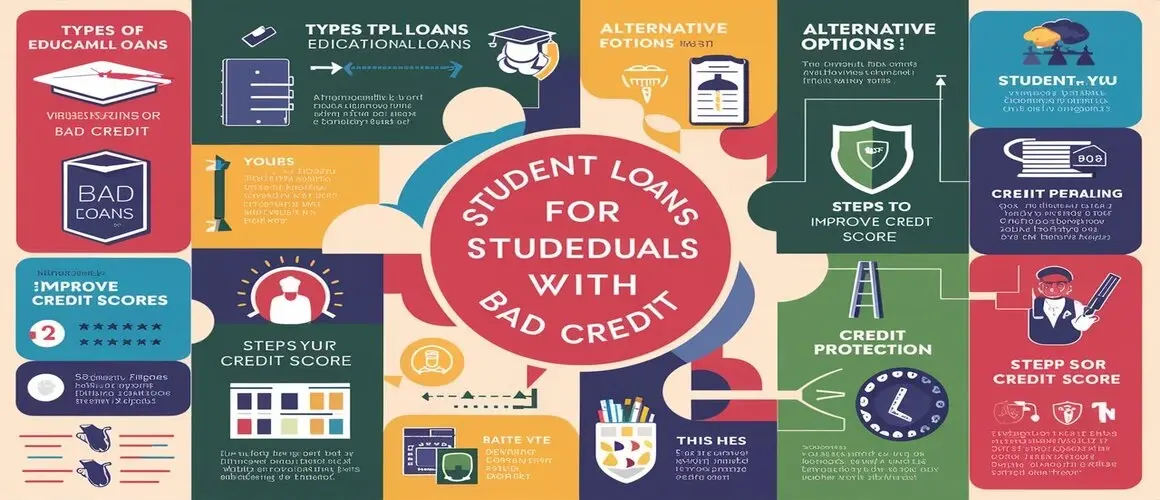
Navigating student loans with bad credit can feel daunting, but it's not impossible. This comprehensive guide explores your options for financing higher education, even with a less-than-perfect credit history. We'll break down what you need to know, from understanding credit scores to finding lenders who work with borrowers like you, ensuring you can pursue your academic goals.
Understanding Credit and Student Loans
Your credit score is a three-digit number that lenders use to assess your creditworthiness. It's a snapshot of your financial history, reflecting how reliably you've managed debt in the past. For student loans, especially private ones, a good credit score is often a prerequisite for approval and for securing favorable interest rates. However, a low credit score doesn't automatically close the door to higher education funding.
What is a Credit Score?
Credit scores, most commonly FICO scores and VantageScores, range from 300 to 850. They are calculated based on several factors:
- Payment History (35%): This is the most critical factor. Paying bills on time, every time, is paramount. Late payments, defaults, and bankruptcies significantly lower your score.
- Amounts Owed (30%): This refers to your credit utilization ratio – the amount of credit you're using compared to your total available credit. Keeping this ratio low (ideally below 30%) is beneficial.
- Length of Credit History (15%): The longer you've had credit accounts open and managed them responsibly, the better.
- Credit Mix (10%): Having a mix of different credit types (e.g., credit cards, installment loans) can positively impact your score, though this is less important than payment history and amounts owed.
- New Credit (10%): Opening too many new accounts in a short period can signal risk to lenders.
Why Credit Matters for Student Loans
Lenders, whether federal or private, want assurance that you will repay the money you borrow. Your credit history is their primary tool for evaluating this risk. For federal student loans, credit history is generally not a primary factor for undergraduate loans, but it can play a role in PLUS loans. For private student loans, it's almost always a major consideration.
Credit Score Ranges (General Guidelines for 2025)
While specific lender requirements vary, here are general credit score ranges:
- Excellent Credit: 750+
- Good Credit: 670-749
- Fair Credit: 580-669
- Poor Credit: Below 580
Borrowers with scores below 580 are often considered to have bad credit, making it challenging to secure traditional loans without additional measures.
Impact of Bad Credit on Student Loans
Having bad credit when applying for student loans can lead to:
- Higher Interest Rates: Lenders will charge you more to compensate for the increased risk.
- Lower Loan Limits: You might not be able to borrow the full amount you need.
- Denial of Application: Some lenders may simply refuse to lend to you.
- Requirement for a Cosigner: You may need someone with good credit to co-sign the loan.
Federal Student Loans: Your First and Best Option
Before exploring private options, it's crucial to understand federal student loans. These are offered by the U.S. Department of Education and are generally the most borrower-friendly. They often come with more flexible repayment plans, lower fixed interest rates, and protections that private loans lack. For most students, especially undergraduates, federal loans are the primary source of funding, regardless of credit history.
Types of Federal Student Loans
The main types of federal student loans include:
- Direct Subsidized Loans: Available to undergraduate students with demonstrated financial need. The U.S. Department of Education pays the interest while you're in school at least half-time, for the first six months after you leave school, and during deferment periods.
- Direct Unsubsidized Loans: Available to undergraduate and graduate students; financial need is not a requirement. Interest accrues on these loans from the time they are disbursed, even while you are in school.
- Direct PLUS Loans: Available to graduate or professional students and to parents of dependent undergraduate students. These loans have a higher borrowing limit and a fixed interest rate. Approval for Direct PLUS Loans *does* involve a credit check, but the criteria are less stringent than for private loans.
Credit Check for Federal PLUS Loans
For Direct PLUS Loans, the Department of Education performs a credit check. However, they look for adverse credit history, such as accounts that are 90 days or more delinquent, have been charged off, or have been subject to default, bankruptcy, foreclosure, repossession, or wage garnishment. If you have past issues, but they are resolved, you may still be approved. If denied due to credit, you may be able to get approved by:
- Providing Documentation of Resolved Adverse Credit: Show proof that the issues that led to the adverse credit are now resolved.
- Obtaining an Endorser: Find someone with good credit who agrees to guarantee the loan if you cannot repay it.
It's important to note that for Direct Subsidized and Unsubsidized Loans for undergraduates, there is generally no credit check required. This makes them an accessible option for many students, even those with poor credit.
Benefits of Federal Loans
Federal student loans offer several advantages:
- Fixed Interest Rates: Rates are set by Congress and don't change over the life of the loan, providing predictability. For 2025-2026 academic year, undergraduate fixed rates are 6.53%, graduate unsubsidized rates are 8.08%, and PLUS loan rates are 9.08%.
- Income-Driven Repayment (IDR) Plans: These plans can lower your monthly payment based on your income and family size. Options include Pay As You Earn (PAYE), Revised Pay As You Earn (REPAYE), Income-Based Repayment (IBR), and Income-Contingent Repayment (ICR). This is a critical safety net for borrowers who may struggle with payments.
- Deferment and Forbearance: You may be able to temporarily postpone payments if you're experiencing financial hardship, going back to school, or are unemployed.
- Public Service Loan Forgiveness (PSLF): If you work for a qualifying government or non-profit organization, you may be eligible to have the remaining balance of your Direct Loans forgiven after making 120 qualifying monthly payments.
- No Prepayment Penalties: You can pay off your loans early without any extra fees.
How to Apply for Federal Loans
The first step to accessing federal student aid, including loans, is to complete the Free Application for Federal Student Aid (FAFSA). The FAFSA form collects information about your financial situation to determine your eligibility for federal grants, work-study programs, and loans. For the 2025-2026 academic year, the FAFSA opened in December 2024. You should submit it as soon as possible, as some aid is awarded on a first-come, first-served basis.
After submitting the FAFSA, your school's financial aid office will review it and send you a financial aid award letter detailing the types and amounts of aid you're eligible for. You'll then need to formally accept the loan amounts offered.
Private Student Loans for Bad Credit
If federal loans don't cover the full cost of your education, or if you're not eligible for them, private student loans from banks, credit unions, and online lenders become an option. However, these loans are where bad credit poses the most significant challenge. Private lenders are for-profit entities and have stricter credit requirements.
Understanding Private Lenders and Credit Requirements
Private lenders assess your creditworthiness to determine if you're a good risk. For borrowers with bad credit, approval is difficult. Lenders typically look for:
- A Credit Score Above 650-670: While some may go lower, this is a common baseline.
- A Stable Income: Lenders want to see that you can afford payments, even if it's a part-time job while in school.
- A Low Debt-to-Income Ratio: This shows you don't have too much existing debt relative to your income.
Options for Borrowers with Bad Credit
If your credit score is low, you have a few primary avenues for private student loans:
1. Cosigner Requirement
This is the most common way to secure a private student loan with bad credit. A cosigner is someone (usually a parent, guardian, or close relative) who agrees to be legally responsible for the loan if you fail to make payments. The cosigner must have good to excellent credit, a stable income, and a low debt-to-income ratio. Their creditworthiness is heavily considered by the lender.
Pros of a Cosigner:
- Increases your chances of approval.
- Can help you qualify for a lower interest rate than you would get on your own.
- Can help you borrow a larger amount.
Cons of a Cosigner:
- Puts the cosigner's credit at risk. If you miss payments, it will negatively impact their credit score.
- The cosigner is equally responsible for the debt.
- It can be difficult to remove a cosigner from the loan later, though some lenders offer cosigner release programs after a period of on-time payments.
2. Lenders Who Specialize in Bad Credit
Some lenders are more willing to work with borrowers who have less-than-perfect credit. These lenders might:
- Consider Alternative Data: They may look beyond traditional credit scores to assess your ability to repay, such as your banking history or rent payment history.
- Offer Lower Loan Limits: They might be willing to lend smaller amounts.
- Charge Higher Interest Rates: Be prepared for significantly higher APRs.
Research lenders carefully. Look for those that explicitly state they work with students who have limited or bad credit. Online lenders are often more flexible than traditional banks.
3. Loans for Specific Programs or Institutions
Some specialized programs or educational institutions may offer their own loan programs with more flexible credit requirements. These are less common but worth investigating if you're pursuing a specific vocational training or degree.
Comparing Private Student Loans
Even with bad credit, comparison is key. When looking at private loans, consider:
- Interest Rate (APR): This is the annual cost of borrowing. Look for fixed rates if possible, as variable rates can increase over time.
- Loan Term: The length of time you have to repay the loan. Shorter terms mean higher monthly payments but less interest paid overall.
- Fees: Check for origination fees, late fees, and returned payment fees.
- Repayment Options: Do they offer in-school payment options (interest-only, full payments) or grace periods?
- Cosigner Release: If you use a cosigner, does the lender have a program to release them from the loan after a certain period of your successful payments?
Example Comparison (Hypothetical for 2025)
Let's imagine two hypothetical private lenders offering loans to a student with fair credit (620) needing $10,000 for one academic year, with a 4-year repayment term after graduation.
| Feature | Lender A (Standard) | Lender B (Bad Credit Focused) |
|---|---|---|
| Credit Score Requirement | 670+ | 600+ (with cosigner) |
| Interest Rate (Fixed) | 10.5% | 14.5% |
| Origination Fee | 2% | 0% |
| Monthly Payment (Est.) | $254 | $297 |
| Total Interest Paid (Est.) | $2,192 | $4,256 |
| Cosigner Needed | Yes (for this credit score) | Yes (highly recommended) |
Note: These are illustrative figures for 2025 and actual rates and terms will vary significantly.
As you can see, Lender B, while more accessible, comes with a significantly higher interest rate and total cost over the life of the loan. This highlights the importance of a cosigner if possible.
Alternative Funding and Strategies
Beyond federal and private loans, several other avenues can help fund your education, especially if your credit is a barrier. These strategies often involve less debt or no debt at all.
1. Scholarships and Grants
These are the holy grail of educational funding because they don't need to be repaid. You should exhaust all scholarship and grant opportunities before considering loans.
- Merit-Based Scholarships: Awarded based on academic achievement, athletic ability, artistic talent, or other skills.
- Need-Based Grants: Awarded based on financial need, as determined by the FAFSA.
- Institutional Scholarships: Offered by colleges and universities themselves.
- Private Scholarships: Offered by businesses, non-profits, community organizations, and individuals.
- Federal Pell Grants: A significant source of grant aid for undergraduate students with exceptional financial need. For the 2025-2026 academic year, the maximum Pell Grant is projected to be around $7,395.
- State Grants: Many states offer their own grant programs.
Where to Find Them:
- Your high school guidance counselor or college admissions office.
- Online scholarship search engines (e.g., Fastweb, Scholarship America, Niche).
- Professional organizations related to your field of study.
- Community foundations and local organizations.
2. Work-Study Programs
Federal Work-Study provides part-time jobs for students with financial need, allowing them to earn money to help pay for educational expenses. These jobs are often on campus and are designed to be flexible around your class schedule. Eligibility is determined by your FAFSA.
3. Employer Tuition Assistance
Many companies offer tuition reimbursement or assistance programs for employees pursuing further education, especially if it's relevant to their job. Check with your current or prospective employer about their policies. Some programs may cover a percentage of tuition or a set amount per year.
4. Savings and Family Contributions
Utilizing personal savings, or contributions from family members, can significantly reduce the amount you need to borrow. Even small, consistent savings can add up over time.
5. Payment Plans with the Institution
Most colleges and universities offer payment plans that allow you to spread tuition payments over several months during the semester or academic year. This can be a good alternative to taking out a loan for a portion of the costs, as it often has no interest or fees.
6. Income Share Agreements (ISAs)
ISAs are an alternative to traditional loans where you agree to pay back a percentage of your income for a set period after graduation, once you reach a certain income threshold. These are typically offered by coding bootcamps and some specialized degree programs. They can be attractive because you don't make payments if you're unemployed or earn below the threshold, but the total repayment could be higher than a traditional loan if you earn a high salary.
The Application Process: What to Expect
Applying for student loans, especially with bad credit, requires careful preparation and understanding of the steps involved. Whether you're applying for federal or private loans, the process has common elements.
Step-by-Step Guide
Step 1: Complete the FAFSA (For Federal Aid)
As mentioned, this is the gateway to federal loans, grants, and work-study. Do this as early as possible each year you plan to attend college. Ensure all information is accurate to avoid delays.
Step 2: Research and Compare Lenders (For Private Loans)
If you anticipate needing private loans, start researching lenders well in advance. Gather information on their credit requirements, interest rates, fees, and terms. Use online comparison tools, but always visit the lender's official website for the most accurate details.
Step 3: Gather Necessary Documentation
Regardless of the loan type, you'll need:
- Social Security number
- Driver's license or state ID
- Alien registration number (if not a U.S. citizen)
- Parent's information (if you're a dependent student)
- Federal income tax returns (yours and your parents', if applicable)
- W-2 forms and other records of money earned
- Records of untaxed income (e.g., child support, interest income)
- Bank account statements
- Investment records
For private loans, especially with bad credit, you'll also need information for your potential cosigner, including their Social Security number, employment history, and income verification.
Step 4: Submit Your Application
Federal Loans: After submitting the FAFSA, your school will send you an award letter. You'll typically need to accept the loan offers through your school's student portal.
Private Loans: You'll apply directly on the lender's website. This usually involves an initial pre-qualification step that performs a soft credit check (which doesn't hurt your score) to give you an estimate of potential rates and terms. If you proceed, a hard credit check will be performed.
Step 5: Review Loan Offers and Disclosures
Once approved, you'll receive loan documents outlining the exact terms, interest rate, fees, and repayment schedule. Read these carefully. For private loans, pay close attention to variable vs. fixed rates and any fine print.
Step 6: Loan Acceptance and Disbursement
You'll need to formally accept the loan offer. The funds are typically disbursed directly to your school to cover tuition, fees, and other educational expenses. Any remaining funds will be sent to you for living expenses.
Tips for a Smoother Application with Bad Credit
- Be Honest About Your Credit History: If you have past issues, be prepared to explain them and show how you've improved.
- Consider a Cosigner Early: If you know your credit is an issue, discuss this with a potential cosigner before you start applying.
- Apply to Multiple Lenders: Don't rely on just one lender. Shop around to find the best possible terms, even if they're not ideal.
- Understand the Fine Print: Pay special attention to fees, repayment start dates, and any penalties.
- Build Your Credit Before Applying: If you have time, work on improving your credit score by paying bills on time, reducing debt, and checking your credit report for errors.
Managing Your Student Loans Responsibly
Securing a student loan is only the first step. Managing your debt effectively is crucial to avoid future financial distress. This is especially important if you've had to take out loans with higher interest rates due to bad credit.
Understanding Your Loan Terms
Before you even graduate, make sure you understand:
- Your Loan Servicer: Who is managing your loan payments?
- Your Due Date: When are payments due each month?
- Your Interest Rate: Is it fixed or variable? What is the current APR?
- Your Grace Period: How long do you have after graduation before payments begin?
- Your Repayment Plan Options: What choices do you have for repayment?
Strategies for Repayment
1. Make Payments on Time: This is the single most important factor. Late payments incur fees and can damage your credit score further.
2. Pay More Than the Minimum When Possible: Even an extra $25 or $50 per month can significantly reduce the principal and the total interest paid over time. Ensure extra payments are applied to the principal, not just the next month's payment.
3. Explore Refinancing (with Caution): Once your credit has improved, you might be able to refinance your private student loans to a lower interest rate. Federal loans cannot be refinanced in the traditional sense, but they can be consolidated. Be very cautious about refinancing federal loans into private ones, as you'll lose federal benefits like IDR plans and PSLF.
4. Utilize Income-Driven Repayment (IDR) Plans (for Federal Loans): If you're struggling to make payments on federal loans, explore IDR plans. These can lower your monthly payment to a manageable percentage of your income. While this may extend the repayment term and increase total interest paid, it provides a vital safety net.
5. Consider Forbearance or Deferment Wisely: If you face temporary hardship, these options can provide relief. However, interest may still accrue during these periods, increasing your loan balance. Use them only when necessary and understand the terms.
Building and Improving Your Credit Score
If you've had bad credit, actively working to improve it will benefit you not only for future loans but also for renting an apartment, getting insurance, and even some job applications.
- Pay All Bills On Time: This is the most impactful action. Set up auto-pay for minimums if you're worried about forgetting.
- Reduce Credit Card Balances: Lower your credit utilization ratio.
- Avoid Opening Too Many New Accounts: Space out credit applications.
- Check Your Credit Report Regularly: Dispute any errors you find with the credit bureaus (Equifax, Experian, TransUnion). You can get free reports annually at AnnualCreditReport.com.
- Consider a Secured Credit Card: If you have very poor credit, a secured credit card requires a cash deposit as collateral, making it easier to get approved and build positive payment history.
Financial Literacy Resources
Many organizations offer free resources on financial literacy and debt management:
- Consumer Financial Protection Bureau (CFPB): Offers extensive information on student loans and debt.
- National Foundation for Credit Counseling (NFCC): Provides access to non-profit credit counselors who can help with budgeting and debt management.
- Your University's Financial Aid Office: They often have resources or can point you to helpful services.
Taking proactive steps to manage your student loans and improve your financial health will set you up for long-term success after graduation.
Conclusion:
Securing student loans with bad credit presents challenges, but it is by no means an insurmountable obstacle to obtaining a higher education. Federal student loans remain your most accessible and beneficial option, often requiring no credit check for undergraduate studies. If federal aid falls short, private loans become a possibility, though they typically necessitate a cosigner with good credit or come with higher interest rates. Always prioritize exploring scholarships, grants, and other forms of free money first. Diligent research, careful comparison of loan terms, and a strategic approach to the application process are your greatest allies. By understanding your options and taking proactive steps to manage your finances and credit, you can successfully navigate the path to funding your education and building a brighter financial future.
