What Is the Difference Between Leasing and Renting?
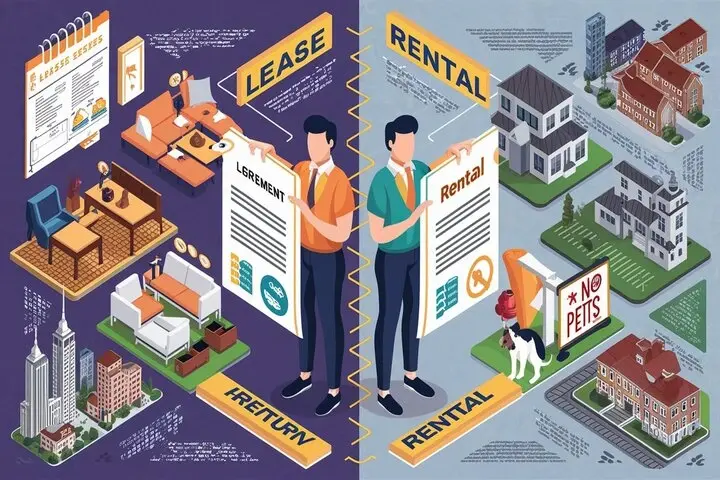
Understanding the core distinctions between leasing and renting is crucial for making informed decisions about acquiring property or assets. While often used interchangeably, these terms represent fundamentally different contractual agreements with unique implications for duration, flexibility, and financial commitment.
Understanding the Basics: Leasing vs. Renting
At its heart, the distinction between leasing and renting boils down to the duration and nature of the agreement. Both involve paying for the use of an asset or property without outright ownership. However, a lease typically signifies a longer-term, fixed contract, often with more stringent terms and conditions, while renting generally implies a shorter-term, more flexible arrangement. Understanding these nuances is paramount for consumers and businesses alike to avoid costly misunderstandings and to align their choices with their specific needs and financial strategies. This exploration will delve deep into each concept, highlighting their defining characteristics, implications, and practical applications across various sectors.
Lease Agreements Explained
A lease agreement, often referred to as a lease contract, is a legally binding document that outlines the terms under which one party (the lessor) agrees to rent an asset or property to another party (the lessee). The defining characteristic of a lease is its fixed term. This term can range from a few months to several years, and crucially, it is non-cancellable by either party without incurring significant penalties. For example, a typical residential lease might be for 12 months, while a commercial lease could extend for 5, 10, or even 20 years. Auto leases are commonly for 24, 36, or 48 months.
The lessor retains ownership of the asset, but the lessee gains the exclusive right to use it for the duration of the lease. Lease agreements are generally more comprehensive than rental agreements, detailing specifics such as:
- Lease Term: The exact start and end dates of the agreement.
- Rent/Payment Schedule: The amount due, the frequency of payments, and the due dates.
- Security Deposit: An amount paid by the lessee to protect the lessor against damage or non-payment.
- Use Restrictions: Limitations on how the asset or property can be used.
- Maintenance and Repairs: Clear delineation of who is responsible for upkeep.
- Termination Clauses: Conditions under which the lease can be terminated early, and the associated penalties.
- Renewal Options: Whether the lessee has the right to extend the lease and under what terms.
- Default Provisions: What constitutes a breach of contract and the consequences.
Leases are often used for significant assets like real estate, vehicles, and expensive machinery. In the business world, leasing is a common strategy to acquire assets without the large upfront capital expenditure of purchasing them. For individuals, leasing a car or an apartment provides a predictable cost of use over a defined period. The fixed nature of a lease offers stability but sacrifices flexibility. If your circumstances change drastically, breaking a lease can be financially burdensome.
Types of Lease Agreements
Lease agreements can vary significantly depending on the asset and the industry. Some common types include:
- Operating Leases: These are common for assets like vehicles or equipment that depreciate quickly. The lessor typically retains ownership and handles depreciation. The lease payments are treated as operating expenses.
- Finance Leases (Capital Leases): These are more akin to a purchase. The lessee effectively bears most of the risks and rewards of ownership, and the asset is often recorded on the lessee's balance sheet. At the end of a finance lease, the lessee often has the option to purchase the asset for a nominal sum.
- Net Leases: In commercial real estate, net leases (single, double, or triple net) require the lessee to pay not only rent but also some or all of the property's operating expenses, such as property taxes, insurance, and maintenance. A triple net lease (NNN) is the most comprehensive, with the lessee covering all these costs.
- Gross Leases: In a gross lease, the lessee pays a flat rental fee, and the lessor is responsible for all operating expenses. This is more common in residential rentals but can also be found in some commercial settings.
The Legal Framework of Leases
Lease agreements are governed by contract law. In real estate, specific landlord-tenant laws provide additional protections and regulations. For instance, in many jurisdictions, lease agreements must be in writing if they extend beyond a year. The enforceability of a lease hinges on its clarity, fairness, and compliance with applicable laws. Both parties are advised to seek legal counsel before signing a long-term lease, especially for commercial properties or high-value assets, to fully understand their rights and obligations.
Rental Agreements Explained
A rental agreement, often called a month-to-month agreement, is a contract between a landlord and a tenant that specifies the terms under which the tenant can occupy a property. Unlike a lease, a rental agreement is typically short-term, most commonly on a month-to-month basis. This means the agreement automatically renews each month unless either the landlord or the tenant provides proper notice to terminate. The notice period is usually stipulated in the agreement and is often 30 days, though it can vary by local laws.
The key advantage of a rental agreement is its flexibility. Tenants are not locked into a long-term commitment. If they need to move for a new job, family reasons, or simply find a different living situation, they can do so with relative ease by providing the required notice. Similarly, landlords can adjust rent or other terms more readily when a rental agreement is up for renewal (usually at the end of each month), provided they give proper notice according to local regulations.
Rental agreements generally cover the following:
- Rental Period: The duration of the agreement, typically month-to-month.
- Rent Amount: The monthly rent due and its payment schedule.
- Security Deposit: The amount held by the landlord.
- Utilities: Which party is responsible for paying for utilities.
- Rules and Regulations: Guidelines for property use, such as pet policies or noise restrictions.
- Notice to Terminate: The required notice period for ending the agreement.
Renting is common for residential properties, vacation homes, and short-term needs for equipment or vehicles. It offers a less committal option, making it ideal for individuals or businesses with uncertain future needs or those who prefer to have the freedom to change their arrangements frequently.
Pros and Cons of Rental Agreements
Pros:
- Flexibility: Easy to move or change arrangements with short notice.
- Lower Commitment: Less risk of being tied to an unfavorable situation.
- Adaptability: Easier to adjust to changing market conditions or personal needs.
Cons:
- Rent Increases: Landlords can raise rent more frequently, typically at the end of each rental period.
- Instability: The tenant's living situation can be less secure, as the landlord can choose not to renew the agreement.
- Fewer Tenant Protections: While still governed by law, short-term agreements might offer fewer protections against arbitrary changes compared to long-term leases.
- No Equity Building: Rent payments do not contribute to ownership or asset accumulation.
The Role of Landlord-Tenant Laws
Rental agreements are heavily influenced by state and local landlord-tenant laws. These laws dictate minimum standards for habitability, security deposit handling, eviction procedures, and notice periods for rent increases or termination. It is crucial for both landlords and tenants to be aware of these regulations to ensure their agreements are legally sound and their rights are protected. For example, a landlord cannot simply evict a tenant without following a specific legal process, even on a month-to-month agreement.
Key Differences at a Glance
To solidify understanding, let's summarize the core distinctions between leasing and renting in a comparative table. This provides a quick reference for the most critical differentiating factors.
| Feature | Lease Agreement | Rental Agreement |
|---|---|---|
| Term Length | Fixed, long-term (e.g., 12 months, 3 years, 5 years) | Short-term, typically month-to-month |
| Flexibility | Low; difficult and costly to terminate early | High; easy to terminate with proper notice |
| Rent/Payment Stability | Rent is usually fixed for the entire term | Rent can be increased with proper notice at the end of each term |
| Commitment Level | High; binds both parties for the full term | Low; renews automatically but can be ended by either party |
| Common Use Cases | Residential homes, commercial properties, vehicles, heavy equipment | Apartments, short-term rentals, temporary equipment needs |
| Renewal Process | Requires explicit renewal or new agreement | Automatic renewal unless notice to terminate is given |
Financial Implications
The financial aspects of leasing and renting are significant and often dictate which option is more suitable. Understanding these implications can help individuals and businesses make financially sound decisions. For 2025, the economic landscape continues to influence these choices, with interest rate fluctuations and inflation playing a role in the cost of both options.
Upfront Costs
Both leasing and renting typically require some upfront payment. However, the nature and amount can differ:
- Lease: Often involves a security deposit, first month's rent/payment, and potentially a "key money" deposit or advance payments for longer terms. For vehicle leases, there might be acquisition fees and a down payment (though often lower than purchasing).
- Rental: Usually requires a security deposit (often equivalent to one month's rent) and the first month's rent. These costs are generally lower than the upfront commitments for a long-term lease, especially for residential properties.
Ongoing Payments
The monthly payments are a core component of both agreements:
- Lease: Payments are typically fixed for the entire lease term. This predictability is a major advantage for budgeting. For example, a 36-month car lease will have the same monthly payment for all 36 months. In real estate, a fixed-term lease protects against sudden rent hikes.
- Rental: Monthly payments are subject to change. Landlords can increase rent at the end of each rental period (e.g., monthly) with proper notice. This offers less payment stability for the tenant. For 2025, with ongoing inflationary pressures, tenants on rental agreements may see more frequent rent adjustments than those on fixed leases.
Equity and Asset Building
This is a fundamental difference. When you rent, your payments go towards the use of an asset, but you build no ownership stake. When you lease, you are also not building equity in the traditional sense, as you do not own the asset. However, some finance leases can be structured with an option to purchase at the end, allowing for eventual ownership. For most leases, especially operating leases and rentals, the primary financial outcome is the cost of use, not asset accumulation.
Consider the case of a business acquiring new office equipment. Leasing allows them to use the equipment immediately without a large capital outlay. Renting might be for a very short-term need, like a single event. Neither builds equity, but leasing provides a longer-term, predictable cost for essential operational assets.
End-of-Term Options
The financial implications at the end of the agreement are also distinct:
- Lease: Depending on the type of lease and asset, options might include returning the asset, purchasing it (often at a predetermined residual value), or entering into a new lease. Penalties for exceeding mileage limits or wear-and-tear on vehicles, for instance, can be significant financial considerations. For real estate, a lease might expire, requiring the tenant to vacate, renew, or negotiate a new lease.
- Rental: The agreement simply ends with proper notice. There are typically no purchase options or residual value considerations. The tenant vacates, and the landlord is free to re-rent the property, potentially at a higher rate.
Tax Implications for Businesses
For businesses, the tax treatment of leases and rentals can differ significantly:
- Lease Payments: Operating lease payments are generally treated as deductible operating expenses, reducing taxable income. Finance leases may have different accounting and tax treatments, often involving depreciation deductions.
- Rental Payments: Rental payments are also typically deductible operating expenses.
The specific tax treatment depends on accounting standards (like IFRS 16 or ASC 842) and local tax laws, which have evolved to better reflect the economic substance of lease arrangements. Consulting with a tax professional is crucial for businesses to optimize their financial strategies.
Flexibility and Commitment
The degree of flexibility and commitment is perhaps the most intuitive difference between leasing and renting. This aspect directly impacts how easily individuals and businesses can adapt to changing circumstances.
Lease Commitment
Leases are characterized by a high level of commitment. Once signed, both the lessor and lessee are bound for the entire duration of the lease term. Breaking a lease is not a simple matter. It usually involves substantial penalties, such as paying out the remaining rent, forfeiting a security deposit, or facing legal action. This lack of flexibility is a trade-off for the stability and predictable costs that a lease provides.
Example: Sarah signs a 12-month apartment lease. Six months in, she gets a fantastic job offer in another state. To break her lease, she might have to pay two months' rent as a penalty, plus find a replacement tenant if the landlord requires it. This can amount to thousands of dollars, making the decision to move very costly.
Rental Flexibility
Rental agreements, particularly month-to-month ones, offer unparalleled flexibility. Tenants can typically end their agreement by providing 30 days' notice (or as specified by law/agreement). This allows for easy relocation, downsizing, or changing living situations without severe financial repercussions. For landlords, this flexibility means they can adjust rental rates more frequently to align with market conditions or repossess the property if needed.
Example: John is renting an apartment on a month-to-month basis. He decides he wants to buy a house. He gives his landlord 30 days' notice, pays his final month's rent, and moves out. The process is straightforward and incurs minimal penalty beyond the cost of moving.
When Flexibility is Key
Flexibility is crucial for individuals or businesses facing:
- Uncertainty: If future needs are unclear (e.g., a startup business, a student's academic career, temporary work assignments).
- Short-Term Needs: Requiring an asset or property for a limited, defined period.
- Desire for Frequent Change: Those who prefer to upgrade or change their living or working situations regularly.
When Commitment is Beneficial
A commitment is beneficial for those who:
- Seek Stability: Prefer predictable costs and long-term arrangements.
- Plan for the Long Term: Have a clear vision for their needs over several years.
- Desire Lower Monthly Costs: Longer-term leases often have lower monthly payments than month-to-month rentals, especially in real estate.
- Value Predictability: Need to budget precisely for expenses over an extended period.
In 2025, with economic shifts, the trade-off between flexibility and commitment is a significant consideration. Some may opt for the security of a lease, while others prioritize the agility that rentals offer.
Responsibilities and Maintenance
The division of responsibilities, particularly concerning maintenance and repairs, is another critical area where leasing and renting often differ. These differences can have significant financial and practical implications for both parties.
Lease Responsibilities
Lease agreements, especially for commercial properties and vehicles, tend to be more detailed about maintenance. The terms can vary widely:
- Commercial Leases: In triple net (NNN) leases, the lessee is responsible for virtually all maintenance and repairs, including structural elements, HVAC, plumbing, and electrical systems. In gross leases, the lessor covers most maintenance. Modified gross leases fall somewhere in between.
- Vehicle Leases: Lessees are typically responsible for routine maintenance (oil changes, tire rotations) and any damage beyond normal wear and tear. The lessor is responsible for major mechanical issues not caused by the lessee's negligence.
- Residential Leases: While landlords are generally responsible for major repairs (structural, plumbing, electrical, HVAC), long-term leases might specify that the tenant is responsible for minor upkeep, such as changing light bulbs or unclogging drains. Some leases might require the tenant to perform specific tasks like lawn care.
Rental Responsibilities
In month-to-month rental agreements, particularly for residential properties, the landlord typically retains most of the responsibility for maintenance and repairs. This includes ensuring the property is habitable and addressing issues with essential systems. Tenants are usually responsible for keeping the property clean and reporting any problems promptly. Minor cosmetic repairs or damage caused by the tenant are often the tenant's responsibility.
Example: If the refrigerator in a rented apartment stops working, the landlord is usually obligated to repair or replace it. In a commercial NNN lease, the tenant would be responsible for arranging and paying for the repair or replacement.
Impact on Cost and Time
The allocation of maintenance responsibilities directly impacts the overall cost and the time commitment for both parties:
- Tenant/Lessee Responsibility: If the tenant or lessee is responsible for maintenance, it can lead to unexpected costs and require them to spend time managing repairs. However, this can sometimes offer more control over the quality and speed of repairs.
- Landlord/Lessor Responsibility: If the landlord or lessor handles maintenance, the tenant or lessee enjoys greater convenience and predictability in costs. However, they may have less control over the timing and quality of repairs, and the costs are often factored into the overall rental or lease price.
Wear and Tear Clauses
A common point of contention is "normal wear and tear" versus damage. Leases and rental agreements should ideally define this. Normal wear and tear (e.g., faded paint, minor scuffs on floors) is generally accepted as a consequence of normal use and is the landlord's responsibility. Damage (e.g., large holes in walls, broken windows from negligence) is typically the tenant's or lessee's responsibility and may be deducted from the security deposit or billed separately.
For 2025, with increased awareness of tenant rights and landlord obligations, clear definitions in agreements are more important than ever. Many jurisdictions have specific laws outlining landlord responsibilities for maintaining safe and habitable living conditions.
When to Choose Leasing
Leasing is a strategic choice that suits specific circumstances. It's often favored by those who require an asset for a defined, medium-to-long-term period and prioritize predictable costs and asset utilization without the burden of full ownership and its associated capital expenditure.
Business Needs
Businesses often opt for leasing for several strategic reasons:
- Capital Preservation: Leasing allows businesses to acquire necessary equipment, vehicles, or real estate without tying up significant capital that could be used for core operations, marketing, or research and development. For instance, a growing tech startup might lease office space and servers rather than purchase them outright, preserving cash for product development.
- Access to Latest Technology: For assets that become obsolete quickly (e.g., computers, specialized machinery), leasing allows businesses to upgrade to the newest models at the end of the lease term, ensuring they always have access to efficient and up-to-date technology.
- Predictable Expenses: Fixed monthly lease payments make budgeting easier and more reliable. This is crucial for financial planning and forecasting.
- Tax Advantages: Lease payments can often be treated as deductible operating expenses, reducing a business's taxable income.
- Off-Balance Sheet Financing: Historically, operating leases could be kept off the balance sheet, improving financial ratios. While accounting standards have evolved (e.g., IFRS 16, ASC 842), leasing can still offer advantages in financial reporting.
Personal Needs
Individuals might choose leasing for personal assets:
- Vehicle Acquisition: Many consumers lease cars because it allows them to drive a new car every few years with lower monthly payments than financing a purchase. They avoid the large down payment and the hassle of selling a used car. For example, someone who enjoys driving a new model every three years might find a car lease ideal.
- Long-Term Accommodation: While less common than renting for short periods, some individuals might enter into long-term leases for apartments or houses, especially if they are relocating for a specific duration (e.g., a two-year work assignment) and want the stability of a fixed rent.
Key Indicators for Leasing
You might consider leasing if:
- You need an asset for a defined period (e.g., 2-5 years for a car, 3-10 years for commercial property).
- You want to avoid a large upfront capital expenditure.
- You prefer predictable monthly expenses.
- You anticipate needing to upgrade or change the asset at the end of the term.
- You can benefit from potential tax deductions.
- You are comfortable with the commitment and understand the penalties for early termination.
In 2025, with continued economic volatility, leasing remains a popular strategy for businesses seeking to manage cash flow and access essential assets without significant upfront investment. For consumers, the appeal of driving newer vehicles or securing stable housing for a set period also drives leasing decisions.
When to Choose Renting
Renting, particularly on a short-term or month-to-month basis, is the preferred option when flexibility, minimal commitment, and adaptability are paramount. It's ideal for situations where future needs are uncertain or when temporary use of an asset or property is required.
Short-Term or Transitional Periods
Renting is perfect for periods of transition:
- Moving Between Homes: If you've sold your house but haven't found a new one, or if you're relocating and need temporary accommodation while searching for a permanent residence.
- Students: For students attending university for a few years, renting an apartment or room is often more practical than committing to a long-term lease or purchase.
- Temporary Work Assignments: Professionals on short-term contracts or assignments may rent furnished apartments or homes.
- Seasonal Needs: Businesses might rent equipment or vehicles for seasonal demands, such as a construction company renting specialized machinery for a specific project duration.
Uncertain Future Needs
When the future is unpredictable, renting provides a safety net:
- Job Uncertainty: If your job security is uncertain, or if you anticipate potential relocation due to career changes, a month-to-month rental agreement allows you to move without penalty.
- Personal Circumstances: For individuals going through personal changes (e.g., divorce, starting a new business), renting offers the flexibility to adjust living arrangements as needed.
- Testing the Waters: A business might rent office space or equipment before committing to a long-term lease to assess market demand or operational feasibility.
Desire for Minimal Responsibility
Many people prefer renting because it shifts the burden of major maintenance and repairs to the landlord:
- Hassle-Free Living: Renters can often enjoy a property without worrying about property taxes, insurance premiums (for residential), or the cost and time involved in major repairs. If the roof leaks or the HVAC system breaks down, it's typically the landlord's responsibility to fix it.
- Lower Upfront Costs: Generally, the upfront costs for renting (security deposit and first month's rent) are lower than those for a long-term lease, making it more accessible.
Key Indicators for Renting
You might consider renting if:
- Your stay in a location or need for an asset is expected to be short-term (less than a year).
- Your future plans are uncertain, and you need the freedom to move easily.
- You prefer not to be responsible for major maintenance and repairs.
- You want lower upfront costs and more flexibility in your monthly payments (though they may increase over time).
- You are not looking to build equity or own the asset at the end of the term.
In 2025, the demand for flexible housing solutions remains high, making renting a popular choice for many. The ability to adapt quickly to changing economic or personal circumstances makes renting a valuable option.
Leasing and Renting in Different Contexts
The terms "leasing" and "renting" are applied across various industries, and their specific meanings and implications can vary. Understanding these nuances is vital for making informed decisions in each sector.
Real Estate: Leasing vs. Renting
In real estate, the distinction is primarily about the term length and the nature of the contract.
Residential Real Estate
- Lease: A residential lease is typically a fixed-term agreement, most commonly for 12 months. It locks in the rent for that period, providing stability for the tenant and a guaranteed occupancy for the landlord. Early termination usually incurs penalties.
- Rental: A residential rental agreement is often month-to-month. It offers more flexibility for both parties but allows the landlord to increase rent or terminate the agreement with proper notice.
Example: A family signs a 12-month lease for a house. They know their rent won't change for a year. If they were on a month-to-month rental agreement, the landlord could raise their rent with 30 days' notice.
Commercial Real Estate
Commercial leases are almost always long-term and far more complex than residential ones. They can range from 3 to 20 years or more. The terms are highly negotiable and often include detailed clauses about:
- Rent Structure: Gross lease, net lease (single, double, triple net), percentage lease.
- Tenant Improvements: Who pays for customizing the space.
- Use Clauses: Restricting how the space can be used.
- Maintenance and Repairs: As discussed earlier, this can be extensive for the tenant in net leases.
The term "rental agreement" is less common in commercial real estate for anything beyond very short-term pop-up shops or temporary storage. The commitment and complexity demand a formal lease.
Data Point for 2025
As of early 2025, the U.S. rental market continues to see strong demand, with average rents for apartments increasing by approximately 4-6% year-over-year in many major metropolitan areas. However, lease renewals for longer terms (18-24 months) are becoming more attractive for tenants seeking to lock in current rates against anticipated future increases.
Vehicle: Leasing vs. Renting
The automotive industry uses both leasing and renting, but for very different purposes.
Vehicle Leasing
Vehicle leasing is a long-term arrangement, typically 24 to 48 months, where you pay to use a new car for a set period. You don't own the car, and at the end of the lease, you return it, purchase it, or lease a new one. Key features include:
- Fixed Monthly Payments: Usually lower than loan payments for a financed vehicle.
- Driving New Cars: The ability to drive a new car every few years.
- Mileage Limits: Penalties apply for exceeding the agreed-upon mileage.
- Wear and Tear: Responsibility for maintaining the car and covering excessive wear and tear.
Vehicle Renting
Vehicle renting is for short-term needs, ranging from a few hours to a few weeks. It's what you do when you need a car for a vacation, a business trip, or while your own car is being repaired.
- Flexibility: Rent for exactly as long as you need it.
- Variety of Vehicles: Access to different types of vehicles for specific purposes (e.g., a large SUV for a family trip).
- Higher Daily/Weekly Cost: The per-day cost is significantly higher than a lease payment.
Example: Someone leases a new sedan for three years to have predictable payments and always drive a modern car. Someone else rents a minivan for a week-long family vacation.
Data Point for 2025
In 2025, the automotive market sees continued strong interest in leasing, particularly for electric vehicles (EVs), as manufacturers offer attractive lease deals to encourage adoption. Lease deals often include maintenance packages. Meanwhile, car rental companies are adapting to fluctuating demand, with pricing remaining dynamic based on location and season.
Equipment: Leasing vs. Renting
Businesses frequently use both leasing and renting for equipment, from office printers to heavy construction machinery.
Equipment Leasing
Equipment leasing is common for assets that a business needs for an extended period but doesn't want to purchase outright. This includes IT equipment, manufacturing machinery, medical devices, and vehicles. It's a form of financing that allows businesses to use equipment without the large capital outlay. Lease terms can range from 1 to 7 years or more, depending on the asset's lifespan and the business's needs.
Equipment Renting
Equipment renting is typically for short-term, project-specific needs. A construction company might rent a specific type of excavator for a three-month project, or an event planner might rent sound systems and lighting for a weekend festival. Renting offers flexibility to use specialized equipment only when needed, avoiding long-term commitment and maintenance responsibilities for assets that would otherwise sit idle.
Example: A small bakery might lease an industrial oven for five years, with fixed monthly payments. A film production company might rent specialized cameras and lighting equipment for a two-week shoot.
Data Point for 2025
The equipment leasing and rental market in 2025 is influenced by technological advancements and the demand for specialized machinery in sectors like renewable energy and infrastructure development. Leasing remains a key strategy for businesses to manage capital expenditure, while rental services provide crucial flexibility for project-based work.
Making the Right Choice for You
Deciding between leasing and renting hinges on a careful assessment of your individual or business needs, financial situation, and future outlook. There isn't a one-size-fits-all answer; the optimal choice is highly contextual.
Evaluate Your Needs
Start by clearly defining what you need the asset or property for:
- Duration: How long do you anticipate needing it? If it's less than a year, renting is likely more suitable. If it's several years, leasing might be a better option.
- Usage: Will you use it intensely, or is it for occasional use? High usage might warrant ownership if possible, or a carefully considered lease with appropriate terms.
- Flexibility Requirements: How important is it for you to be able to change your situation quickly? If significant flexibility is needed, renting is usually the way to go.
- Commitment Tolerance: Are you comfortable with a long-term commitment, or do you prefer to keep your options open?
Analyze Financial Implications
Conduct a thorough financial review:
- Upfront Costs: Compare the initial payments required for both options.
- Ongoing Payments: Calculate the total cost over the expected duration for both leasing and renting. Consider potential increases in rental rates.
- Total Cost of Ownership vs. Use: If considering purchasing, compare the lease/rental costs to the total cost of ownership (purchase price, depreciation, maintenance, insurance, taxes).
- Budgeting: Which option offers more predictable and manageable expenses for your budget?
- Tax Benefits: For businesses, investigate the tax implications of leasing versus renting.
Review Terms and Conditions
Crucially, read and understand the contract:
- Lease: Pay close attention to the lease term, early termination penalties, mileage limits (for vehicles), wear-and-tear clauses, maintenance responsibilities, and renewal options.
- Rental: Understand the notice period for termination, rules regarding rent increases, and any specific clauses about property use or maintenance.
Seeking legal or professional advice before signing any significant lease or rental agreement is always a wise decision. This ensures you are fully aware of your rights and obligations.
In conclusion, while both leasing and renting provide access to assets without immediate ownership, they serve different purposes. Leasing offers stability and predictable costs for longer-term needs, often with a higher degree of commitment. Renting provides flexibility and lower commitment, ideal for short-term or uncertain situations. By carefully evaluating your specific circumstances, you can confidently choose the option that best aligns with your goals and financial strategy for 2025 and beyond.
