How To Repair Your Credit To Buy A House?
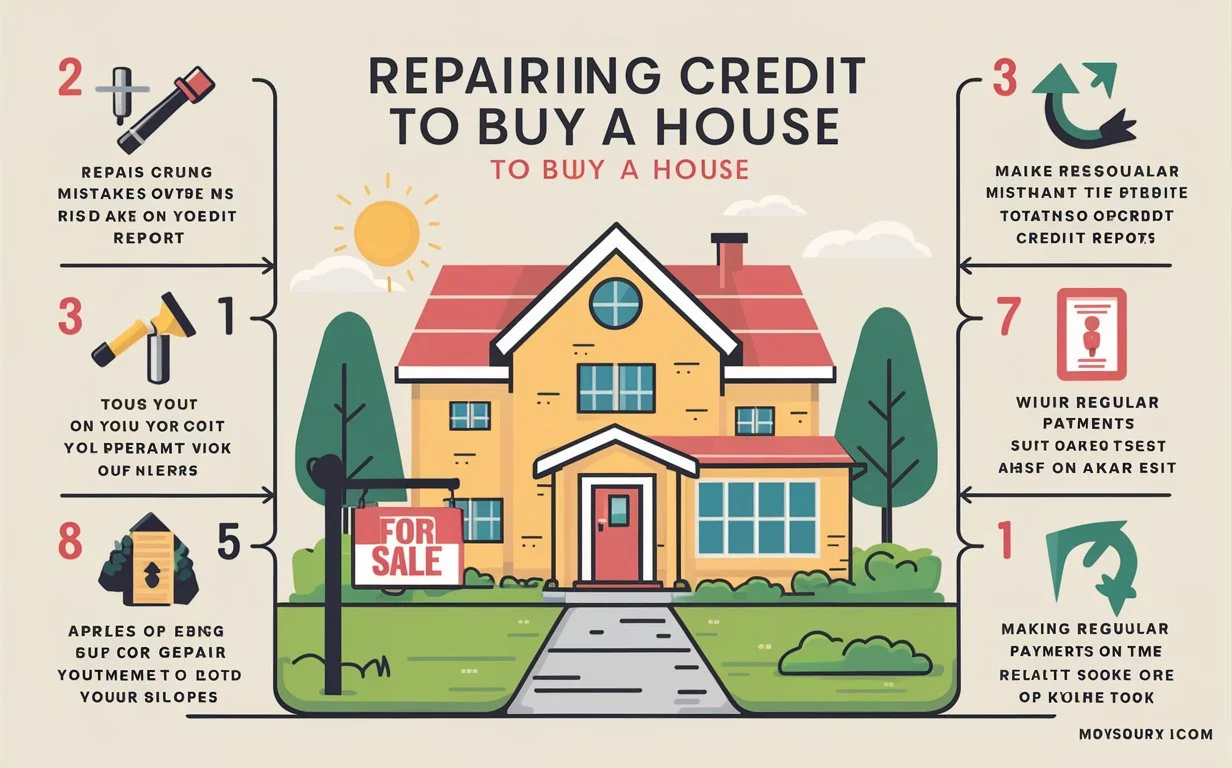
Embarking on the journey to homeownership requires a solid financial foundation, and your credit score is a cornerstone of that. This guide provides a comprehensive, step-by-step approach to repairing your credit, specifically tailored to meet the stringent requirements of mortgage lenders, ensuring you can achieve your dream of owning a home.
Understanding Credit Scores for Homeownership
When you're aiming to buy a house, your credit score isn't just a number; it's a critical indicator of your financial reliability. Lenders use it to assess the risk involved in extending a mortgage to you. A higher credit score generally translates to better loan terms, lower interest rates, and a higher chance of loan approval. In 2025, the landscape of mortgage lending continues to emphasize creditworthiness, making a strong score more vital than ever.
The FICO Score and Its Significance
The most commonly used credit scoring model by mortgage lenders is the FICO score. While there are different versions of FICO scores, mortgage lenders typically use specific industry scores like FICO Score 2, FICO Score 5, and FICO Score 3. These scores range from 300 to 850, with higher scores indicating better credit risk.
What Constitutes a "Good" Credit Score for a Mortgage?
While the definition of "good" can be subjective and vary slightly between lenders and loan programs, here's a general breakdown for 2025:
- Excellent: 740+ - You'll likely qualify for the best interest rates and loan terms.
- Very Good: 670-739 - Still considered strong, with good chances of approval and competitive rates.
- Fair: 580-669 - Approval is possible, but rates may be higher, and loan options might be limited. Some government-backed loans, like FHA loans, may accept scores in this range.
- Poor: Below 580 - Obtaining a mortgage can be very challenging, often requiring significant credit repair or alternative lending solutions.
Understanding Different Credit Scoring Models
Beyond FICO, VantageScore is another credit scoring model that has gained traction. While FICO remains dominant in mortgage lending, understanding that different models exist is important. For mortgage purposes, focus on FICO scores. It's crucial to know which FICO score lenders are looking at, as they can differ.
Why Your Credit Score is Crucial for Buying a House
The connection between your credit score and your ability to secure a mortgage is direct and profound. Lenders aren't just looking at your ability to repay; they're assessing your history of managing debt. A higher score signals a responsible borrower, which reduces the lender's risk.
Impact on Interest Rates
This is perhaps the most significant impact. Even a small difference in your interest rate can translate into tens of thousands of dollars saved over the life of a 30-year mortgage. For instance, a borrower with a 740+ FICO score might secure an interest rate of 6.5%, while a borrower with a 620 FICO score might face a rate of 7.5% or higher. Over 30 years, this difference can be substantial.
Example (2025 Data): A $300,000 mortgage at 6.5% for 30 years results in a monthly payment of approximately $1,896. The same loan at 7.5% results in a monthly payment of approximately $2,098. That's a difference of $202 per month, or $72,720 over the loan's term.
Loan Approval Likelihood
Many mortgage programs have minimum credit score requirements. If your score falls below these thresholds, you may not even be considered for a loan, regardless of your income or down payment. Government-backed loans, like FHA loans, often have more lenient requirements, but a better score still opens more doors and better terms.
Down Payment Requirements
While not always directly tied to your credit score, lenders may require a larger down payment from borrowers with lower credit scores to mitigate their risk. Conversely, excellent credit can sometimes lead to reduced down payment requirements or access to specific first-time homebuyer programs that offer down payment assistance.
Private Mortgage Insurance (PMI)
If you put down less than 20% on a conventional loan, you'll typically have to pay Private Mortgage Insurance (PMI). The cost of PMI is often influenced by your credit score. A higher score can result in lower PMI premiums, saving you money each month.
Assessing Your Current Credit Situation
Before you can repair your credit, you need to understand where you stand. This involves obtaining your credit reports and knowing what factors influence your score.
Step 1: Obtain and Review Your Credit Reports
Your credit reports are detailed summaries of your credit history. They are maintained by the three major credit bureaus: Equifax, Experian, and TransUnion. You are entitled to a free credit report from each bureau annually through AnnualCreditReport.com. It's advisable to check them at least a few months before you plan to apply for a mortgage.
What to Look For in Your Credit Reports
- Personal Information Accuracy: Ensure your name, address, Social Security number, and employment history are correct.
- Account Status: Verify that all accounts (credit cards, loans, mortgages) are reported accurately, including payment history, balances, and credit limits.
- Late Payments: Identify any instances of missed or late payments.
- Collections: Check for any accounts that have been sent to collections.
- Public Records: Look for bankruptcies, liens, or judgments.
- Inquiries: Note any recent credit inquiries. Too many can negatively impact your score.
The Importance of Discrepancies
Errors on your credit report are more common than you might think. These can include incorrect account balances, accounts that don't belong to you, or outdated negative information. Identifying and disputing these errors is a crucial step in credit repair.
Step 2: Understand the Factors Affecting Your Score
Credit scoring models, like FICO, weigh several factors to calculate your score. Understanding these components will help you prioritize your repair efforts.
Payment History (Approximately 35% of FICO Score)
This is the most critical factor. Making payments on time, every time, is paramount. Late payments, defaults, and bankruptcies significantly damage your score.
Amounts Owed / Credit Utilization (Approximately 30% of FICO Score)
This refers to the amount of credit you're using compared to your total available credit. Keeping your credit utilization ratio low (ideally below 30%, and even better below 10%) is vital. This applies to individual credit cards and your overall credit utilization.
Length of Credit History (Approximately 15% of FICO Score)
A longer credit history generally benefits your score. This includes the age of your oldest account, the age of your newest account, and the average age of all your accounts.
Credit Mix (Approximately 10% of FICO Score)
Having a mix of different types of credit (e.g., credit cards, installment loans like mortgages or auto loans) can be beneficial, though this factor is less influential than payment history and utilization.
New Credit (Approximately 10% of FICO Score)
Opening multiple new credit accounts in a short period can lower your score. Each time you apply for credit, a hard inquiry is placed on your report, which can temporarily decrease your score.
Step 3: Create a Credit Repair Plan
Once you understand your credit report and the factors influencing your score, you can develop a targeted plan. This plan should be realistic and actionable.
Prioritize Negative Items
Focus on the items that have the most significant negative impact. For most people, this means addressing late payments and high credit utilization.
Set Realistic Goals and Timelines
Credit repair is not an overnight process. Set achievable monthly goals, such as paying down a specific amount of debt or reducing your credit utilization ratio by a certain percentage. For mortgage readiness, aim to have your credit in the best possible shape at least 6-12 months before applying.
Consider Professional Help (Cautiously)
credit repair companies can help, but choose wisely. Look for companies with good reputations, transparent pricing, and a clear understanding of what they can and cannot do. Be wary of companies that guarantee results or charge upfront fees before performing any work. In 2025, many reputable services offer free initial consultations.
Paying Down Debt Strategically
Reducing your debt is fundamental to improving your credit score and demonstrating financial responsibility to lenders. This isn't just about paying off balances; it's about smart debt management.
The Debt-to-Income Ratio (DTI)
Lenders scrutinize your Debt-to-Income ratio, which compares your total monthly debt payments to your gross monthly income. A lower DTI indicates you have more disposable income to handle a mortgage payment. For conventional loans, lenders often prefer a DTI of 43% or lower, and for government-backed loans, it can sometimes be higher, but a lower ratio is always better.
Strategies for Debt Reduction
The Debt Snowball Method
Pay off your smallest debts first while making minimum payments on larger ones. Once a small debt is paid off, roll that payment amount into the next smallest debt. This method provides psychological wins, which can be motivating.
The Debt Avalanche Method
Prioritize paying off debts with the highest interest rates first, while making minimum payments on others. This method saves you more money on interest over time and is generally more financially efficient.
Negotiating with Creditors
If you're struggling to make payments, contact your creditors. You might be able to negotiate a lower interest rate, a payment plan, or even a settlement for a reduced lump sum. Document all agreements in writing.
Balance Transfers (Use with Caution)
Transferring high-interest credit card balances to a card with a 0% introductory APR can save you money on interest. However, be mindful of transfer fees and ensure you can pay off the balance before the introductory period ends. This strategy primarily helps with credit utilization and interest savings, not necessarily with overall debt reduction if not managed carefully.
Managing Credit Utilization
Your credit utilization ratio (CUR) is a major driver of your credit score. Keeping it low is crucial for mortgage readiness.
Understanding Credit Utilization Ratio (CUR)
CUR is calculated by dividing the total balance on your revolving credit accounts by your total credit limit. For example, if you have two credit cards, one with a $500 balance and a $2,000 limit, and another with a $1,000 balance and a $3,000 limit, your total balance is $1,500, and your total credit limit is $5,000. Your CUR is $1,500 / $5,000 = 30%.
Strategies to Lower Your CUR
- Pay Down Balances: The most direct way to lower your CUR is to reduce the amount you owe on your credit cards. Aim to keep balances as low as possible, ideally below 30% of the credit limit, and even better below 10%.
- Request a Credit Limit Increase: If you have a good payment history with a creditor, you can request a higher credit limit. This increases your total available credit, which lowers your CUR even if your balance remains the same. Be cautious, as some lenders may perform a hard inquiry for this.
- Spread Out Your Spending: If you have multiple credit cards, try to distribute your spending across them rather than maxing out one card.
- Pay Before the Statement Closing Date: Credit card companies typically report your balance to the credit bureaus on your statement closing date. Paying down your balance before this date can result in a lower utilization being reported.
The Impact of Credit Cards on Your Score
Credit cards are powerful tools for building credit, but they can also be detrimental if mismanaged. Responsible use involves making timely payments and keeping balances low.
Dealing with Errors and Disputes
Errors on your credit report can unfairly lower your score, hindering your homebuying aspirations. Taking the time to dispute them is essential.
How to Dispute Errors with Credit Bureaus
If you find an error on your credit report:
- Gather Evidence: Collect any documentation that supports your claim (e.g., payment receipts, account statements).
- Write a Dispute Letter: Clearly state the error, the account it pertains to, and why you believe it's incorrect. Include copies of your supporting documents. Send this letter via certified mail with a return receipt requested to the credit bureau.
- Wait for Investigation: The credit bureau has 30 days (or 45 days if you provide new information during the initial 30-day period) to investigate your dispute. They will contact the creditor to verify the information.
- Follow Up: If the error is corrected, ensure the updated information is reflected accurately on your report. If not, you may need to escalate the dispute or seek further assistance.
Disputing Errors with Creditors
You can also dispute errors directly with the creditor who reported the information. This process is similar to disputing with the bureaus, and it's often a good first step before involving the bureaus.
Negative Information and Time Limits
Most negative information (late payments, collections) remains on your credit report for seven years. Bankruptcies can stay for 7-10 years, depending on the type. While you can't remove accurate negative information before these time limits, you can work to mitigate their impact and ensure no inaccuracies are present.
Building a Positive Credit History
Beyond repairing negative items, actively building a positive credit history is crucial for a strong score.
Responsible Credit Card Use
If you have a limited credit history or are rebuilding, consider a secured credit card or a credit-builder loan. Use them for small, recurring purchases that you can pay off in full each month. This demonstrates responsible credit management to lenders.
Authorized User Status
Becoming an authorized user on a trusted friend or family member's credit card can help, provided they have excellent credit and manage their account responsibly. Their positive payment history can reflect on your report. However, if they miss payments, it can negatively impact you too.
Co-signing a Loan (Use with Extreme Caution)
Co-signing a loan means you are equally responsible for the debt. While it can help build credit if the primary borrower pays on time, it poses significant risk if they default. This is generally not recommended for mortgage preparation unless absolutely necessary and with clear understanding.
Secured Loans and Credit-Builder Loans
These are specifically designed to help individuals build or rebuild credit. A secured loan requires collateral, while a credit-builder loan involves making payments into a savings account that you receive back after the loan term. Both report your payment activity to credit bureaus.
Step 4: Monitor Your Progress
Credit repair is an ongoing process. Regular monitoring is key to ensuring your efforts are paying off and to catch any new issues.
Regularly Check Your Credit Reports
Obtain your free credit reports annually from AnnualCreditReport.com. Consider using credit monitoring services that provide regular updates and alerts on changes to your credit report and score.
Track Your Credit Score
Many credit card companies and financial institutions offer free credit score monitoring. While these may not be the exact FICO scores lenders use, they provide a good indication of your progress. Aim for consistent improvement.
Adjust Your Plan as Needed
As you make progress, you may need to adjust your credit repair plan. For example, if your credit utilization has significantly improved, you might shift focus to other areas. Stay flexible and adaptive.
How Long Does Credit Repair Take?
The timeline for credit repair varies significantly based on your starting point and the nature of the issues on your report. Generally, you can expect:
- Minor Improvements: You might see noticeable score increases within 1-3 months if you focus on reducing credit utilization and ensuring on-time payments.
- Moderate Improvements: Addressing some errors and diligently paying down debt could lead to significant improvements over 6-12 months.
- Major Overhauls: If you have significant negative items like collections, charge-offs, or past bankruptcies, it can take 1-2 years or more to see substantial improvements that will satisfy most mortgage lenders.
Remember, accurate negative information typically remains on your report for seven years, but its impact diminishes over time, especially if you build a strong positive credit history alongside it.
The "Seven-Year Rule"
Most negative information, such as late payments and collections, will fall off your credit report after seven years from the date of the first delinquency. Bankruptcies can remain for 7-10 years. While you can't remove accurate negative information early, focusing on positive actions can help outweigh its impact.
Credit Repair vs. Credit Building
It's important to distinguish between repairing existing credit issues and building a positive credit history from scratch or for those with limited credit experience.
Credit Repair
This focuses on identifying and rectifying errors, managing and reducing existing debt, and addressing negative marks on your credit report. The goal is to clean up past mistakes and improve your score from a lower baseline.
Credit Building
This involves establishing a positive credit history through responsible use of credit. It's for individuals who have little to no credit history or who have had their credit damaged and are starting over with a clean slate. Strategies include secured credit cards, credit-builder loans, and becoming an authorized user.
For aspiring homeowners, a combination of both is often necessary. You might need to repair past issues while simultaneously building a positive track record.
Special Considerations for First-Time Homebuyers
First-time homebuyers often face unique challenges, and there are programs and strategies designed to help.
Government-Backed Loans (FHA, VA, USDA)
These loans often have more flexible credit score requirements and down payment options compared to conventional loans. For example, FHA loans can be accessible with credit scores as low as 580 with a 3.5% down payment, and even lower with a larger down payment.
First-Time Homebuyer Programs
Many states and local municipalities offer programs that provide down payment assistance, closing cost grants, or lower interest rates for first-time homebuyers. These programs often have income limits and require homebuyer education courses.
The Importance of a Down Payment
While credit is crucial, lenders also look at your down payment. A larger down payment reduces the lender's risk and can sometimes compensate for a slightly lower credit score. Saving for a down payment should be a parallel goal to credit repair.
What Lenders Look For Beyond the Score
While your credit score is a primary factor, lenders consider a holistic view of your financial health.
Income Stability and Employment History
Lenders want to see a consistent employment history, ideally with the same employer or in the same field for at least two years. They will verify your income through pay stubs, tax returns, and W-2s.
Debt-to-Income Ratio (DTI) Revisited
As mentioned, this is a critical metric. A lower DTI demonstrates your capacity to handle a mortgage payment alongside your existing financial obligations.
Assets and Reserves
Lenders want to ensure you have sufficient funds for the down payment, closing costs, and a financial cushion (reserves) to cover mortgage payments for a few months in case of unexpected income loss. This demonstrates financial stability.
The "Full Picture" Approach
Lenders use automated underwriting systems, but a human underwriter may review your application if it's on the borderline. In such cases, a compelling explanation for any past credit issues, coupled with a strong demonstration of current financial responsibility, can sometimes sway a decision.
Comparison of Loan Types and Credit Requirements (2025 Estimates)
| Loan Type | Typical Minimum Credit Score | Typical Down Payment | Notes |
|---|---|---|---|
| Conventional (Fannie Mae/Freddie Mac) | 620+ | 3%-20%+ | Lower scores may require higher down payments or PMI. |
| FHA Loan | 580+ (with 3.5% down) 500-579 (with 10% down) |
3.5% - 10% | Requires Mortgage Insurance Premium (MIP). |
| VA Loan | No official minimum (lender dependent) | 0% | For eligible veterans and active-duty military. Requires Certificate of Eligibility (COE). |
| USDA Loan | 640+ (recommended) | 0% | For eligible rural and suburban areas. Income limits apply. |
Note: These are general guidelines for 2025. Lender overlays and specific program requirements can vary. Always consult with a mortgage professional.
Conclusion: Your Path to Homeownership
Repairing your credit to buy a house is a marathon, not a sprint. It requires diligence, patience, and a strategic approach. By understanding the factors that influence your credit score, meticulously reviewing your reports, and implementing a targeted plan to reduce debt and manage utilization, you significantly increase your chances of mortgage approval and securing favorable loan terms. Remember to monitor your progress consistently and consider leveraging resources like first-time homebuyer programs. Your credit is a powerful tool; wield it wisely, and your dream of homeownership in 2025 and beyond is well within reach.