How To Start A Credit Repair Business From Home?
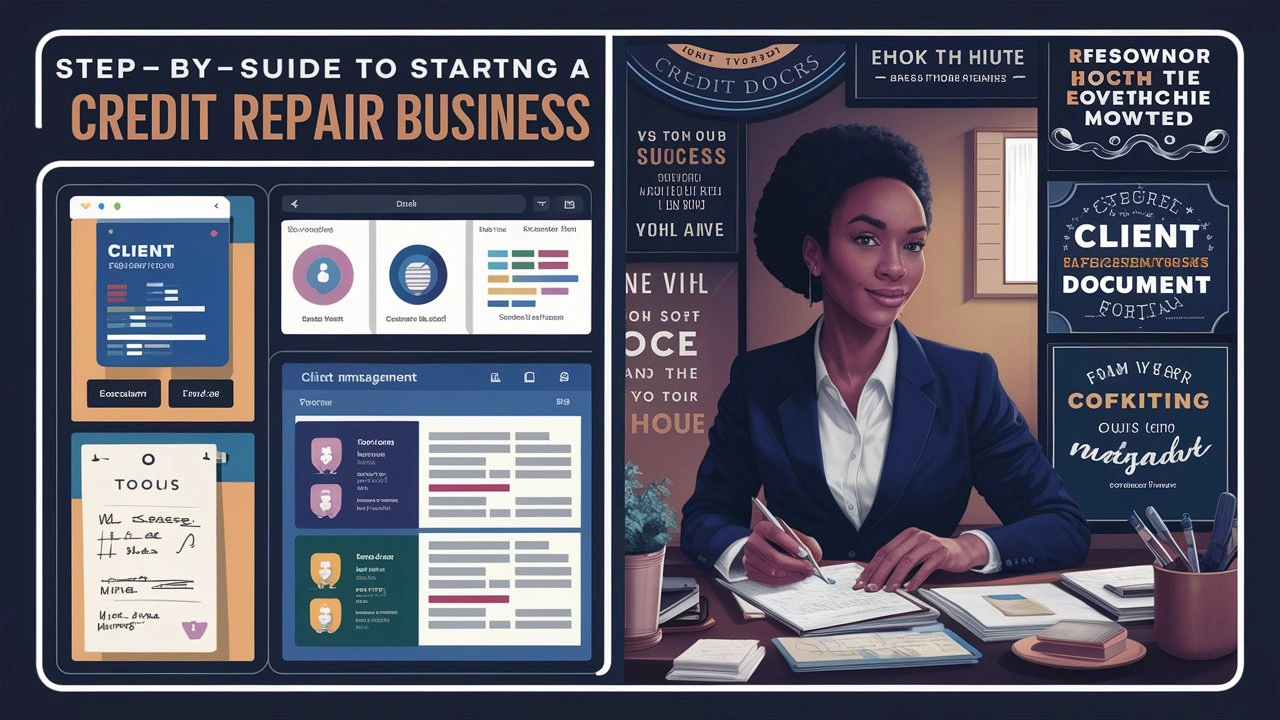
Dreaming of financial independence and the flexibility of working from home? Starting a credit repair business from home in 2025 offers a lucrative opportunity to help others while building your own empire. This guide provides the essential steps and insights to launch your successful venture.
Understanding the Credit Repair Landscape in 2025
The demand for credit repair services continues to surge as more individuals recognize the critical role their credit score plays in achieving financial goals. In 2025, the landscape is shaped by evolving consumer protection laws, advanced data analytics, and a greater emphasis on personalized financial education. Consumers are increasingly aware that a good credit score unlocks doors to lower interest rates on mortgages, auto loans, and even better insurance premiums. Conversely, poor credit can lead to higher costs, limited housing options, and employment challenges. This creates a consistent and growing market for ethical and effective credit repair professionals.
The core of credit repair involves identifying inaccuracies, disputing erroneous information with credit bureaus and creditors, and helping clients build positive credit habits. This isn't about "fixing" credit overnight or guaranteeing results, but rather about a diligent, systematic process of challenging questionable data and educating clients. The Credit Repair Organizations Act (CROA) in the United States, along with similar regulations in other countries, sets strict guidelines for how credit repair businesses can operate, emphasizing transparency and consumer rights. Understanding these regulations is paramount to building a reputable and sustainable business.
In 2025, we see a trend towards more sophisticated credit analysis tools and a greater reliance on digital platforms for client communication and document management. Businesses that can leverage technology to streamline their operations and offer a seamless client experience will have a significant competitive advantage. Furthermore, the emphasis on financial literacy as a component of credit repair is growing. Clients aren't just looking for someone to fix their report; they want to understand how to maintain good credit long-term. Integrating educational resources and personalized advice into your service offering can differentiate your business significantly.
Key Statistics for 2025
To grasp the market potential, consider these insights:
- Consumer Debt Levels: Total household debt in the US is projected to exceed $17 trillion in 2025, with a significant portion of consumers carrying balances on credit cards and struggling with loan repayments.
- Credit Score Distribution: Approximately 35% of Americans have a credit score below 670, often considered fair or poor, indicating a substantial pool of potential clients. (Source: Experian, 2025 projections)
- Impact of Poor Credit: A lower credit score can cost consumers tens of thousands of dollars over their lifetime in increased interest payments on mortgages and auto loans. (Source: Consumer Financial Protection Bureau, 2025 analysis)
- Digital Adoption: Over 80% of consumers prefer to interact with service providers digitally, highlighting the importance of online presence and communication tools. (Source: Pew Research Center, 2025 trends)
The Ethical Imperative
It's crucial to understand that credit repair is not about fabricating information or engaging in fraudulent activities. It's about ensuring accuracy and fairness in credit reporting. The Federal Trade Commission (FTC) and state attorneys general actively monitor and prosecute credit repair companies that make false promises or engage in deceptive practices. A business built on integrity and transparency will not only comply with the law but also build lasting trust with clients, leading to referrals and positive word-of-mouth marketing.
Legal and Compliance: Laying a Solid Foundation
Operating a credit repair business from home requires strict adherence to federal and state regulations. Failure to comply can result in hefty fines, legal action, and the inability to operate. The cornerstone of credit repair regulation in the United States is the Credit Repair Organizations Act (CROA). Understanding and implementing its provisions is non-negotiable.
Understanding the Credit Repair Organizations Act (CROA)
CROA establishes several key requirements for credit repair organizations:
- Disclosure Requirements: You must provide clients with a detailed disclosure statement at least three days before signing a contract. This statement must include information about their rights, the services you offer, the total cost, and the timeframe for results.
- Contract Requirements: All contracts must be in writing and clearly outline the services to be performed, the fees, and the payment schedule. You cannot charge clients until the services are performed.
- Prohibited Practices: CROA prohibits several practices, including advising clients to misrepresent their identity or credit history, assisting clients in obtaining an Employer Identification Number (EIN) for illegal purposes, and engaging in deceptive advertising.
- Cancellation Rights: Clients have the right to cancel their contract within three business days of signing without penalty.
State-Specific Regulations
In addition to federal law, many states have their own specific licensing and registration requirements for credit repair businesses. These can vary significantly. For example, some states require a surety bond, while others have specific bonding requirements or licensing exams. It is imperative to research the laws in your state of operation and any state where you plan to serve clients.
Actionable Step: Before launching, thoroughly research your state's Department of Consumer Affairs, Attorney General's office, or Secretary of State's website for credit repair business regulations. This might include:
- Business registration
- Licensing requirements
- Bonding requirements (often $10,000 to $50,000)
- Specific contract language mandates
- Annual reporting or renewal fees
Business Structure and Registration
Choosing the right business structure is crucial for legal and tax purposes. Common options include:
- Sole Proprietorship: Simple to set up, but offers no personal liability protection.
- Limited Liability Company (LLC): Offers personal liability protection and pass-through taxation. This is often the preferred choice for small businesses.
- S-Corporation/C-Corporation: More complex structures, typically for larger businesses.
Once you've chosen a structure, you'll need to register your business name (often as a DBA, "Doing Business As," if you're operating under a name different from your legal name) and obtain an Employer Identification Number (EIN) from the IRS, even if you don't plan to hire employees. This EIN is essential for opening business bank accounts and filing taxes.
Insurance and Bonding
A surety bond is often a legal requirement to protect consumers against fraudulent or negligent acts by the credit repair business. The amount of the bond varies by state. Additionally, consider obtaining business liability insurance to protect your business from unforeseen events and lawsuits.
Data Privacy and Security
You will be handling sensitive client information, including Social Security numbers, financial statements, and credit reports. Implementing robust data security measures is vital. This includes:
- Secure document storage (encrypted digital files, locked physical cabinets)
- Secure client portals for information exchange
- Compliance with data privacy regulations (e.g., GDPR if serving EU clients, although less common for US-based credit repair)
- Regularly updating antivirus and anti-malware software
Building trust starts with demonstrating that you take client data security seriously. A data breach can be catastrophic for your reputation and business continuity.
Crafting Your Business Plan: The Blueprint for Success
A well-structured business plan is your roadmap. It forces you to think critically about every aspect of your venture, from market analysis to financial projections. For a home-based credit repair business, this plan doesn't need to be a 100-page document, but it should cover the essential elements.
Executive Summary
A brief overview of your business, its mission, vision, and key objectives. This is often written last but placed first.
Company Description
Detail what your business is, its legal structure, and its core values. Emphasize your commitment to ethical practices and client success.
Market Analysis
This section requires research into your target market and competitors. Identify:
- Target Audience: Who are your ideal clients? (e.g., individuals with specific credit issues like collections, bankruptcies, late payments; young adults building credit; individuals preparing for major purchases like homes or cars).
- Market Size and Trends: As discussed earlier, the market is substantial and growing.
- Competitor Analysis: Identify other credit repair businesses operating in your area or online. Analyze their services, pricing, marketing strategies, and customer reviews. What are their strengths and weaknesses? How can you differentiate yourself?
Example Competitor Analysis Table:
| Competitor Name | Services Offered | Pricing Model | Online Presence | Customer Reviews (General Sentiment) | Differentiation Opportunity |
|---|---|---|---|---|---|
| Credit Solutions Pro | Dispute letters, credit education | Monthly retainer ($99-$199) | Strong website, active social media | Mostly positive, some mention slow communication | Faster response times, personalized coaching |
| FixMyCredit Fast | Aggressive disputing, debt settlement referral | One-time setup fee + monthly ($150-$250) | Basic website, minimal social engagement | Mixed, some praise results, others caution about aggressive tactics | Focus on ethical, transparent processes, holistic financial planning |
| Your Local Credit Expert | Personalized consultations, dispute letters | Hourly consultation + project fee | Limited online presence, relies on local referrals | Very positive, strong community reputation | Scalable online services, broader reach beyond local area |
Services Offered
Clearly define the services you will provide. This could include:
- Reviewing credit reports and scores
- Identifying inaccurate or unverifiable information
- Drafting and sending dispute letters to credit bureaus (Equifax, Experian, TransUnion) and creditors
- Assisting with goodwill letters for late payments
- Providing credit education and budgeting advice
- Monitoring credit report changes
- Potentially offering services like credit building with secured credit cards or tradelines (ensure compliance with all regulations regarding tradelines).
Crucially, state what you DON'T do: You cannot guarantee results, charge upfront fees for services not yet performed (under CROA), or promise to remove accurate negative information.
Marketing and Sales Strategy
How will you reach your target audience and convert them into clients? Consider:
- Online Marketing: Search Engine Optimization (SEO) for your website, social media marketing (LinkedIn, Facebook), content marketing (blog posts like this one!), paid advertising (Google Ads).
- Referral Partnerships: Connect with mortgage brokers, real estate agents, auto dealerships, bankruptcy attorneys, financial advisors, and divorce attorneys who often encounter clients with credit challenges.
- Networking: Attend local business events and financial literacy workshops.
- Client Testimonials: Encourage satisfied clients to provide reviews and testimonials.
Management Team
Even if it's just you initially, outline your skills, experience, and any advisors or mentors you have. If you plan to hire later, describe the roles.
Financial Projections
This is a critical section. Include:
- Startup Costs: Estimate all initial expenses (legal fees, licensing, bonding, software, website development, marketing materials, office supplies).
- Operating Expenses: Project your monthly costs (software subscriptions, internet, phone, marketing budget, potential future salaries).
- Revenue Projections: Based on your pricing and estimated client acquisition rate, forecast your revenue for the first 1-3 years.
- Break-Even Analysis: Determine when your revenue will cover your expenses.
Appendix
Include supporting documents like market research data, resumes, licenses, or permits.
Essential Tools and Technology for Your Home-Based Business
To run an efficient and professional credit repair business from home, you'll need the right tools and technology. Investing in these will streamline your operations, enhance client communication, and ensure accuracy.
Credit Report Access
You'll need a way to access clients' credit reports from the three major bureaus: Equifax, Experian, and TransUnion. Several platforms provide this:
- Credit Monitoring Services for Professionals: Companies like IdentityIQ, SmartCredit, MyScoreIQ, and CreditRater offer wholesale access to credit reports and scores for businesses. These are essential for your work.
- Direct Bureau Access (Less Common for Startups): In some cases, larger or more established businesses might negotiate direct access, but this is usually complex and costly for new ventures.
Recommendation: Start with a reputable professional credit monitoring service. They typically offer tiered plans based on the number of reports you need to pull per month.
Credit Repair Software
Dedicated credit repair software can automate many of the tedious tasks involved in the process. These platforms often:
- Generate dispute letters based on client information and specific dispute reasons.
- Track the status of disputes and client progress.
- Manage client communication and documentation.
- Provide reporting and analytics.
Popular options include:
- Credit-Repair-Cloud
- LendingUSA (offers software solutions)
- DisputeSuite
- LexisNexis Risk Solutions (more enterprise-level)
Considerations: Look for software that is user-friendly, offers robust letter generation capabilities, integrates with credit report access, and provides good customer support. Many offer free trials, so test them out.
Customer Relationship Management (CRM) System
A CRM system is vital for managing client interactions, tracking leads, and organizing your sales pipeline. Even a simple CRM can help you stay organized.
- HubSpot CRM (Free Tier): Excellent for managing contacts, tracking deals, and basic email marketing.
- Zoho CRM: Offers a robust free tier and scalable paid plans.
- Pipedrive: Known for its visual sales pipeline management.
Your CRM should allow you to log calls, emails, meetings, and notes for each prospect and client.
Communication Tools
Reliable communication is key. You'll need:
- Professional Email Address: Use a domain-specific email (e.g., info@yourbusiness.com) rather than a generic Gmail or Yahoo address.
- Business Phone Number: Consider a VoIP (Voice over Internet Protocol) service like Google Voice or RingCentral. This allows you to have a dedicated business line, manage calls professionally, and keep your personal number private.
- Video Conferencing: Tools like Zoom, Google Meet, or Microsoft Teams are essential for client consultations and virtual meetings.
- Secure Messaging/Client Portal: If your credit repair software doesn't offer this, consider secure messaging platforms or a client portal solution to exchange sensitive information safely.
Document Management and Storage
You'll be dealing with a lot of documents. Secure and organized storage is crucial:
- Cloud Storage: Google Drive, Dropbox, OneDrive offer secure cloud storage for digital documents. Ensure you use strong passwords and enable two-factor authentication.
- Scanning Software/App: Mobile scanning apps (like Adobe Scan or Microsoft Lens) can turn paper documents into digital files efficiently.
- Physical Storage: If you handle physical documents, invest in a secure filing cabinet with a lock.
Website and Online Presence
A professional website is your digital storefront. It should include:
- Information about your services
- Your credentials and testimonials
- Contact information
- A blog for content marketing
- Potentially a secure client login area
Consider using website builders like WordPress, Wix, or Squarespace. Ensure your site is mobile-responsive and optimized for search engines (SEO).
Financial Management Tools
Keep your business finances in order:
- Accounting Software: QuickBooks Online, Xero, or Wave (free for basic features) can help you track income, expenses, send invoices, and prepare for taxes.
- Secure Payment Processing: Integrate a payment gateway like Stripe or PayPal into your invoicing system or website to accept payments securely.
Client Acquisition Strategies: Finding Your First Clients
Once your business is legally set up and you have your tools ready, the next critical step is acquiring clients. This is where many new businesses struggle, but with a strategic approach, you can build a steady stream of clients.
Leveraging Your Network (The "Friends and Family" Phase)
Your initial clients often come from people you know. Let your friends, family, former colleagues, and acquaintances know about your new venture. Ask them if they know anyone who could benefit from credit repair services. Offer them a referral bonus or discount for successful leads. This phase is invaluable for gaining early experience and testimonials.
Building Strategic Partnerships
Collaborating with other professionals who serve clients with credit challenges can be a powerful lead generation engine. Identify potential partners such as:
- Mortgage Brokers and Real Estate Agents: Many potential homebuyers are turned away due to poor credit.
- Auto Dealerships and Lenders: Individuals seeking car loans often have credit issues.
- Bankruptcy Attorneys: Clients emerging from bankruptcy need to rebuild their credit.
- Financial Advisors and Planners: They may refer clients who need credit repair before implementing broader financial strategies.
- Divorce Attorneys: Individuals going through divorce often face credit score impacts.
- Small Business Lenders: Entrepreneurs seeking loans often need to improve their personal credit first.
How to approach them:
- Research potential partners and understand their business.
- Schedule a brief meeting (in person or virtual) to introduce yourself and your services.
- Explain how you can help their clients and, by extension, help their business by closing more deals.
- Offer a clear referral process and potentially a referral fee or reciprocal referral arrangement.
- Follow up regularly and maintain the relationship.
Content Marketing and SEO
Attracting clients organically through search engines is a sustainable long-term strategy. This involves creating valuable content that answers potential clients' questions.
- Blogging: Regularly publish blog posts on topics like "What is a good credit score?", "How to dispute errors on your credit report," "Understanding your credit utilization ratio," "Impact of medical debt on credit," etc. Use relevant keywords (like "how to start a credit repair business from home" or "credit repair services near me").
- Search Engine Optimization (SEO): Optimize your website and content with relevant keywords, build backlinks, and ensure your site is technically sound to rank higher in search results.
- Local SEO: If you serve a specific geographic area, optimize your Google Business Profile and ensure your website includes local keywords.
Social Media Marketing
While not always the primary lead source for credit repair, social media can build brand awareness and trust.
- Facebook: Create a business page, share informative content, run targeted ads, and engage in relevant local groups (where permitted).
- LinkedIn: Ideal for connecting with potential referral partners and establishing professional credibility. Share articles and engage in industry discussions.
- Instagram/TikTok: Use these platforms for short, engaging educational videos explaining credit concepts.
Focus on providing value and education, not just sales pitches.
Paid Advertising (PPC)
Platforms like Google Ads can drive targeted traffic to your website quickly. You can bid on keywords such as "credit repair services," "fix my credit score," or "credit report dispute."
- Start Small: Begin with a modest budget and closely monitor your campaigns.
- Targeting: Use geographic and demographic targeting to reach the most relevant audience.
- Landing Pages: Ensure your ads lead to specific landing pages designed for conversion (e.g., a page offering a free credit consultation).
Online Reviews and Testimonials
Positive reviews are social proof. Encourage satisfied clients to leave reviews on platforms like Google, Yelp, or your Facebook page. Actively request testimonials and feature them prominently on your website.
Free Consultations/Audits
Offer a free initial consultation or credit report audit. This is a low-risk way for potential clients to experience your expertise and for you to assess their situation and explain how you can help. It's a prime opportunity to demonstrate value and build rapport.
Delivering Exceptional Credit Repair Services
Once you have clients, your focus shifts to delivering outstanding service that leads to results and builds your reputation. Ethical practices, clear communication, and a structured process are paramount.
The Onboarding Process
A smooth onboarding process sets the tone for the client relationship.
- Initial Consultation: Conduct a thorough consultation to understand the client's financial situation, goals, and credit concerns.
- Obtain Necessary Documents: Collect signed authorization forms (required by CROA), copies of their ID, proof of address, and access to their credit reports (via your chosen monitoring service).
- Credit Report Analysis: Carefully review all three credit reports (Equifax, Experian, TransUnion) and credit scores. Identify inaccuracies, outdated information, and items that may be disputable.
- Develop a Strategy: Based on the analysis, create a personalized credit repair plan. Explain the plan clearly to the client, including what can be disputed, potential timelines, and realistic expectations.
- Sign the Contract: Ensure the client understands and signs your service agreement, which must comply with CROA.
The Dispute Process
This is the core of credit repair. It involves systematically challenging inaccurate information.
- Identify Disputable Items: Focus on items that are negative, inaccurate, outdated, or unverifiable. Common examples include incorrect personal information, late payments that are not late, accounts that don't belong to the client, or incorrect balances.
- Drafting Dispute Letters: Use your credit repair software or templates to draft detailed dispute letters. These letters should clearly state the item being disputed, the reason for the dispute (e.g., "inaccurate," "unverifiable"), and reference relevant consumer protection laws (e.g., Fair Credit Reporting Act - FCRA).
- Sending Letters: Send dispute letters to the credit bureaus via certified mail with return receipt requested. This provides proof of mailing and receipt. You will also send correspondence to the original creditors or collection agencies.
- Tracking Responses: The credit bureaus have 30 days (sometimes extended to 45) to investigate and respond to disputes. Track all correspondence and responses meticulously.
- Follow-Up Disputes: If an item is not removed or corrected after the first dispute, you may be able to send further disputes, especially if new evidence or arguments arise.
Client Communication and Education
Regular and transparent communication is vital for client satisfaction and retention.
- Progress Updates: Keep clients informed about the status of their disputes, bureau responses, and any new developments. Provide updates at least monthly, or more frequently if there's significant activity.
- Educational Resources: Educate clients on how to manage their credit responsibly moving forward. This includes topics like:
- Understanding credit utilization
- The impact of payment history
- Building positive credit with new accounts
- Budgeting and debt management strategies
- Setting Expectations: Be honest about what credit repair can and cannot do. Avoid making guarantees of specific results or timelines.
- Availability: Be accessible to answer client questions and address concerns promptly.
Monitoring and Re-evaluation
Credit repair is an ongoing process. Continuously monitor credit reports for changes and re-evaluate the strategy as needed.
- Regular Checks: Pull updated credit reports periodically to track progress and identify new issues.
- Adaptation: If certain disputes are unsuccessful, adjust your strategy. Sometimes, a different approach or more evidence is needed.
- Goal Achievement: Work with clients to achieve their credit goals, whether it's a specific score increase or removing certain negative items.
Ethical Considerations
Always operate with integrity:
- No Guarantees: Never promise specific results or timelines.
- No Upfront Fees for Services Not Rendered: CROA prohibits charging fees before services are performed.
- Transparency: Be upfront about fees, services, and limitations.
- Accuracy: Only dispute items that are genuinely inaccurate or unverifiable.
- Client Consent: Always obtain written consent before taking any action on behalf of a client.
Financial Management and Pricing Your Services
Sound financial management is the backbone of any successful business, including a home-based credit repair operation. This involves understanding your costs, setting appropriate prices, and managing your cash flow effectively.
Understanding Your Costs
Accurately calculating your costs is essential for profitable pricing. Categorize them into:
- Startup Costs: (One-time expenses)
- Business registration and legal fees
- Licensing and bonding fees
- Credit repair software purchase/setup
- Website development and design
- Initial marketing materials
- Office equipment (computer, printer, scanner)
- Operating Expenses: (Recurring monthly expenses)
- Credit monitoring service subscriptions
- Credit repair software subscriptions
- CRM software subscriptions
- Internet and phone services
- Marketing and advertising budget
- Payment processing fees
- Accounting software subscriptions
- Insurance premiums
- Office supplies
- Taxes (set aside a portion of revenue)
Example Cost Breakdown (Monthly Estimate for a Solo Operator):
| Expense Category | Estimated Monthly Cost |
|---|---|
| Credit Monitoring Service | $40 - $100 |
| Credit Repair Software | $50 - $200 |
| CRM Software | $0 - $50 (using free tiers) |
| Internet/Phone | $75 - $150 |
| Marketing/Advertising | $100 - $500+ (scalable) |
| Payment Processing Fees | Variable (e.g., 2.9% + $0.30 per transaction) |
| Office Supplies | $20 - $50 |
| Accounting Software | $0 - $30 |
| Insurance/Bond (amortized) | $50 - $150 |
| Total Estimated Monthly Expenses (excluding owner's draw/salary) | $335 - $1,230+ |
Pricing Models for Credit Repair Services
There are several common pricing models. CROA prohibits charging significant upfront fees for services not yet performed, so most models involve a combination of an initial setup fee and a recurring monthly fee.
- Setup Fee + Monthly Fee: This is the most common model.
- Setup Fee: Covers the initial work of obtaining credit reports, conducting the initial analysis, and setting up the client's file. This fee can range from $50 to $300.
- Monthly Fee: Covers the ongoing work of disputing items, communicating with bureaus and creditors, and client support. This typically ranges from $75 to $200 per month.
Example: $150 setup fee + $99 per month for 6-12 months.
- Tiered Service Packages: Offer different levels of service with corresponding price points.
- Basic: Standard dispute process.
- Standard: Includes dispute process plus more personalized coaching.
- Premium: Comprehensive service with advanced strategies and dedicated support.
- Per-Item Fee (Less Common and Potentially Risky): Charging a fee for each item disputed. This can be difficult to manage and may not align with CROA's intent regarding upfront fees.
Factors influencing your pricing:
- Your operating costs
- The value you provide (expertise, results)
- Competitor pricing
- Your target market's ability to pay
- The typical duration of credit repair (often 6-18 months)
Recommendation: A setup fee plus a recurring monthly fee is generally the most compliant and sustainable model. Ensure your contract clearly outlines what the setup fee covers and the duration and cost of the monthly service.
Invoicing and Payment Collection
Streamline your invoicing and payment process:
- Use Accounting Software: Generate professional invoices with clear service descriptions and due dates.
- Offer Multiple Payment Options: Accept credit cards, debit cards, and bank transfers via secure payment gateways.
- Automate Payments: Set up recurring payments for monthly fees to reduce manual effort and ensure timely collection.
- Clear Payment Terms: State your payment terms clearly in your contract and on your invoices.
Financial Tracking and Reporting
Maintain meticulous financial records:
- Track Income and Expenses: Use your accounting software to record all financial transactions.
- Monitor Cash Flow: Understand how much money is coming in and going out to ensure you can meet your obligations.
- Budgeting: Create and stick to a business budget.
- Tax Preparation: Keep records organized throughout the year to make tax filing easier. Consult with a tax professional who understands small businesses.
Crucially, maintain separate business and personal bank accounts. This is vital for legal protection and financial clarity.
Scaling Your Credit Repair Business for Long-Term Growth
Once your home-based credit repair business is stable and profitable, you'll likely want to scale it for greater impact and income. Scaling involves expanding your reach, increasing efficiency, and potentially building a team.
Optimizing Your Processes
Before scaling, ensure your core processes are as efficient as possible. This might involve:
- Refining Software Usage: Maximize the features of your credit repair and CRM software to automate tasks.
- Standardizing Workflows: Document your procedures for onboarding, disputing, client communication, and follow-up. This makes training new staff easier.
- Leveraging Templates: Utilize and continually improve templates for emails, dispute letters, and client reports.
Expanding Your Service Offerings
Consider adding complementary services that align with your mission:
- Credit Coaching/Financial Literacy Programs: Offer more in-depth financial education, budgeting workshops, or one-on-one coaching sessions.
- Debt Management Guidance: Partner with reputable debt management companies or provide basic guidance on debt consolidation strategies (ensure you are not offering debt settlement, which is heavily regulated).
- Assisted Credit Building: Offer services that help clients build positive credit, such as guidance on secured credit cards or authorized user tradelines (again, with strict adherence to regulations).
Hiring Your First Employees
As demand grows, you may need to hire help. Start with roles that can be performed remotely:
- Credit Analyst/Dispute Specialist: To handle the core dispute process.
- Client Success Manager: To manage client communication, updates, and support.
- Administrative Assistant: For general tasks, scheduling, and data entry.
Key considerations for hiring:
- Thorough Vetting: Look for individuals with attention to detail, strong communication skills, and a commitment to ethical practices.
- Training: Develop a comprehensive training program to ensure new hires understand your processes and compliance requirements.
- Remote Work Infrastructure: Ensure you have the tools and policies in place to manage a remote team effectively (e.g., secure access, communication protocols).
Expanding Your Marketing Reach
Scale your client acquisition efforts:
- Increase Paid Advertising Budget: Invest more in targeted Google Ads or social media campaigns.
- Content Marketing Expansion: Produce more in-depth content, such as e-books, webinars, or video series.
- Affiliate Program: Create a formal affiliate program to incentivize partners and clients to refer new business.
- Public Relations: Seek opportunities for media mentions or speaking engagements to build brand authority.
Technology and Automation
Invest in technology that can handle increased volume:
- Advanced CRM: Upgrade to a CRM that offers more automation, marketing automation, and robust reporting.
- Client Portals: Implement or enhance a secure client portal for seamless communication and document sharing.
- AI Tools: Explore AI-powered tools for tasks like initial client screening, sentiment analysis of communications, or content generation assistance.
Geographic Expansion
If you started locally, consider expanding your reach nationally or even internationally (while adhering to all relevant laws in those regions). This is best achieved through strong online marketing and a scalable service model.
Measuring Success and Adapting
Continuously track key performance indicators (KPIs) to understand what's working and where improvements are needed.
- Client Acquisition Cost (CAC)
- Client Lifetime Value (CLTV)
- Client Retention Rate
- Average Dispute Resolution Time
- Client Satisfaction Scores (NPS)
- Revenue Growth Rate
Use this data to refine your strategies, allocate resources effectively, and ensure sustainable growth.
Conclusion
Starting a credit repair business from home in 2025 is a viable and potentially highly rewarding venture. By meticulously adhering to legal and ethical standards, crafting a solid business plan, leveraging the right technology, and implementing effective client acquisition and service delivery strategies, you can build a thriving enterprise. Remember that success hinges on transparency, integrity, and a genuine commitment to helping clients improve their financial well-being. The journey requires diligence and continuous learning, but the rewards of financial independence and the satisfaction of making a positive impact are well within reach. Begin by focusing on compliance, then build out your operational framework, and finally, dedicate yourself to attracting and serving your clients with excellence. Your home can indeed become the launchpad for a significant business.